A kit restock calculator solves the problem every safety officer meets: the kit passed the audit, but by the time someone cut a finger the plasters were gone. A few items do most of the moving, so the tool estimates how many of each your kits use, adds a margin, rounds up to packs and gives the dates to check. See the first aid kit refills page for refill packs and restock services.
The fast movers
Plasters, gloves, swabs, wound cleaner, bandages and small dressings are taken far more often than splints or triangular bandages. The tool uses a usage rate for every 10 people a month, at three levels: low for an office, medium for a shop floor, kitchen or school, high for a workshop, a site or a sports club. These rates are our rules of thumb from what restock services commonly see. Keep a simple log of what comes out of each kit for a few months and your own numbers soon replace ours.
The order and the margin
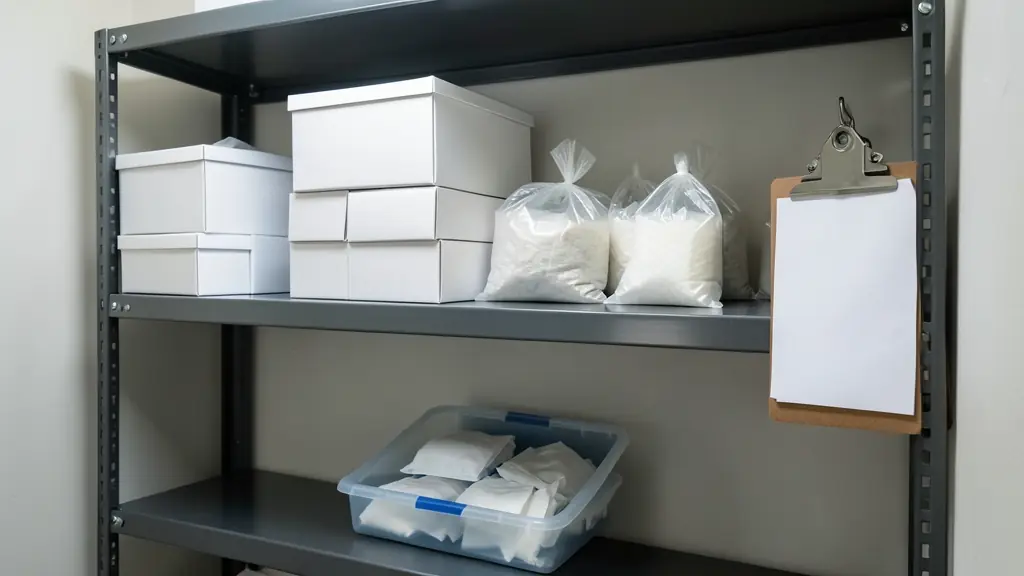
The order is what all the kits should use until the next check, plus a quarter, rounded up to the packs suppliers usually sell: plasters by the box, gloves by the box of pairs, swabs by the pack, wound cleaner by the bottle. Keep that stock in a cupboard and top each kit up to its level at every check. If one kit uses more between checks than it can hold, the tool says so: check that kit monthly or give it a bigger box.
The check schedule
Pick the date of this check and the months between checks, and the tool lists the next dates with what to do at each. A quick look inside every kit each month catches the empty plaster box. Every few months, top up the fast movers and check the seal and the wall sign. Once a year, read every expiry date, gloves and sterile packs included, and replace anything cracked, damp or dried out. A shared calendar reminder for each date costs nothing.
Buy refills or a service
For a few kits, ordering refills yourself is usually enough. For many kits on many sites, a restock service visits, refills, replaces expired stock and leaves a record for the audit; it is usually priced per visit or per kit. Send the kit count and the check interval from the tool for quotes. The first aid kit checklist gives the full contents, and gloves in the right sizes are on the surgical gloves page.
Frequently asked questions
How often should a first aid kit be checked?
A quick look each month and a full check every three months is a common pattern, with every expiry date read at least once a year. Busy sites check more often.
Why do plasters run out first?
They get used for blisters, paper cuts and shaving nicks as well as real wounds. Keep a box in the stock cupboard so the kit itself is never empty.
Do gloves expire?
Yes. Many boxes carry a date, and gloves kept hot in a car or a sunny room go brittle or sticky sooner. Replace any that tear when you put them on.
Can a supplier restock our kits for us?
Many do, on a schedule. Send a request with the number of kits and sites and how often, and restock services near you quote. We do not restock kits ourselves.
Read more
More tools
- Workplace first aid calculatorEmployees, shifts, sites, floors and the kind of work in: the first aid boxes and first aiders to plan for
- First aid kit checklistA kit type and the number of people in: a printable tick list of contents with guide quantities
- AED response time calculatorWalking distance, floors, stairs or lift and the cabinet in: minutes to bring the AED against a 3 minute aim
- CPR metronomeA rate of 100 to 120 a minute and a mode in: a click, a light and a 30 and 2 count for practice on a manikin
- Blood pressure checkerThe top and bottom numbers and the pulse in: the common category and what to do next, not a diagnosis
- Burn area calculatorAdult or child and the areas burnt in: a rough share of the body by the rule of nines and when to get help
- Oxygen duration calculatorA cylinder's size, gauge and flow, or a concentrator's watts and a battery in: how long the oxygen lasts