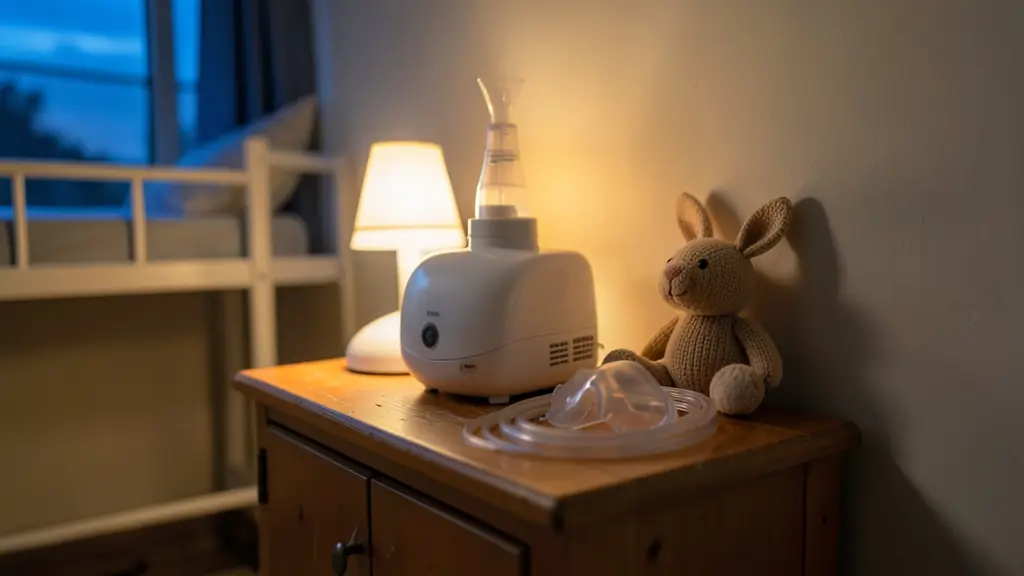
A nebuliser (searched as a nebulizer too) turns a liquid medicine into a fine mist that a child or an adult breathes in through a mask or a mouthpiece. The mother in Pinetown pricing one for a toddler with asthma, the frail care sister and the creche that keeps one for a learner all ask the same things: which machine, which mask, how loud, and what happens when the power goes.
Price guideA pharmacy lists compressor nebulisers at about R590 to R850 and mesh nebulisers at about R850 to R1,125, with a spare mask and tubing kit at about R34A rough guide from published South African prices. The contents, the quantities, the make, delivery and VAT all move it.
Compressor or mesh nebuliser
A compressor nebuliser machine uses a small air pump to push air through the medicine cup. It is sturdy, cheaper to buy and suits home use, but it is louder and needs a plug. A mesh nebuliser vibrates the medicine through a fine mesh: it is small, almost silent, runs on batteries or USB, and suits travel, night treatments and load shedding. Mesh units cost more and the mesh must be cleaned carefully. A sleeping toddler is often the reason parents choose mesh.
The right nebuliser mask or mouthpiece
Babies and small children use a soft mask that covers the nose and mouth; older children and adults often do better with a mouthpiece, which wastes less mist. Ask for the mask in the right size (infant, child, adult) and a spare. Tubing, masks and medicine cups wear out and are sold as replacement kits; air filters on compressors are changed as the maker advises.
The medicine and the doctor
The machine is only the delivery system. The medicine, how much, and how often come on a script from the doctor and through the pharmacy; never add anything the doctor did not prescribe. For many children a spacer and an inhaler work as well, so the doctor decides whether a nebuliser is needed at all. If breathing does not ease, the lips turn blue or the child cannot speak, call 10177 or 112 straight away.
Cleaning, schools and creches
Rinse and dry the cup, mask and mouthpiece after every use, and wash them as the manual says; a damp cup left in a drawer grows mould. Schools and creches that keep a nebuliser for a learner need the parents' written consent, the child's own mask and medicine, and a staff member shown how to use it. Keep a pulse oximeter nearby if the doctor suggests one, and put a baby first aid kit on the same shelf.
Who asks for this
- Families and carers
- A quiet unit and the right size mask for a toddler with asthma on a script.
- Offices, shops and salons
- Rarely kept at work; an employee on treatment may bring a small mesh unit.
- Factories, mines and sites
- The site clinic keeping a unit for staff, used under the occupational nurse.
- Schools, creches and clubs
- A creche or school sick bay unit for a learner, with the parents' consent and mask.
- Clinics, practices and care homes
- Frail care homes, GP rooms and clinics keeping compressors and spare kits.
- Events and venues
- A unit in the medical tent for spectators with breathing trouble on a dusty day.
- Farms, lodges and the outdoors
- A battery mesh unit packed for camping or a farm far from a pharmacy.
- Vehicle fleets
- A car adapter for a compressor so treatment can run on a long drive.
Frequently asked questions
Do I need a script for a nebuliser?
You can usually buy the machine without one, but the medicine comes on a script, and your medical aid will want a script and a motivation before it pays for the device.
How loud is a compressor nebuliser?
Loud enough to wake a light sleeper. Ask the supplier for the noise level in decibels, or choose a mesh unit if treatments happen at night.
Can a nebuliser run during load shedding?
A mesh unit with a battery can, and some compressors come with a rechargeable pack or a car adapter. Charge it before each outage; the battery and power calculator helps if the child also uses oxygen.
How are nebulisers priced?
Per unit, by compressor or mesh, battery or mains, and the masks and spare kits included. Replacement kits are priced per pack. Home care dealers and medical supply companies quote you directly; we sell nothing ourselves.