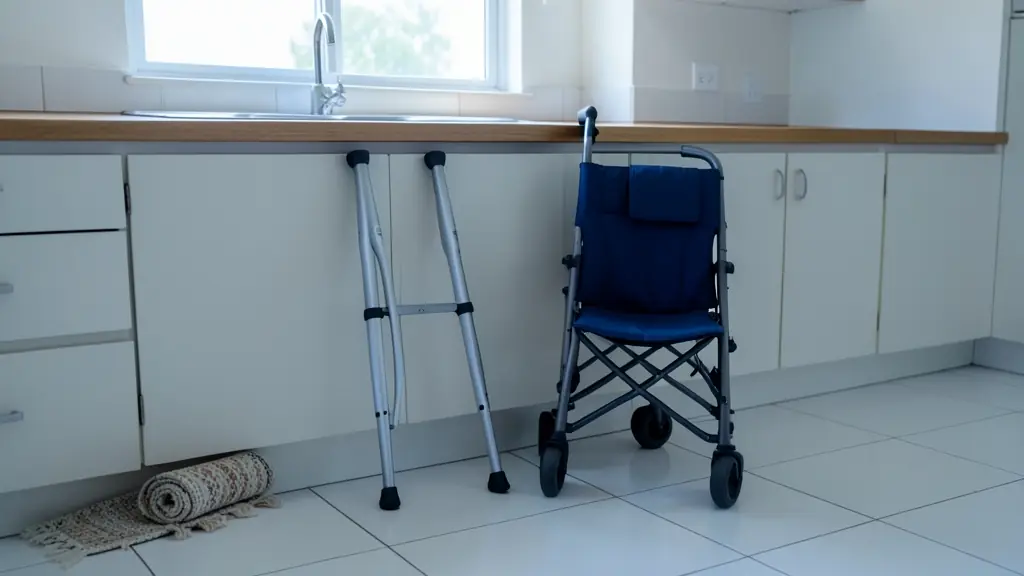
Crutches arrive in most homes after a sports injury, a broken ankle or a knee replacement, often with a day's notice. The physiotherapist at the hospital shows the basics, then you are on your own with the stairs, the shower and the dog. Getting the type and height right from the start makes those first weeks safer, and the same goes for a walking frame or a rollator for someone older.
Price guideA pharmacy lists a pair of aluminium underarm crutches at about R440. Elbow crutches are listed at about R250 to R403 without saying whether that is one crutch or a pair, so check before you orderA rough guide from published South African prices. The contents, the quantities, the make, delivery and VAT all move it.
Elbow crutches or underarm crutches
Elbow crutches (forearm crutches) have a cuff around the forearm and a handgrip; they are lighter, easier on the stairs and the usual choice in South African hospitals. Underarm crutches give more support for someone who struggles with balance, but leaning on the pad presses on nerves and blood vessels in the armpit. The physiotherapist decides which suits the injury and how much weight you may put on the leg.
Setting the height
Stand straight in the shoes you wear most. With elbow crutches, the handgrip sits level with the wrist crease when the arm hangs down, giving a slight bend at the elbow. Underarm crutches leave about two to three finger widths below the armpit. Push buttons click into holes; check that both crutches are set the same. Rubber tips wear smooth and slide on wet tiles, so replace them when the tread is gone or the metal shows.
Walking frames, rollators and sticks
- Walking frame: four legs without wheels, lifted with each step; the most stable, for frail users and early recovery.
- Two wheel frame: glides at the front, for someone who cannot lift a frame.
- Rollator: three or four wheels, hand brakes and often a seat and a basket, for someone steady enough to walk to the shops in Pietermaritzburg and rest on the way.
- Quad stick and walking stick: for mild support, held on the side opposite the weak leg.
Safety at home, and hire or buy
Roll up loose rugs, wipe wet floors, clear cables and add a night light on the way to the toilet. Pair a frame with a raised toilet seat or a wheelchair for longer trips, and keep a stocked home kit using the first aid kit checklist. Crutches for six weeks are often hired or bought outright, since they are priced per pair; a rollator for years is worth buying. After a fall where the person cannot get up or has hit their head, get an ambulance on 10177, or dial 112 from a mobile. For a full recovery setup see hospital beds and bandages.
Who asks for this
- Families and carers
- A frame for a grandparent and elbow crutches for a teenager after a rugby injury.
- Offices, shops and salons
- A spare pair at reception for staff who sprain an ankle on the stairs.
- Factories, mines and sites
- Crutches in the plant clinic for a worker sent home after a foot injury.
- Schools, creches and clubs
- A pair of adjustable crutches in the sports office for injured learners.
- Clinics, practices and care homes
- Physio practices and orthopaedic wards issuing crutches in several heights.
- Events and venues
- Crutches at the medical tent of a marathon or a rugby tournament.
- Farms, lodges and the outdoors
- A lodge or camp keeping a pair for guests who twist an ankle on a trail.
- Vehicle fleets
- A frame folded into a patient transport van for older passengers.
Frequently asked questions
How do I go up stairs on crutches?
Commonly: up with the good leg first, then the crutches and the injured leg; down with the crutches and injured leg first. Use a rail where there is one, and let the physiotherapist show you before you try it.
Rollator or walking frame for my mother?
A frame without wheels is steadier for someone unsteady on her feet; a rollator suits someone who walks well but tires. A physiotherapist or occupational therapist can assess her at home.
Will medical aid pay for crutches or a walking frame?
Some plans cover mobility aids when a doctor or physiotherapist writes a motivation. Check with the fund before paying, since it may want a quotation on file first.
Who quotes for crutches?
Home care equipment dealers, pharmacies and hire companies in your region. This site sells nothing: it forwards the request, and each of them prices it for you.
Related topics
Work it out first
- Workplace first aid calculatorEmployees, shifts, sites, floors and the kind of work in: the first aid boxes and first aiders to plan for
- First aid kit checklistA kit type and the number of people in: a printable tick list of contents with guide quantities
- Kit restock calculatorKits, people, how often small injuries happen and the months between checks in: a reorder list and check dates