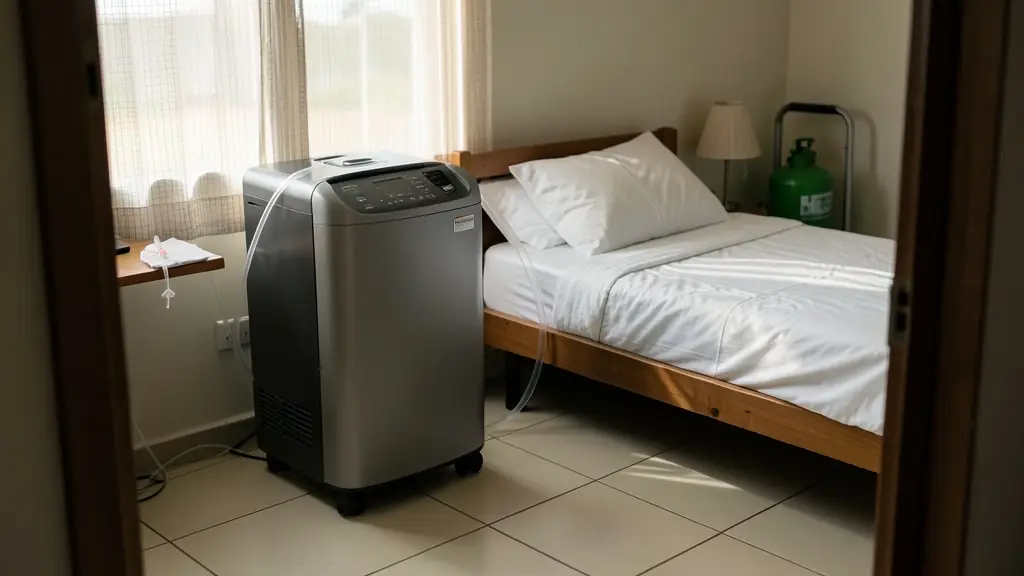
An oxygen concentrator pulls air from the room, filters out most of the nitrogen and delivers oxygen through a nasal cannula or a mask, at the flow your doctor prescribes in litres a minute. People usually come looking after a hospital stay, a lung diagnosis or a script for oxygen at night. The doctor sets the flow and the hours; your job is a unit that delivers it and keeps working when Eskom does not.
Price guideA 5 L/min home oxygen concentrator is listed at about R11,500 at a pharmacy and R11,824 incl. VAT at a medical supply company, both out of stock when read. No monthly hire rate was published on a page we openedA rough guide from published South African prices. The contents, the quantities, the make, delivery and VAT all move it.
Home unit or portable oxygen concentrator
A home unit plugs into the wall, sits by the bed or the lounge chair and usually gives continuous flow. It is heavier and hums, so ask about the noise if it will run in a bedroom. A portable oxygen concentrator runs on a battery, fits in a shoulder bag or on a small cart, and often works in pulse mode, releasing a puff as you breathe in. Not everyone can use pulse mode, and some scripts need continuous flow at night, so the doctor or the respiratory sister decides which suits you.
Load shedding and backup
A concentrator stops the moment the power goes. Plan a backup before the first outage: a medical oxygen cylinder with a regulator, or an inverter and battery sized for the unit's watts. The oxygen duration calculator shows how long a cylinder lasts at your flow, or how long a battery runs the machine. Ask the supplier for the watts and whether the unit restarts by itself when the power returns.
Hire, buy and medical oxygen
Hire suits a few weeks of recovery; buying makes sense for long term use. Hire is usually priced by the month and should include delivery, setting up, a cylinder backup and a service call. Medical oxygen in cylinders comes on a script through a pharmacy or a gas supplier. Ask your medical aid what it needs: many want a script and a motivation. A pulse oximeter helps you keep the readings the doctor asks for.
Safety and servicing
- No smoking, candles, gas heaters or braai fires near the oxygen.
- No oil based creams or petroleum jelly near the cannula; ask the pharmacist for a water based one.
- Keep the unit a hand's width from walls and curtains so it breathes.
- Wash the air filter as the manual says and replace the cannula and tubing regularly.
- If breathing gets worse, call 10177 or 112; never turn the flow up on your own.
Who asks for this
- Families and carers
- A home unit by the bed for a parent on night oxygen, with a cylinder for outages.
- Offices, shops and salons
- A portable unit that lets an employee on oxygen keep working at a desk.
- Factories, mines and sites
- Rarely bought by plants; their clinics usually rely on cylinders and the paramedics.
- Schools, creches and clubs
- A portable unit for a learner on oxygen, agreed with the parents and the doctor.
- Clinics, practices and care homes
- Frail care homes and hospices hiring several units with a service contract.
- Events and venues
- Not stocked by organisers; a guest on oxygen brings a portable unit and spare batteries.
- Farms, lodges and the outdoors
- A portable unit and car charger for a patient on a long road trip or at a lodge.
- Vehicle fleets
- A car charger and a secured cylinder for a patient transport vehicle.
Frequently asked questions
Can I buy an oxygen concentrator without a script?
Some sellers will sell one, but oxygen is a treatment and the wrong flow can do harm. Get the script first; it tells the supplier the flow, the hours and whether continuous or pulse mode is needed.
Will my medical aid pay?
Often, at least in part, for hire or purchase with a script and a motivation from your doctor. Check with the scheme which forms it wants, and get its answer in writing before the unit is delivered.
How much power does a home unit use?
It varies by model and flow; ask the supplier for the watts at your prescribed setting. That number sizes the inverter and battery, and tells you roughly what the unit adds to the electricity bill.
Who will quote me?
Home care equipment dealers, medical supply companies and hire companies near you. We sell and hire nothing ourselves: your one request reaches them, and each sends its own price straight to you.