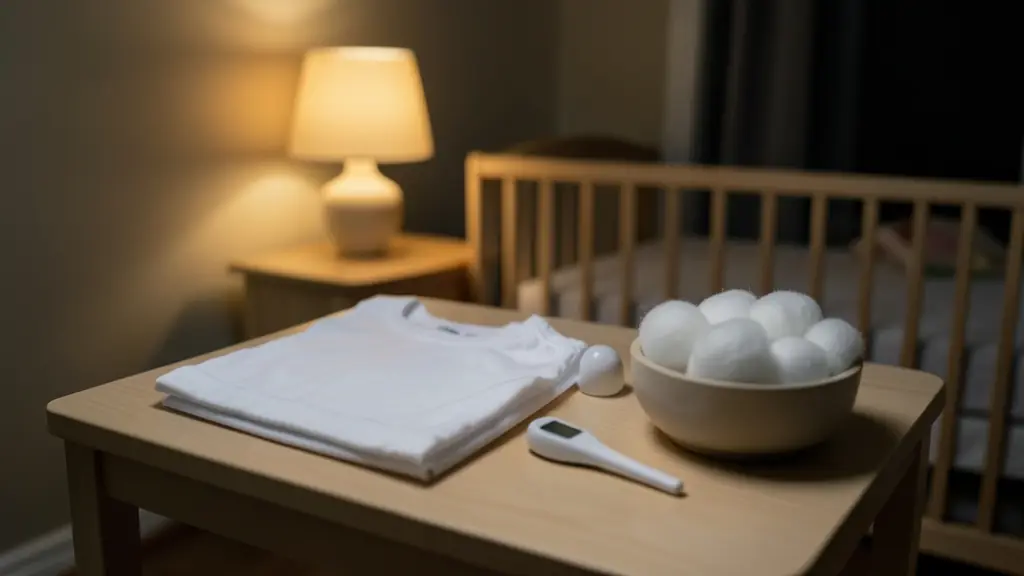
A thermometer in the bathroom cabinet settles the question every parent asks at 2 in the morning: is this child actually hot? This page covers clinical thermometers for people, the kind a family, a creche or a GP's rooms uses, not the ones for cooking or the factory floor. The type you buy decides how easy a reading is on a wriggling toddler and how far you can trust it.
Price guideA pharmacy lists digital stick thermometers from about R58 to R370, forehead and non contact thermometers from about R200 to R1,349, and ear thermometers from about R875 to R1,500A rough guide from published South African prices. The contents, the quantities, the make, delivery and VAT all move it.
Digital, ear and forehead thermometers compared
| Type | Where it reads | Good to know |
|---|---|---|
| Digital stick | Under the arm, in the mouth, or in the bottom for babies where a doctor advises it | Cheap and accurate if held in place until it beeps |
| Ear thermometer | Inside the ear canal | Fast; commonly not advised for small babies, and wax or a bad angle gives low numbers |
| Forehead and no touch | Across or just off the forehead | Handy for a sleeping child or a queue at the creche gate; sweat, a fan or a cold walk in can skew it |
Each method reads a little differently, so stick to one and write down which you used.
What counts as a fever
A temperature of 38 °C or more is commonly called a fever. If the feverish child is younger than about 3 months, take them to a doctor at once, at any hour. For older children and adults, the GP or the pharmacist decides what to do; tell them the number, the method and how the person is behaving. A floppy, hard to wake child, a stiff neck, a rash that does not fade or trouble breathing are reasons to ring 10177 for an ambulance (or 112 on a mobile) or drive straight to the nearest emergency unit. Glass mercury thermometers are no longer advised; if one breaks, ask the clinic how to dispose of it.
Creches, schools and clinic rooms
A creche in Soweto with four rooms usually wants one thermometer per room plus probe covers, so nobody shares an unwrapped tip. Wipe the tip with an alcohol swab between children and let it dry. Keep a spare battery taped inside the lid of the baby first aid kit and tick it off on the first aid kit checklist each month.
What changes the price
Thermometers are priced per unit, with covers sold per box. Ear and forehead models cost more than sticks, and clinic grade units with fast readings and memory cost more again. Order with your other medical supplies to save a delivery fee.
Who asks for this
- Families and carers
- A stick for the baby and an ear model for the older children in the bathroom cabinet.
- Offices, shops and salons
- A no touch model at reception for the staff member who comes in feeling unwell.
- Factories, mines and sites
- A clinic thermometer in the plant's medical room next to the workplace first aid box.
- Schools, creches and clubs
- One per creche room with covers, and a forehead model in the school sick bay.
- Clinics, practices and care homes
- Fast clinic units with covers in every consulting room and the frail care ward.
- Events and venues
- A thermometer in the medical tent for spectators who fall ill at a summer festival.
- Farms, lodges and the outdoors
- A stick in the camp kit for a child who runs a temperature far from town.
- Vehicle fleets
- A thermometer in the medical bag of a school bus or a tour coach on long trips.
Frequently asked questions
Which digital thermometer is best for a newborn?
A digital stick with a flexible tip is the usual buy for a newborn. Whether to read under the arm or in the bottom is for your clinic sister or GP to say, so ask them at the first check up.
Why does the forehead thermometer give a different number each time?
Distance, a damp fringe, a draught or a child who just came in from the cold all change it. Hold it at the distance the instructions give, take two readings, and confirm a high one with a stick.
How often should an ear thermometer cover be changed?
With every reading on a different person, and whenever it is dirty. A cracked or missing lens cover usually means the readings are off.
Can you supply thermometers yourselves?
No. Pharmacies, medical supply companies and surgical suppliers that serve your area get your request and send their prices straight to you.