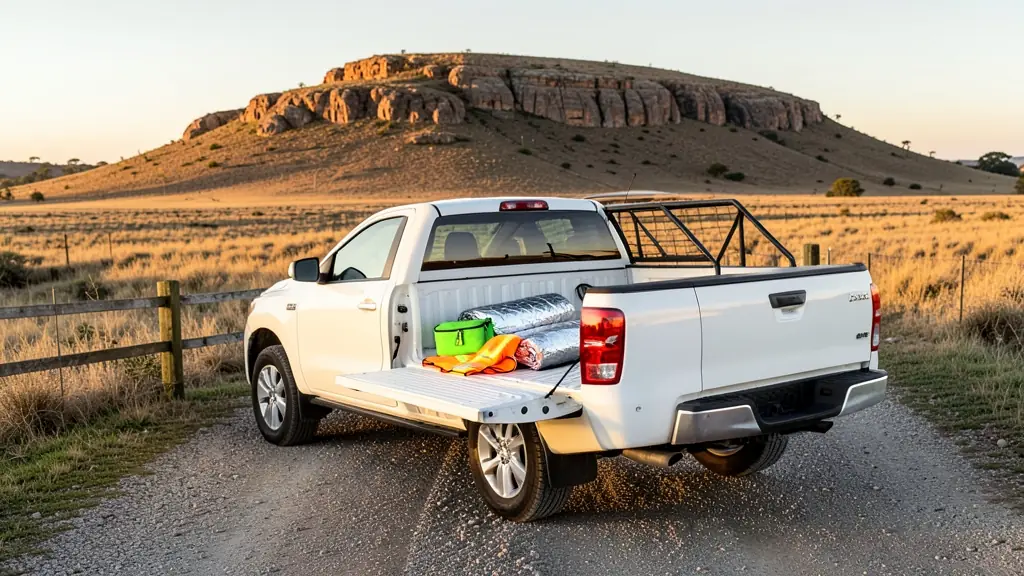
A car first aid kit has a harder life than any kit on a wall. It bakes in a closed boot in January, rattles across gravel in a bakkie and is opened at the side of a road with traffic still moving. The right one is small enough to sit under a seat, sealed against dust and heat, and laid out so a shaken driver finds gloves and a dressing in seconds.
Price guideA pharmacy lists a small first aid travel kit at about R37 and a vehicle first aid kit at about R133. Larger kits for fleets are usually a workplace kit in a bagA rough guide from published South African prices. The contents, the quantities, the make, delivery and VAT all move it.
What fits under a seat or in the boot
For a private car or a bakkie, a soft zip pouch or a slim hard case is enough: a few sterile dressings, two crepe bandages, a triangular bandage, gloves in two sizes, a CPR mouthpiece, a foil blanket, shears and some plasters. Taxis and buses carry more, for more people. Whatever the size, strap it down or fix it with hook tape to the boot carpet; a loose case becomes a missile in a hard stop. Compare the full item list on first aid kit contents.
What summer heat does to a kit
A parked car in the sun gets far hotter inside than the air outside. Plaster adhesive turns soft and peels off the backing, gel sachets and burn gel dressings can split, wound cleaner bottles leak and thin gloves go brittle. Keep the kit under a seat or in the cabin shade, never on the parcel shelf, and open it after every summer to replace anything sticky, swollen or dry.
At the roadside after a crash
Park well clear, hazards on, put on the reflective vest and set out the triangle before you walk to anyone. Ring 10177 for the public ambulance (112 works from any cellphone), or the number printed on your medical aid card. Unless there is fire, fuel or traffic danger, leave a casualty who may have a neck or back injury where they are and keep them talking. Firm pressure on bleeding and a foil blanket against the cold are the general principles; a first aid course teaches them properly, and the paramedics and the hospital decide the treatment.
Fleet orders and road trips
A fleet manager putting kits into 80 delivery bakkies wants one identical kit per vehicle, the same layout in every pouch so drivers know where things are, a tamper seal that shows when it was opened and a refill plan from the start. Set the check dates with the kit restock calculator. For a road trip, add sunscreen, water and the hospitals on your route. Kits are priced per kit by the contents and the case, and fleets usually get a better price per kit on volume.
Who asks for this
- Families and carers
- A pouch under the driver's seat for the school run, holidays and long weekends away.
- Offices, shops and salons
- A kit in the pool car and the sales reps' vehicles that are on the road daily.
- Factories, mines and sites
- Kits in site vehicles, forklift yards and supervisor bakkies that travel between work areas.
- Schools, creches and clubs
- A bigger kit on every sports bus and tour vehicle with the learners' emergency contacts.
- Clinics, practices and care homes
- A backup kit in the home based carer's car and the mobile clinic vehicle.
- Events and venues
- Kits in the marshals' vehicles and golf carts that move around a large venue.
- Farms, lodges and the outdoors
- A sealed kit in the 4x4 for overland trips far from towns and cell signal.
- Vehicle fleets
- One identical kit per taxi, bus, truck or delivery bakkie with a refill schedule.
Frequently asked questions
Must a private car carry a first aid box?
We cannot sign that off for you, so check the current road traffic rules. For a vehicle used for work, many safety officers treat it as part of the workplace under the OHS Act and want a kit in every vehicle; ask your health and safety officer.
Is an auto first aid kit the same as a travel first aid kit?
Close. A vehicle kit leans toward crash injuries: dressings, bandages, a vest and a foil blanket. A holiday travel kit adds blister plasters, bite care and your own medicines.
Can I leave medicines in the car kit?
Heat spoils many tablets, syrups and creams, so most people keep medicines in the cabin bag instead and take them out after the trip. Ask your pharmacist how each one should be stored.
Who will quote for kits for our vehicles?
Kit suppliers and medical supply firms covering your area. We hold no stock; they read your request and send their own prices, so give the number and type of vehicles.