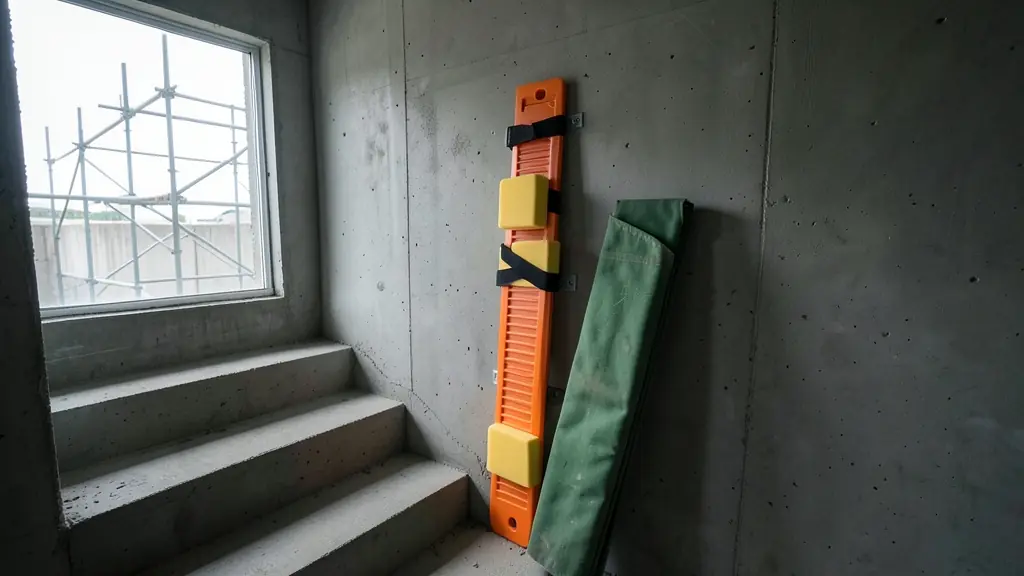
A stretcher is the piece of kit most workplaces buy last and need in the worst moment: a fall from a ladder, a collapse at the back of a warehouse, a rugby player down on the far field. The right one depends on where the casualty will be, how far they must go to reach an ambulance, and the stairs, lifts and doorways on the way out.
Price guideA first aid supply store lists a zip stretcher at about R558, a double fold pole stretcher at R1,158, plastic and wooden spine boards at R1,071 and R1,444, and scoop stretchers at about R2,842 aluminium to R8,250 plasticA rough guide from published South African prices. The contents, the quantities, the make, delivery and VAT all move it.
The kinds, and where each one belongs
- Folding canvas or nylon stretchers: light and easy to store; fine for a school sick bay or a sports club, but no support for the spine.
- Scoop stretcher: splits down the middle so the two halves slide under someone lying on the floor, then lock together. Paramedics like them because the casualty is barely rolled.
- Spine board: a rigid plastic board with straps and head blocks, made for a suspected neck or back injury and for lifting out of tight spots.
- Basket stretcher: a rigid tray for mines, shafts, tanks and rope rescue, where the casualty is lifted vertically.
- Carry chair: a chair with tracks or wheels for taking a seated patient down a stairwell.
- Stretcher trolley: wheels and a mattress for a clinic, a stadium medical room or a large venue.
Measure the way out before you order
The stretcher that would not fit in the lift is a story every site agent has heard. Measure the lift car, the tightest turn on the stairs and the narrowest door between the work area and the place an ambulance can park. A long spine board may need the stairs, so a carry chair or a scoop can suit a multi storey office better. Ask the supplier for the length and folded size of each model.
Storage, cleaning and checks
Hang it on a wall bracket near the first aid box, not in a locked storeroom. Wipe it down with a disinfectant after each use, check the straps, buckles and head blocks for wear, and keep the cover on canvas models out of the sun. A trauma site often pairs one with bleeding control kits; the workplace first aid calculator helps you see how many first aiders will be on each shift to carry it.
Moving a casualty is a trained job
Do not move an injured person unless there is danger where they lie (fire, traffic, a collapsing structure). Phone 10177 (public ambulance) or 112 on a mobile, or the private number printed on the medical aid card, and keep the person still until help arrives. Log rolls and strapping are taught on a first aid course; paramedics decide how and when the casualty travels.
Who asks for this
- Families and carers
- Rarely needed at home; farms and smallholdings far from town sometimes keep a folding one.
- Offices, shops and salons
- A carry chair for a multi storey office where the lift stops in a power cut.
- Factories, mines and sites
- Spine boards and basket stretchers for falls from height, mine shafts and confined spaces.
- Schools, creches and clubs
- A folding stretcher in the sick bay and one on the sports field for match days.
- Clinics, practices and care homes
- Stretcher trolleys and scoops for clinics, care homes and private patient transport.
- Events and venues
- Stretchers carried by the medics at races, concerts and matches, with a route to the ambulance.
- Farms, lodges and the outdoors
- A light folding stretcher or a basket for lodges, trail routes and rescue on rough ground.
- Vehicle fleets
- A scoop or spine board carried in a site response vehicle or a mine bakkie.
Frequently asked questions
Which stretcher does a construction site need?
Most site safety files plan for a spine board with head blocks, because falls are the main risk, plus a folding stretcher for lesser injuries. Your site's own risk assessment, signed off by the safety officer, settles what goes on the list.
Is a scoop stretcher better than a spine board?
They do different jobs. A scoop lifts someone off the floor with little rolling; a spine board holds the body rigid for a longer carry or a tight extraction. Many mines and stadiums keep both.
How are stretchers priced?
Per unit, by the type, the material, the straps and head blocks included, and whether a wall bracket or a carry bag comes with it. Basket stretchers and carry chairs cost the most. Delivery and VAT are extra.
Can I hire a stretcher for an event?
Some hire companies and event medical companies bring their own with the crew. If you are the organiser, ask the medical provider what they carry before you buy anything.
Related topics
Work it out first
- Workplace first aid calculatorEmployees, shifts, sites, floors and the kind of work in: the first aid boxes and first aiders to plan for
- First aid kit checklistA kit type and the number of people in: a printable tick list of contents with guide quantities
- Kit restock calculatorKits, people, how often small injuries happen and the months between checks in: a reorder list and check dates