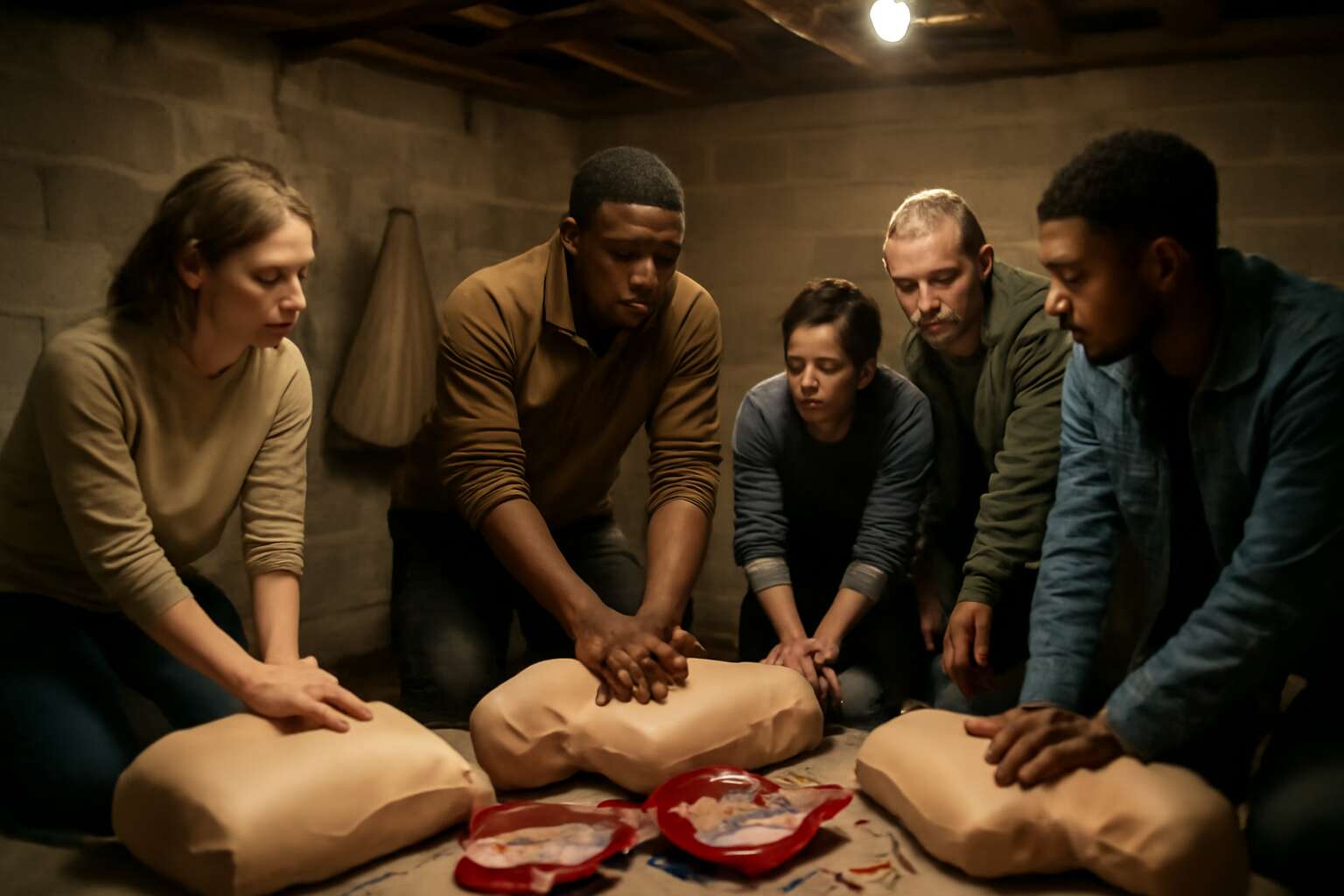
Preparing for Emergencies: Why War-Time First Aid Training Matters
Key Trauma Responses in Conflict Settings
In war-torn streets, seconds determine survival—nearly 70% of civilian injuries could be mitigated with rapid, trained response. This is where first aid training during war becomes more than a skill—it is a lifeline. South African communities, from townships to rural clinics, face unpredictable emergencies that demand ready hands and clear minds.
In conflict settings, rapid recognition of key trauma responses can alter outcomes.
- Airway compromise and respiratory distress
- Uncontrolled bleeding and hemorrhage
- Shock and perfusion failure
Training that speaks to humility and courage helps volunteers, caregivers, and families act with calm restraint when hours matter. The goal is to nurture moral clarity and practical readiness in the face of uncertainty.
Bleeding Control and Hemorrhage Management
Seconds matter when blood speaks the loudest, and conflict zones sharpen the clock! In war-torn environments, uncontrolled bleeding is a leading cause of preventable deaths, yet rapid bleeding control can rewrite the odds for a wounded neighbour.
For South African communities, this is where first aid training during war becomes a lifeline—humility, courage, and calm, practical action all rolled into one reliable response.
Bleeding control rests on simple, repeatable steps: direct pressure, elevation, and, when needed, a tourniquet applied correctly. Hemostatic dressings can help, but they work best when responders understand timing and context.
- Direct pressure with clean wraps and steady, firm pressure
- Tourniquet use as a last resort—apply proximal to the wound and record the time
- Hemostatic dressings and improvised packing to sustain pressure
Airway, Breathing, Circulation Essentials
In South Africa’s resilient towns and crowded streets, every urgent moment tests the mettle of community care. First aid training during war reframes fear into precise action, turning instinct into a coherent response when chaos arrives.
Preparing for emergencies by focusing on Airway, Breathing, and Circulation Essentials keeps teams grounded when the environment tightens. The essentials nurture calm assessment and clear communication—foundations that endure whether a clinic stands at a checkpoint or a home becomes a makeshift aid station.
- Airway: recognizing obstruction and maintaining a clear path
- Breathing: observing rate and effort under pressure
- Circulation: noting color, pulse, and signs of shock
These macro-areas anchor trained responders in South Africa, delivering dignified care amid interruptions, dust, and distant sirens—the value of first aid training during war is evident.
Triage and Prioritization under Pressure
In South Africa’s crowded streets and war-weary corridors, field reports show that 72% of urgent outcomes improve when triage principles are applied swiftly. first aid training during war reshapes fear into steps, guiding teams through uncertainty with calm, clear intent.
Under pressure, priorities must emerge with the echo of a whistle and a steady voice. Training teaches teams to assess, categorize, and mobilize with concise handoffs. When resources thin, this training acts as a compass, keeping order and dignity intact even as dust swirls and sirens wail.
- Clear roles and briefings
- Calm communication and concise handoffs
- Compassion and dignity under pressure
In this context, prioritization under pressure becomes second nature, and every quiet instruction breathes hope into a crowd. first aid training during war equips responders to keep faces calm and hands deliberate, turning chaotic moments into measured care across South Africa’s communities.
Personal Protective Equipment and Scene Safety
In conflict zones where sirens cut the dust and the night hums, preparedness is a living shield. Training matters because it steadies nerves and turns fear into purposeful care.
Personal Protective Equipment and Scene Safety act as a protective chorus—science over superstition. Through training, responders read hazards, position themselves, and guide teams with dignity amid noise and risk.
- Gloves and eye protection
- Respiratory protection
- High-visibility clothing
- Sturdy footwear
Across South Africa’s streets and clinics, this discipline keeps voices steady when environments tilt. It grants calm assessment, compassionate care, and quiet leadership when chaos swirls. This is first aid training during war.
Foundational Skills for Crisis Field Care
Medical History and Rapid Assessment
In conflict zones, minutes shape outcomes. Foundational Skills for Crisis Field Care begin with a concise medical history. In a war zone, essential signals are pulled fast: allergies, current medications, chronic conditions, and recent injuries. This data helps chart the next steps without unnecessary delays.
- Allergies and current medications
- Past medical history relevant to the present concern
- Recent injuries or surgeries
- Last oral intake and hydration status
Rapid assessment is a structured snapshot, not a narrative. You scan the scene, establish baseline function, and note environmental hazards. For South Africa’s frontline teams, this rapid check keeps focus and readiness high in first aid training during war.
CPR and Shock Management in Low-Resource Environments
In the harsh calculus of war, time is tissue and hope rests on rapid, lucid action. Foundational Skills for Crisis Field Care in low-resource environments—essential for first aid training during war—must weave CPR and shock management into a single, portable framework. South Africa’s frontline teams know that even with scant gear, disciplined breath, deliberate compressions, and calm coordination can bend outcomes toward survival, and training must stay relentlessly practical, human, and adaptable.
CPR and shock care in austere settings hinge on clarity: recognize cardiac arrest early, sustain flow, and manage breaths with whatever is on hand. The aim is resilience, not perfection—keeping a patient alive long enough to reach definitive care while conserving the responder’s energy and safety.
- Prioritize continuous chest compressions and minimize interruptions.
- Leverage improvised airway and ventilation techniques when equipment is scarce.
- Reassess frequently and coordinate evacuation with available resources.
Wound Care, Dressings, and Infection Control
Foundational wound care in crisis settings leans on measured touch and scarce resources. Dressings become not only barriers against contamination but banners of dignity; infection control is a quiet covenant between helper and patient. In South Africa’s frontline, care travels with improvised materials, a disciplined routine, and a steady breath under fire—proof that compassion can endure even when gear is spare. first aid training during war anchors this resolve in everyday practice.
- Principles of asepsis that travel when supplies are scarce
- A flexible approach to dressings and contamination control
- Respect for patient dignity and infection risk in crowded settings
The goal is to preserve life with gentleness and resolve, lifting patients from chaos toward the chance of recovery and dignity amid ruins.
Fracture Stabilization and Immobilization
In crisis zones, a single well-placed splint can shorten a life’s road to recovery. Foundational Skills for Crisis Field Care emphasize steady hands and measured judgment when bones threaten to betray a patient. Fracture stabilization begins with calm assessment, preserving alignment, and choosing a makeshift splint that travels in a rucksack. In South Africa’s frontline, improvisation meets care—board, stick, or rolled blanket becomes a rigid ally, padded to ease pressure. We shield nerves and vessels and keep movement limited to prevent secondary injury; every action is a quiet act of dignity under fire.
- Use a rigid improvised splint along the limb, spanning joints above and below.
- Pad with clothing; secure gently with cloth to protect soft tissue.
- Check distal circulation, sensation, and movement after immobilization; adjust as needed.
The ethos of first aid training during war is in these careful, patient-centered motions—keeping hope intact when resources are scarce.
Burns, Chemical Exposure, and Triage Cues
In the crucible of conflict, burns demand measured care. Foundational Skills for Crisis Field Care teach calm assessment, infection prevention, and patient comfort as a shield against the long arc of healing. In South Africa’s frontline theatres, first aid training during war becomes a quiet vow—to tend with dignity when the clock ticks and supplies dwindle.
Chemical exposure casts a more elusive threat: vapors cling, residues linger, and eyes or skin demand gentle, professional handling. The skill set emphasizes rapid recognition, protective spacing, and coordinated handoffs to higher care, keeping responders safe and victims shielded from secondary harm.
Triage cues in the maelstrom become a compass: prioritizing those most likely to survive, distinguishing those needing evacuation, and maintaining order when chaos presses in. Breath, mobility, and responsiveness become the language guiding teams through crowded wards and open fields alike.
Training Formats for Conflict Zones and Displaced Populations
In-Person versus Remote Scenarios in War Zones
Training formats in conflict zones are life support, not luxury. As one field medic quips, ‘If the syllabus can ride in a rucksack, it should.’ In-person workshops, remote simulations, and hybrid drills each find a place when populations are displaced and clinics scarce. The aim is practical, adaptable knowledge that travels with the people who need it most, not just the classroom—first aid training during war included.
Here are format realities that keep first aid training during war relevant for displaced communities and frontline teams:
- In-person field workshops for hands-on skills, peer feedback, and safety coaching.
- Remote simulations and offline modules that travel with mobile units and shelters.
- Hybrid models that blend quick on-site refreshers with asynchronous learning for continuity.
Ultimately, decision-makers in South Africa and beyond lean toward flexible, context-aware formats that honor safety and dignity while keeping the essence of first aid training intact.
Mobile Training Units and Refugee Camp Programs
In active conflict zones, care dries up fast, and the golden hour matters! Field reports show that trained responders can tilt outcomes even when clinics vanish; this makes first aid training during war a practical lifeline, not a luxury.
Training formats must travel with people: mobile training units deliver hands-on refreshers in markets, shelters, and displacement camps, while offline modules lock to rugged tablets and solar-powered kits. From the field, I’ve seen mobile units arrive. Refugee camp programs blend on-site coaching with asynchronous learning so knowledge sticks across shifting lines of control.
- Mobile Training Units that travel with aid convoys and shelters
- Refugee camp programs offering peer-led practice and safety coaching
- Hybrid refreshers combining quick on-site drills with offline modules
Decision-makers in South Africa and beyond favour formats that respect safety and dignity while keeping essential skills intact. This practical approach keeps care portable and relevant, whatever the terrain.
Simulations, Drills, and Low-Fidelity Practice
Chaos is the constant, and in war-torn zones, life-saving knowledge must be portable. Field reports show responders who train in realistic simulations cut on-scene decisions by up to 40%. This is where first aid training during war becomes a lifeline, not a luxury, when clinics vanish and corridors fracture under shellfire. Training travels with people, carrying competence wherever lines shift.
Simulations, drills, and low-fidelity practice come in three flavors that travel as easily as a convoy of hope:
- Tabletop scenarios that map fast decisions under pressure
- Low-cost, hands-on drills using improvised props for on-the-spot skills
- Peer-led practice and brief coaching cycles to lock in muscle memory
For decision-makers in South Africa and beyond, formats that couple safety with dignity stay practical and portable—an attribute that matters in urban sprawl, crowded shelters, and shifting camps. This emphasis on first aid training during war resonates with local realities, where improvisation keeps care alive.
Language Access and Cultural Considerations
Across conflict zones, training that travels with people can cut on-scene decision time by up to a third. In war-torn urban spaces, when clinics vanish and corridors fracture under shellfire, first aid training during war becomes a portable lifeline that keeps help moving!
Training formats for conflict zones and displaced populations must be portable and adaptable. Think compact modules that fit in a backpack, tabletop scenarios rehearsing decisions under pressure, and micro-lessons that fit into waits at shelters or transit hubs.
- Multilingual, pictorial materials
- Local trainer networks and train-the-trainer models
- Micro-learning modules for on-the-go refreshers
Language access and cultural considerations shape who learns and how skills are applied. Materials in local languages, narratives reflecting community norms, and facilitators from the population boost engagement. In South Africa, content should align with Zulu, Xhosa, and Afrikaans, while honoring gender and authority norms—this is essential for first aid training during war.
Certification, Recertification, and Skill Maintenance
“Every minute saved is a heartbeat longer,” a frontline medic often says. In South Africa, first aid training during war must ride shotgun with people—portable, modular, and adaptable enough to travel from shelters to transit hubs. Certification, recertification, and ongoing skill maintenance are built into the format, not added as afterthoughts. We’ve learned that trainees earn micro-credentials that reflect real decisions under pressure, while refresher cycles align with uneven shelter timetables!
- Portable, backpack-ready modules
- Micro-learning bursts for on-site refreshers
- Local trainer networks and train-the-trainer programs
- Flexible certification and recertification timelines
This structure supports South African learners and mixed-language communities, ensuring skills endure beyond the frontline. This is especially vital in environments where first aid training during war shapes everyday survival.
Safety, Ethics, and Legal Considerations in Combat Contexts
Scene Safety, PPE, and Personal Risk
Scene safety isn’t optional in a shell-cratered city—every minute is a risk calculation. A veteran medic once quipped, “If you can’t secure the scene, you can’t save anyone.” This is where first aid training during war becomes more than knowledge; it becomes restraint and a clear-eyed plan!
Ethics and law ride shotgun the moment you apply care. In combat contexts, the duty to do no harm sits beside legal protections that shield responders and patients alike. Consider:
- Legal frameworks such as international humanitarian law guide actions
- Consent, privacy, nondiscrimination, and cultural norms matter
- Documentation and accountability ensure transparency and learning
From a South African perspective, this work means balancing risk with responsibility. PPE and scene awareness remain frontline safeguards; responders must temper risk, uphold standards, and avoid bravado.
Legal Protections for First Responders in Conflict Areas
In a shell-cratered city, every step is a calculation of risk; a stumble can mean life or loss. In this crucible, first aid training during war becomes discipline and mercy, guiding hands when there is no time for doubt.
- Compliance with international humanitarian law and relevant national statutes
- Respect for consent, dignity, privacy, nondiscrimination, and local cultural norms
- Accurate, confidential documentation that supports learning and accountability
Ethics and law ride shotgun as care begins. International humanitarian law frames action; consent, privacy, nondiscrimination, and cultural norms shape every touch. Documentation and accountability stretch transparency into practice, turning survival into a shared, teachable moment.
From a South African lens, PPE and scene awareness remain frontline safeguards. Responders temper risk with standards, not bravado. And as care crosses borders of conflict, first aid training during war anchors practice in humanity and law.
Ethical Dilemmas: Prioritization and Resource Allocation
Safety in combat is a living discipline, not scenery. Scene reading, hazard awareness, and PPE discipline shape every action; a stumble multiplies harm. In South Africa’s varied risk landscape, first aid training during war trains the eye for danger and the mind for rapid decisions.
Ethical dilemmas arise when supply dwindles. The moral compass seeks maximum good while preserving dignity and trust—a balance navigated with humility. In this arena, first aid training during war becomes more than technique; it is moral literacy.
- Equitable decisions under scarcity
- Transparent, compassionate communication
Legal considerations anchor care in international humanitarian law and national statutes. The rules guide permissible actions, protect the wounded, and shape volunteer conduct; in practice this yields accountability and auditable reasoning that travels across borders.
Infection Control and Waste Management in the Field
“Safety is not scenery,” a medic whispered amid the rattle of shellfire. In South Africa’s varied risk landscape, first aid training during war becomes a compass for courage, guiding choices under pressure while preserving dignity when danger tightens its grip!
Infection control and waste management in the field are not afterthoughts; they are acts of care that prevent tragedy from spreading. Clean hands, clean wounds, and proper waste streams protect the vulnerable and preserve scarce resources.
- Hand hygiene and PPE discipline
- Segregation and containment of contaminated waste
- Safe handling of sharps and sterile supplies
Ethics and law anchor every action—international humanitarian law, patient rights, and transparent accountability travel with responders across borders. In combat contexts, the moral balance rests on compassion, restraint, and lawful care for the wounded.
Mental Health Support for Caregivers and Trainees
“In the theatre of shellfire, restraint is as vital as skill.” Safety, ethics, and legal considerations in combat contexts form the quiet backbone of first aid training during war. They anchor brave action to humane conduct, guiding responders when fear tightens its grip and every decision matters.
International humanitarian law, patient rights, and transparent accountability travel with responders across borders. Triage decisions, consent, and privacy must survive the blast of urgency; leaders cultivate a culture where courage never erases duty to do no harm, and accountability is the juridical ballast amid chaos.
Mental health support for caregivers and trainees is not optional; it is the oxygen of endurance. Practical supports—peer debriefs, confidential counseling, and trauma-informed supervision—keep care humane when the burden presses hard. When resilience is tended, first aid training during war remains humane, effective, and sustainable.
- Structured peer-support sessions
- Confidential psychological first aid
- Trauma-informed supervision and reflective practice
Organizational Implementation: Building Resilient Programs
Partnerships with NGOs, Governments, and Hospitals
Five minutes of coordinated action can mean the difference between life and death in a war zone, and it starts with an iron-clad network. In South Africa’s crowded health landscape, organizational implementation means weaving NGOs, government agencies, and hospital systems into one durable fabric. This is where first aid training during war becomes more than a course!
- Clear governance and escalation routes
- Joint curricula aligned to local needs
- Mutual accountability and data sharing
Such partnerships anchor training into policy, supply chains, and field safety, ensuring that learning translates into timely action wherever conflict unfolds in Africa’s southern corners.
Curriculum Design: Trauma Modules and Scenario-Based Learning
Organizational implementation in South Africa’s crowded health landscape is about turning policy into practice. Resilient programs emerge when leadership wires NGOs, government agencies, and hospital networks into one durable fabric. This is how learning translates into timely action on the ground—first aid training during war becomes a standard of care woven into frontline practice.
Curriculum design focuses on trauma modules and scenario-based learning that reflect real battlefield triage and civilian survival demands. Content is modular, language-accessible, and adaptable to mobile platforms, ensuring frontline teams can learn in disrupted environments. Realistic drills encourage swift triage, resource prioritization, and clear handoffs to care networks, so participants translate lessons into action in the chaos of the moment.
- Context-driven drills that mirror local realities
- Feedback loops and governance that keep curricula relevant
Fundraising, Equipment, and Supply Chains
Every minute a hospital waits for supplies, a life hangs in the balance. Organizational resilience in South Africa’s crowded health system turns promises into durable practice. When budgets are stable, procurement is local, and leadership unites NGOs, government agencies, and hospital networks, frontline teams gain the continuity to teach and sustain life-saving skills. This approach anchors first aid training during war in everyday frontline practice.
- Fundraising that converts short-term grants into multi-year commitments
- Equipment readiness: modular kits, durable simulators, routine maintenance
- Supply-chain resilience: regional hubs, vetted suppliers, rapid restock protocols
Together, fundraising, equipment readiness, and supply-chain resilience anchor scalable first aid training during war, turning policy into practice when every minute counts.
Monitoring Outcomes: Metrics and After-Action Reviews
In conflict zones, organizational implementation is a lifeline. Up to 40% more lives can be saved in the first hour when leadership aligns funding with frontline needs, turning first aid training during war into durable practice.
Organizational Implementation: building resilient programs relies on cross-sector leadership and repeatable, locally grounded training.
- Unified leadership across NGOs, government, and hospitals
- Modular, locally relevant training paths
- Funding that bridges grants to multi-year commitments
Monitoring outcomes translate field experience into learning cycles; use clear metrics and timely after-action reviews.
- Coverage, retention, and time-to-treatment metrics
- Structured after-action discussions with frontline teams
- Curriculum updates from findings
This continuous loop cements essential life-saving skills as everyday practice across South Africa’s frontline networks.
Community Outreach and Sustainable Training
Conflict presses every thread of an organization. When leadership aligns funding with frontline needs, up to 40% more lives can be saved in the first hour. That truth guides our approach to building resilient programs across South Africa’s frontline networks.
We weave unified governance among NGOs, government, and hospitals into one fabric, then stitch in modular, locally grounded training paths that fit real communities. Funding strategies bridge grants to multi-year commitments, ensuring durable support for first aid training during war.
On the ground, outreach converts classrooms into lifelines and daily practice. This communal approach keeps skills alive, empowering caregivers, volunteers, and clinicians to act with confidence when every minute counts.

0 Comments