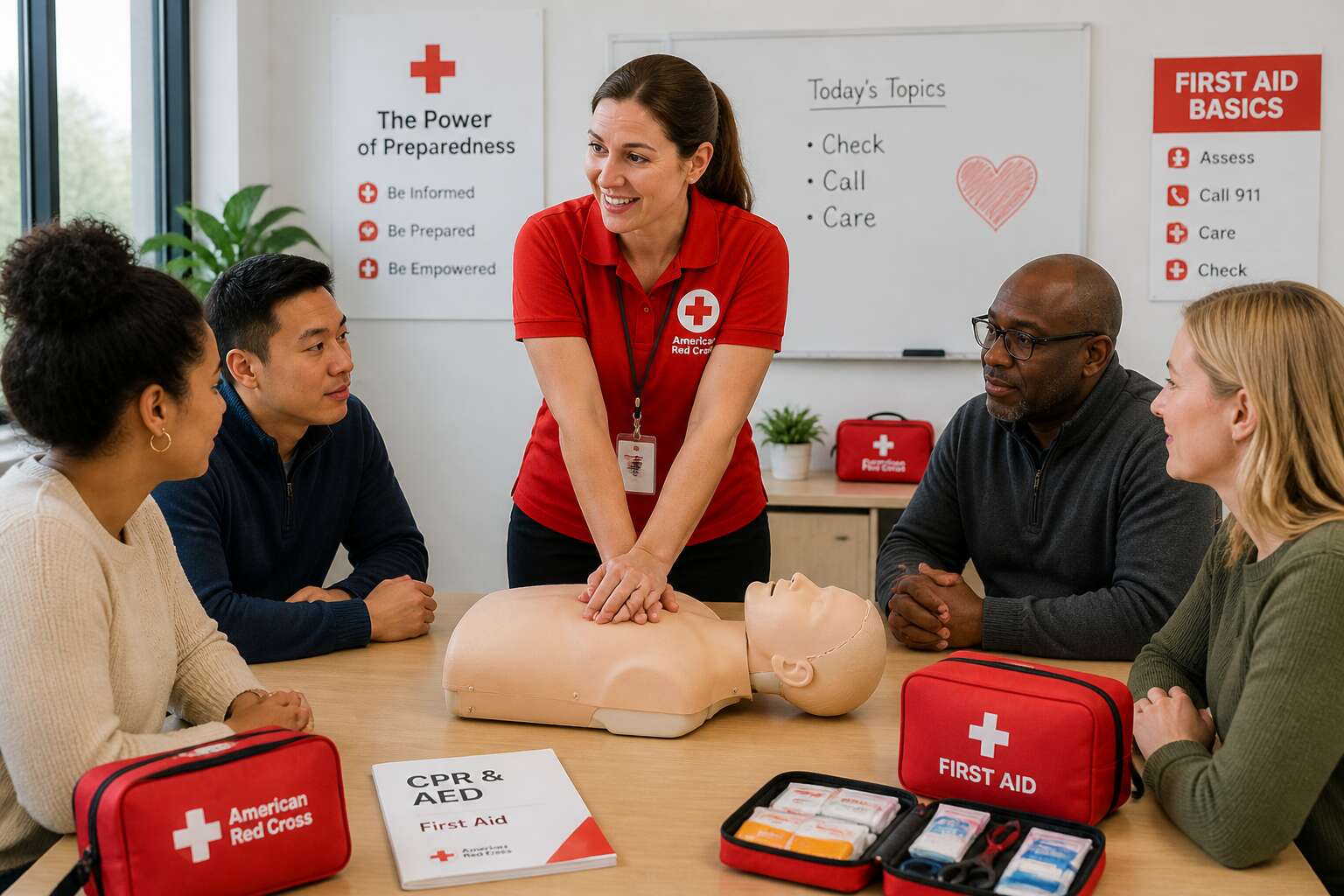
Why First Aid Certification Matters
Workplace Compliance and Legal Requirements
A single expired certificate can derail your liability defence. South Africa’s Occupational Health and Safety Act obligates employers to ensure emergency readiness. Our team saw a client face a Department of Employment and Labour inspection without current training records. The consequences were fines, legal fees, and diminished trust. Certification matters because it is tangible evidence of duty. Compliance requires verifiable, accredited training. Search for first aid training near me. Ensure the provider meets Health and Welfare SETA standards.
Inspectors typically request:
- A register of certified responders per shift
- Valid, unexpired certificates
- An emergency response plan aligned with your risk assessment
These documents establish reasonable care. Without them, your compliance posture weakens. When you evaluate courses, prioritise workplace-specific protocols. Certification becomes your proof of duty.
Building Confidence in Emergency Situations
A sudden silence in a packed boardroom. A waiter choking behind the counter. Most people freeze, not out of indifference, but because their minds offer no clear sequence of actions. Certification supplies that missing structure.
Through repeated scenario practice, you develop a reliable response pattern. Your hands learn what your brain struggles to recall under pressure. I have watched trainees move from visible panic to measured response after just one focused session. That shift is not about courage. It is about preparation!
- Recognising early warning signs
- Prioritising immediate threats
- Speaking clearly to emergency dispatchers
Searching for first aid training near me should lead you to a course that demands active participation. Confidence is not a personality trait. It is a skill built through deliberate repetition. Once you have performed the motions, you carry that certainty into every room you enter.
Protecting Loved Ones and Colleagues
When my neighbour’s toddler swallowed a marble, the mother stood paralysed. Her hands shook while the child gasped. A basic skill, the recovery position, would have given her something to do. Certification turns helplessness into a sequence of steps. You move with purpose instead of panic.
Colleagues share your daily rhythms. If someone collapses at the desk beside you, your response determines the outcome. You learn:
- How to check for breathing
- How to position the head
- How to apply steady pressure
These are learnable acts. Searching for first aid training near me is the first move toward protecting the people around you.
Boosting Career Prospects and Employability
Every interview is a silent interrogation. The employer reads your history for evidence of composure. A first aid certification is documented proof that you have faced the unexpected and did not flinch. In South Africa, where workplace accidents remain a real concern, this credential carries weight.
Consider what the certificate demonstrates to a hiring manager:
- Ability to assess risk quickly
- Capacity to act under stress
- Willingness to take responsibility
These are not abstract virtues. They are observable behaviours. When you complete first aid training near me, you acquire a practical skill that translates directly into employability. Employers notice this! I have watched hiring managers scan for this credential. They know that a certified employee reduces downtime and contributes to a safer environment. Your certification becomes a point of differentiation in a crowded applicant pool.
Types of First Aid Courses Available
Basic First Aid and CPR Combination Programs
When cardiac arrest strikes, the average South African emergency response time in urban areas can exceed 15 minutes. That is an eternity when every minute without CPR reduces survival chances by roughly ten percent. A standard first aid course bridges that gap, teaching you to manage bleeding, fractures, and shock while waiting for professional medics. The beauty of these programmes is their adaptability. Most training providers offer one day courses for those with limited time, yet the depth of practical skill covered is substantial. You will leave with the ability to assess a scene, prioritise casualties, and act with deliberate calm.
For those seeking comprehensive preparedness, combination programmes merge first aid fundamentals with CPR certification and automated external defibrillator (AED) usage. This integrated approach mirrors real world scenarios where a casualty might require airway management, chest compressions, and wound care all within the same incident. The practical sessions are rigorous, often using manikins that provide real time feedback on compression depth and rate. Many South African workplaces actively encourage this dual certification because it creates a versatile responder, not just a certificate holder.
The course spectrum offers something for every level of commitment:
– Basic First Aid: Covers wound care, burns, fractures, and medical emergencies.
– CPR and AED Certification: Focuses exclusively on cardiac events and rescue breathing.
– Advanced First Aid: Incorporates oxygen administration and patient handling.
– Combination Programmes: Merges all the above for complete coverage.
When you search for first aid training near me, you will find that most accredited providers in Johannesburg, Cape Town, and Durban structure their courses around the same national standards, ensuring consistency across provinces. The real differentiator lies in the instructor’s ability to create challenging scenarios. Some facilities simulate high traffic accident scenes or industrial incidents, forcing you to think under pressure. This practical grit is invaluable, because paper knowledge evaporates, but muscle memory persists. Choose a course that offers protective gear and supplies you can keep, ensuring your skills remain relevant long after the final assessment.
Pediatric First Aid for Parents and Caregivers
Pediatric first aid courses cater to the unique physiology of small humans, who can deteriorate faster than adults. Parents and caregivers learn to manage choking, febrile seizures, and allergic reactions. When you search for first aid training near me, look for courses that include infant CPR manikins and dosage charts for age appropriate care.
- Choking relief for infants and children
- Fever and seizure management
- Poisoning and household hazard response
These courses often run over a weekend, because your child’s crisis will not wait for a weekday. The practical sessions simulate real tantrums, spills, and unhelpful pets. You will learn to stay composed while a small person turns blue. That composure is the real curriculum.
Wilderness First Aid for Outdoor Enthusiasts
The bushveld offers no trauma unit with Wi-Fi. When you search for first aid training near me, consider a wilderness specific course, because a twisted ankle on a kloofing trail is not the same as one on a pavement. We are talking prolonged care, improvised splints, and evacuation decisions.
You will learn to handle snakebite, dehydration, and hypothermia while the wind steals your bandages. A solid course covers:
- Improvised splinting with trekking poles
- Tick bite fever identification
- Emergency signalling for rescue teams
These courses assume no ambulance will arrive. The practical simulations happen in actual veld, not a classroom. You will practice keeping a patient stable for hours, which requires stamina and nerve.
Emergency First Response for Workplace Settings
Office emergencies have their own character. One moment you are debating coffee quotas, the next someone is choking on a biscuit. Emergency First Response for workplace settings focuses on scenarios specific to office environments, from cardiac arrests in the boardroom to burns in the breakroom kitchen. This course prioritises rapid assessment and clear communication with paramedics.
When you search for first aid training near me, look for a provider that includes workplace-specific drills. The syllabus typically covers:
- Adult CPR and AED usage
- Choking relief for conscious and unconscious victims
- Managing workplace injuries like cuts and fractures
These courses also address the awkwardness of helping a colleague. Professional distance meets practical care. You will learn to act without hesitation, even when the patient is your manager!
Online, Blended, and In-Person Training Formats
Searching for first aid training near me often leads to a choice between three delivery formats: fully online, blended, and in-person. Each serves a different schedule and learning style. Online courses offer flexibility for unpredictable hours. You work through modules at your own pace, covering theory like wound assessment and emergency response. The practical component remains absent, which matters for skill-based confidence.
Blended courses combine both approaches. The theory is online, then you attend a single practical session to demonstrate skills like CPR and bandaging. This suits busy professionals who want verification without weekly class commitments.
In-person training is the traditional route. A classroom, an instructor, mannequins, and real-time questions. There is an immediacy to it! The instructor notices your hand placement, your rhythm, your hesitation.
For many South Africans, the format matters as much as the content. The best choice depends on how you learn and when you need certification. That is what separates one first aid training near me option from another.
How to Choose the Right Training Provider
Accreditation and Recognized Certification Bodies
The impulse to grab the phone and pay for the first course that appears when searching for “first aid training near me” is powerful, but your wallet and your conscience will thank you for a moment of scrutiny. A certificate is only as good as the organisation that issued it, and in South Africa, the landscape is littered with outfits selling dodgy credentials. You need a provider who is accredited by a recognised ETQA, such as the HWSETA, and who adheres to the guidelines of the Department of Health. Do not be shy to ask for their accreditation number and verify it independently.
A legitimate training provider will happily discuss their credentials. They will not flinch when you ask about their instructors’ current certifications or the ratio of theory to practical work. Be wary of courses that promise certification in a single afternoon without a substantial practical component. Proper first aid training requires you to physically demonstrate your skills on a dummy, not just watch a video.
– Check for a registered and verifiable accreditation number.
– Scrutinise the instructor’s qualifications and experience.
– Ask about the course material and whether it aligns with current SANS standards.
– Look for a provider that offers continued support or refresher material.
When you do find a few candidates in your search for “first aid training near me,” compare what they actually offer. The cheapest option is rarely the best value. A reputable provider will use quality equipment and provide you with clear, practical feedback. Find a course that leaves you feeling prepared, not just processed and handed a piece of paper.
Class Size and Practical Hands-On Practice
When you search for first aid training near me, class size matters more than you might expect. A room with twenty students and one instructor leaves little room for individual feedback. Smaller groups, ideally ten or fewer, give each participant time to practice and receive corrections during the session.
Hands-on practice develops capability. Trainees need repetitions on manikins, bandages, and splints. They need to feel the resistance of a chest compression and the placement of a pressure dressing. I have attended courses where participants only watched demonstrations. That is not training.
The ratio of instructor to student, and the amount of equipment available, determine how quickly skills develop. Passive observation does not build proficiency. Active participation does.
Course Materials, Manikins, and Learning Aids
When you evaluate first aid training near me, inspect the equipment before you commit. A modern manikin with replaceable airways allows repetitive practice without hygiene concerns. Older models may look fine but often lack the feedback mechanisms that show compression depth.
Course materials should match the current South African resuscitation guidelines. Manuals with clear illustrations and recent publication dates set a reliable baseline. Some providers offer digital resources for revision after the course ends.
- Manikins with visible chest rise
- Training defibrillators with voice prompts
- Bandages and splints in sufficient quantities
These learning aids determine whether a session becomes a rehearsal or an observation. A provider that stores broken manikins in a cupboard reveals its priorities clearly.
Student Reviews and Community Reputation
When searching for first aid training near me, student reviews offer a glimpse into the instructor’s character. People rarely mention accreditation in their testimonials. They remember whether the trainer stayed late to help someone master a bandage technique.
Community reputation travels through workplaces and neighbourhoods. Ask a local clinic or a security company which provider they trust. Their answer carries more weight than a glossy website. A provider that returns year after year to the same venues earns a measure of trust.
Signs of a reputable first aid training near me include:
- Repeat bookings from established organisations
- Reviews praising individual attention
- Instructors who answer follow-up questions without charge
These signals reflect an operation that values relationships over volume. A single enthusiastic review could be a fluke. A pattern of consistent feedback across years points to genuine reliability.
Scheduling Flexibility and Location Convenience
Reputation alone does not guarantee a provider will fit your calendar. A first aid training near me that only offers weekday mornings creates friction for night shift workers or parents juggling school pickups.
Location convenience deserves equal attention. A two hour round trip can drain your focus before the first practical drill. Look for venues close to taxi ranks, bus stops, or your workplace.
- Weekend or evening classes
- On-site training for your team
- Make-up sessions for missed days
Providers who offer these options understand that real life rarely follows a fixed timetable.
What to Expect During Your Certification Course
Course Length and Time Commitment
An hour, a morning, a full weekend. The time commitment for a first aid course often surprises people, acting as an initial barrier of hesitation. Yet, the duration is directly proportional to the depth of skill you acquire, shaping how well you react when the moment truly matters.
Most standard provider courses are completed within one to three days. A typical one-day session is intensive, compressing essential theory and practical drills into eight hours. Two day programs allow for deeper practice with bandaging, splinting, and casualty assessment. This expanded timeframe reduces the cognitive load, letting knowledge settle before you are tested on it.
When you search for first aid training near me, you will inevitably find a variation in course hours. This is not an arbitrary number. Your time is broken down into specific phases, ensuring the certification remains both credible and attainable.
– Core theory covering the emergency response protocol.
– Instructor led demonstrations of life saving techniques.
– Practical application where you perform CPR on manikins.
– A final assessment to confirm your competency.
The time you spend is an investment in muscle memory. It is the difference between reading about a procedure and performing it under the watchful eye of a professional. A shorter course offers a rapid overview, but a more comprehensive schedule provides the essential repetition that builds true, lasting recall.
Core Skills Covered in Every Program
When you book a first aid training near me, expect to leave with tired muscles and a head full of procedures. Every programme covers the same core skills. You will check for danger, respond to a casualty, and control bleeding. Instructors will have you practice chest compressions on a manikin until your timing is consistent.
The course includes the recovery position, bandaging, and treatments for choking, burns, and fractures. You will also handle shock and use an AED. Stations rotate, drills repeat, and feedback arrives immediately. I have yet to see anyone leave without a sweat!
Here is the typical lineup:
– Scene safety and primary survey
– CPR and AED use
– Bleeding control and shock management
– Fracture immobilisation and bandaging
That repetition builds recall. You will walk out with sore knees and useful skills.
Written and Practical Assessment Requirements
Certification courses end with an evaluation that separates the attentive from the merely present. The written assessment tests your recall of protocols, while the practical portion demands you demonstrate them under observation. You will perform CPR on a manikin, apply bandages, and respond to a simulated casualty while an instructor scores your technique.
- A multiple choice exam covering emergency procedures.
- A scenario based practical station where you triage and treat.
- A skills check for CPR and AED use.
Expect immediate feedback on your hand placement and compression depth. Failing one station means retraining, not automatic failure. In my experience, most providers allow a reattempt within the week. The entire process takes about two hours. Book a first aid training near me and you will leave with a certificate, but only after your hands prove what your brain remembers!
Maximizing Your Skills After Certification
Assembling a Comprehensive First Aid Kit
Certification expires, but competence should not. The skills you gained in your first aid training near me will fade within months if unused. Schedule regular refresher sessions and practice scenarios with colleagues or family. Repetition builds speed and accuracy.
A comprehensive first aid kit is essential. Build one for your home, vehicle, and workplace. South African conditions require specific items:
- Burnshield dressings for thermal injuries
- Trauma shears and rolled bandages
- Hypoallergenic tape and sterile gauze
- Emergency foil blanket
- Latex-free gloves and CPR mask
Check expiry dates monthly. Replace used items immediately. I keep a spare kit in my boot, because the nearest clinic is rarely close. A well-stocked kit and solid training make you useful during a real emergency.
Practicing Scenario-Based Response Drills
Skills decay without use. Your first aid training near me provides the foundation, but the real transformation happens when you rehearse under pressure. I have found that running scenario-based response drills with friends keeps my hands fast and my decisions clear.
- Sudden choking at a braai
- A cyclist with a head injury
- An allergic reaction after a bee sting
Each scenario forces you to assess, prioritise, and act. Practising in your living room or garden builds a kind of fluency that no textbook can offer. Certification renewals mark the passage of time, while drills retain the skill.
Planning Your Renewal and Refresher Timeline
Your certification expires. That is a fact. Most accredited South African providers recommend renewal every two to three years, depending on the course level. Put the date on your calendar, set phone alerts, and consider booking your refresher with the same first aid training near me provider who handled your original course. Continuity means they already know your background.
Refresher courses generally last a few hours and cover updated protocols. Guidelines shift over time, sometimes in small ways. A short update keeps your approach aligned with current best practice. Some training centres offer discounted rates for early birds. Others bundle refreshers with workplace compliance sessions, which suits employers managing multiple staff members. If you found your first aid training near me provider through word of mouth, renewal time is a good moment to ask about new course options.
Renewal is maintenance, plain and simple. The hours you invest now prevent hesitation later.
Sharing Your Knowledge With Family and Friends
Once you complete your certification, the real value emerges when you pass those skills along. Teaching a family member how to check responsiveness cements your understanding. Adults retain more when they explain to others. This keeps your knowledge sharp without needing a classroom monthly.
Your first aid training near me course covered scenarios you can recreate at home. Gather your household for a casual drill. Show them how to position an unconscious person or handle severe bleeding. That turns abstract protocol into practical habit.
- Run a five minute response drill during family dinner.
- Let friends practice pressure bandaging on you at a braai.
- Review emergency contact numbers with your children.
Sharing your training helps others and forces you to simplify complex steps, revealing gaps in your confidence. That clarity leads you back to your first aid training near me provider for a refresher. Your knowledge becomes a community asset.

0 Comments