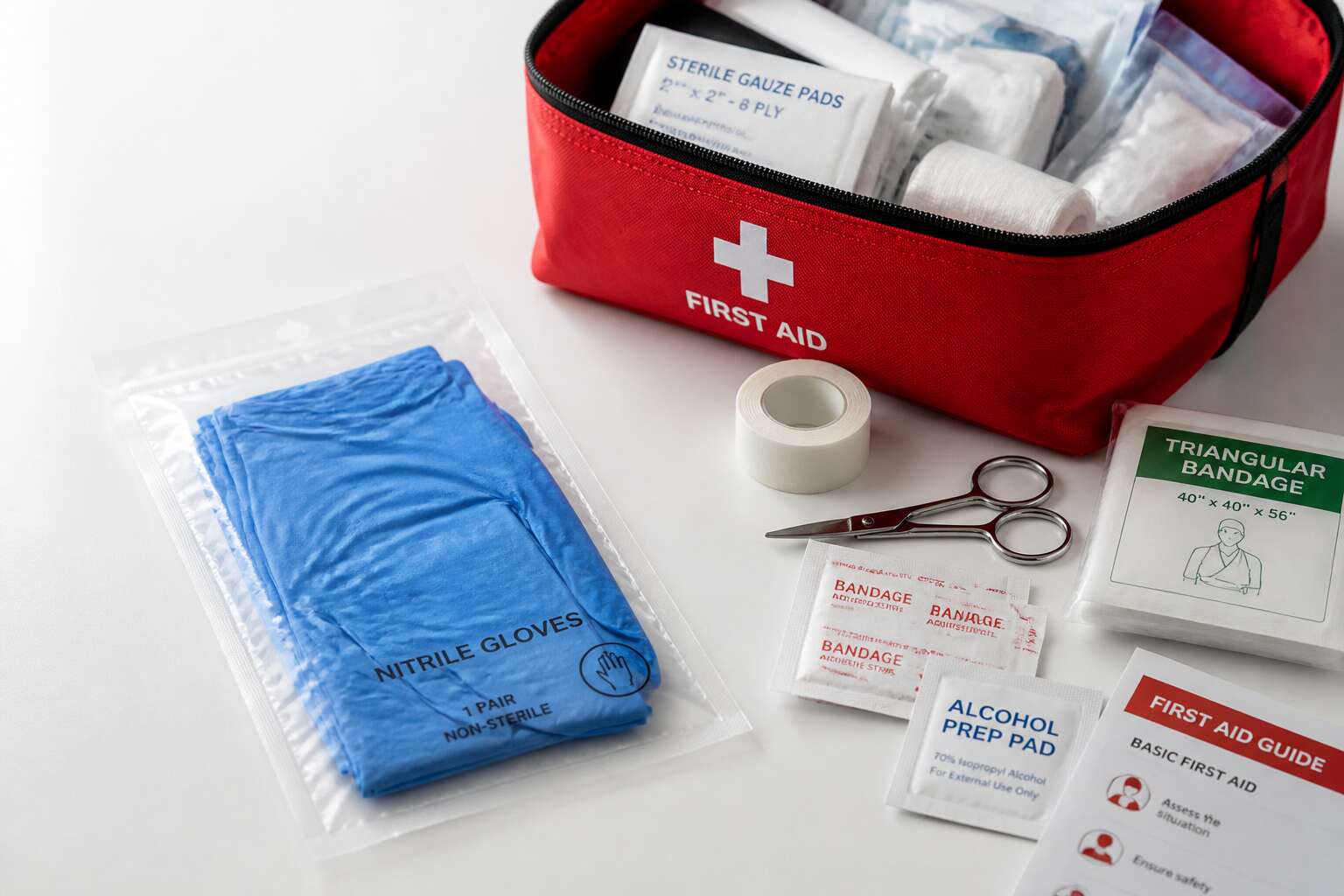
Why Nitrile Gloves Are Essential in First Aid Kits
Protection Against Bloodborne Pathogens
The sight of blood. In an emergency, the instinct to help is immediate, but the risks are invisible. Hepatitis B, HIV, and other bloodborne pathogens are a real concern, not a remote possibility. This is where a nitrile gloves individual pack first aid kit earns its place. It provides a critical layer of protection between you and a potential infection.
Consider the properties of nitrile. It is puncture resistant and offers a superior barrier compared to latex or vinyl. It is also a vital safeguard against chemical hazards you might encounter. Your skin is porous; don’t rely on it as a shield.
The advantages over other materials are clear:
– Superior puncture resistance for demanding situations.
– No latex proteins, so it is safe for those with allergies.
– Excellent chemical and viral resistance.
– A secure grip even when wet.
Having a single glove pack ensures you always have the protection you need. You can store it anywhere, from your car console to a hiking backpack. In the heat of the moment, you will not have the time to search. That prepacked pair of gloves allows you to act with confidence and focus solely on the injured person.
Latex-Free Alternative for Allergy Safety
Few things ruin a rescue mission faster than discovering your own skin is the weak link. The latex allergy is not a niche complaint. It affects a meaningful slice of the population, and in South Africa, we encounter it in clinics, schools, and homes. A single exposure to latex can trigger a reaction that turns a helper into a second patient. That is a problem you can avoid entirely.
A nitrile gloves individual pack first aid kit solves this dilemma with quiet efficiency. You skip the protein irritation altogether. Your hands remain safe, and the person you are assisting does not have to watch you fumble with a product that makes you break out in hives. It is a simple structural upgrade:
1. Nitrile does not contain the latex proteins that cause sensitization.
2. The material is robust enough to handle sharp objects on the scene.
3. Each pack delivers a fresh pair when you need it most.
Carrying one of these packs means you never have to gamble with an allergic reaction during a crisis. The individual pack also keeps the gloves sterile and easy to access. You are not rummaging through a bulk box that has been opened a dozen times. You reach for the sealed pouch, tear it open, and you are ready. That is the difference between hesitation and action. In an emergency, your own allergies should never be the reason you hesitate.
Durability and Puncture Resistance
When a crisis unfolds, the last thing on your mind is whether your gear will hold up under pressure. Yet, that single moment of truth is precisely where inferior materials fail. You need protection that works as hard as you do, especially when seconds count and the situation demands a steady hand. This is where the superior build of a modern protective glove becomes your silent partner in the field. It is about having the confidence to act without hesitation, knowing your barrier against the unknown is secure.
The robust composition of these gloves offers a level of toughness that standard options often lack. They are designed to withstand the rigors of urgent medical care, from applying firm pressure to handling equipment with sharp edges. For any responder, the integrity of their gear is non-negotiable. When you are reaching for a nitrile gloves individual pack first aid kit, you are choosing a tool engineered for resilience, ensuring that a tear or a break does not compromise your ability to provide care.
Here is how they stand up to the challenge:
– Three times more puncture resistant than traditional latex, they shrug off accidental snags.
– High tensile strength means they stretch without tearing, even during complex procedures.
– Chemical resistant properties protect against harsh disinfectants and bodily fluids.
This durability translates directly into peace of mind during chaotic scenes. You can focus entirely on the patient, not on the fragility of your hand protection. The material’s strength is a clear advantage, particularly when dealing with broken glass, jagged metal, or other hazards common in roadside or home emergencies. Knowing your gloves won’t split under strain allows you to maintain dexterity and grip, performing delicate tasks with confidence.
Furthermore, the design of a single-use glove adds to its reliable nature. Because it is sealed in its own pouch, the material is preserved perfectly until the exact moment you need it. This ensures that the glove’s structural integrity is never compromised by exposure to sunlight, ozone, or moisture that can degrade lesser products sitting in a bulk box. When you tear open that pack, you are holding a fresh, uncompromised barrier, ready for the toughest job. The strength of the glove is a direct result of its careful storage, making a nitrile gloves individual pack first aid kit the only logical choice for those who demand readiness.
Versatility for Various First Aid Scenarios
A single responsive glove is not a one trick pony. It morphs to meet the demands of the moment, whether you are splinting a fracture or cleaning a shallow wound. The value of a nitrile gloves individual pack first aid kit lies in this adaptability. It ensures you are never caught off guard, regardless of the injury you face.
Consider the range of tasks where a steady, protected hand is crucial. You might be handling sterile gauze to pack a deep cut, or you might be bracing a sprained ankle. The glove allows for tactile feedback while maintaining a sanitary field. It is this balance of feel and function that makes it a superior choice for general use.
– Managing minor lacerations and abrasions without leaving fibres behind.
– Handling saline solutions and antiseptic wipes without degradation.
– Performing a secondary assessment of a wound site with precision.
This versatility extends to environmental factors. You are not just dealing with blood and fluids; you are dealing with grit, dirt, and the unpredictable nature of an outdoor incident. A robust glove enables you to work in the dirt without introducing new contaminants to the patient. The individual packaging is a practical advantage here. You can carry a few sealed packs for months without worry, and they will be ready for use at a moment’s notice.
The individual pack ensures the glove remains in pristine condition until it is needed. In a chaotic home or roadside setting, having a glove that can handle a variety of situations means you spend less time worrying about the tools and more time focusing on the person in front of you. It is the quiet efficiency of preparation that allows you to move with confidence. For anyone serious about readiness, the adaptability offered by a sealed, durable glove is an essential component of a well stocked kit.
Advantages of Individually Packed Nitrile Gloves
Maintaining Sterility and Hygiene
Statistics reveal that nearly 80% of common infections are transmitted through hands, making hygiene a formidable guardian in emergency care. In the quiet moments before an ambulance arrives, or during a routine workplace injury, the integrity of your supplies determines the outcome. An individually sealed glove does not simply sit in your kit; it stands as a silent sentinel against the invisible. Each pack protects its contents from the dust and damp of the veld, ensuring a pristine barrier is ready when you reach for it.
The true value of a nitrile gloves individual pack first aid kit lies in this sealed sanctity. Bulk containers, while convenient, expose every glove to communal air and the contaminating touch of the seeker. When you tear open a single sachet, you are the first person to interact with that glove since it left the factory floor. This is not a minor detail; it is the difference between a sterile intervention and one that compromises the patient.
– Each glove remains impervious to environmental contaminants like dust and pathogens.
– The packaging prevents cross-contamination between a used glove and an unused one.
– Unused packs do not degrade in quality after other gloves have been accessed.
– A torn, soiled, or outdated single glove can be replaced without discarding the entire stock.
This meticulous approach to packaging ensures that the ritual of first aid begins with a clean slate. The sealed pouch is a tangible promise of safety, allowing the responder to focus on the wound itself, rather than the history of the hand covering theirs. For hikers on Table Mountain or technicians in Durban’s industrial zones, this level of hygiene is not a luxury. It is an operational necessity, translating directly into better patient outcomes and a reduced risk of secondary infection when it matters most.
Easy Accessibility During Emergencies
Every second counts when someone is bleeding. A nitrile gloves individual pack first aid kit puts a fresh pair in your hand without the usual fumbling. You tear the sachet, pull out the glove, and get to work. No shared box, no hunting for the last pair, no wasted motion.
- A single sachet slides into a pocket, a boot, or a vehicle cubby.
- You can scatter packs across a site, a car, and a home without splitting a bulk bundle.
- The remaining stock stays sealed even if one glove is used.
Bulk packaging forces you to open a communal flap and rummage through the contents. I’ve watched trained responders lose seconds doing exactly that. An individually sealed sachet removes the delay. The responder gets gloved fast, and quick access is the entire point of a nitrile gloves individual pack first aid kit.
Preventing Cross-Contamination
In a busy clinic or a remote farmhouse, a first aid kit is a promise of readiness. Yet, the tools inside can betray that promise if they are not stored properly. For years, responders relied on boxes of loose gloves, pulling out a single pair while their fingers brushed against dozens of others. This action, repeated hundreds of times, turns a simple container into a vector for germs. The shift to a nitrile gloves individual pack first aid kit is a quiet but powerful response to this hidden risk.
The journey of contamination often begins with the packaging itself. A cardboard box sits open on a shelf, exposed to dust, airborne particles, and the hands of everyone who reaches inside. Studies show that glove boxes in high-traffic areas can harbour bacteria within days of first use. When you need to treat a wound, you do not want to introduce a new problem while solving an old one. The individual sachet acts as a barrier, ensuring that the glove you touch is the first glove that has ever been touched.
Consider the specific ways cross-contamination occurs with bulk packaging:
– The shared opening: Every hand that opens the box touches the same flap or slit.
– The exposed stack: Gloves sitting near the opening are vulnerable to splashes and sneezes.
– The retrieval process: Fumbling for a single glove can transfer skin oils and bacteria onto the other gloves in the box.
An individually wrapped pair eliminates every one of these entry points. The packaging is torn open at the moment of need, creating a sterile bridge between the external environment and the patient’s skin. For a rural clinic that may lack running water between patients, or a hiker miles from the nearest town, this barrier is not a luxury. It is the only line of defence against turning a minor injury into a serious infection.
There is also the question of numerical honesty. When you bring a cardboard box to a scene, you often do not know how many gloves remain inside. A box that looks half full might be empty, or worse, it might contain gloves that have been compromised by a previous failed attempt to pull one out. With individual packaging, the inventory is absolute. You know exactly how many sterile pairs you have. You know that if a sachet is intact, the glove is ready for use.
Finally, there is the unspoken event of the unused pair. In a standard box, a pair of gloves that was exposed to the air but not worn is often thrown back in, mixing the clean with the questionable. In an individual pack, the sachet is a sealed commitment. If it is not opened, it remains pure. If it is opened and not used, it is discarded, and the rest of the supply stays untouched. For any responder who has ever hesitated at the sight of a messy glove box, the nitrile gloves individual pack first aid kit offers the simplest form of protection: the certainty that what you are putting on is clean, every single time.
Compact and Lightweight for Portability
A responder’s backpack is a study in managed space. Space is tight. A nitrile gloves individual pack first aid kit changes that balance. A single sachet is no thicker than a folded banknote and weighs nothing. Forty pairs fit where a box of five loose gloves would sit.
Bulk packaging demands space. It needs to sit flat and stay dry. Individually packed gloves conform to the curves of a backpack, a kit bag, or a car door pocket. Sachets slide into a trail running vest, a school bag, or a farm bakkie’s cubby hole.
- Thirty sachets fit into a sandwich-sized pouch.
- A single sachet takes up less space than a smartphone.
- The weight saved against a cardboard dispenser is substantial.
The compact profile encourages carrying spares. I know wilderness guides who tuck extra sachets into their jacket linings. The burden of a few unused pairs is nothing.
Extended Shelf Life and Storage Convenience
Most first aid gloves have a stated shelf life of five years, but that timeline only holds if the material survives its environment. A loose glove box left in a hot vehicle or a damp cupboard will degrade quickly. Heat causes polymer chains to break down, which leads to cracking and tearing. Exposure to light does the same. The result is a pair of gloves that fail at the moment you need them to hold. A nitrile gloves individual pack first aid kit removes that variable. Each sachet is a sealed unit, a barrier against moisture, UV rays, and the slow deterioration caused by oxygen. The gloves inside stay supple and functional until the seal is broken.
Storage convenience follows the same logic. With a box, you need a flat, stable surface. You need the box to remain closed and intact. With sachets, storage becomes a matter of placement, not protection. You can drop them into a drawer, a toolkit, a glove compartment, a hiking pack, or a waterproof bag. They carry no risk of contaminating other items. There is no way for dirt or chemicals to reach the glove through the sealed foil.
Consider how the package changes storage dynamics:
- Moisture resistance is built into every sachet, so damp environments like a beach bag or a bathroom cabinet are no longer a problem.
- Temperature swings in a vehicle are less likely to impair the glove’s integrity.
- Sachets can be stacked, rotated, or stored vertically, making use of spaces that a box cannot occupy.
The real value is that a nitrile gloves individual pack first aid kit turns your spares into a long term investment. You are not replacing brittle gloves every few months. You are carrying a stock that stays ready, regardless of where you leave it.
Selecting the Best Nitrile Gloves for Your First Aid Kit
Understanding Glove Thickness and Quality
Nearly every first aid kit contains gloves, but the selection process often comes down to grabbing the first box on the shelf. That approach is a gamble. The true measure of a glove’s protective capability lies in its gauge and material consistency, not its colour or brand name. When you are sourcing a nitrile gloves individual pack first aid kit, the specification sheet matters more than the packaging. A flimsy glove will tear at the worst moment, compromising the entire sterile field you are trying to maintain.
Thickness in nitrile is measured in mils, with 4 mils serving as a baseline for general use and 8 mils plus reserved for heavy duty tasks. For a first aid scenario, you need a balance between tactile sensitivity and structural integrity. A glove that is too thick makes tying a knot in a suture impossible. A glove that is too thin offers you no protection against jagged glass or sharp bone fragments. Consider the physical properties that matter during an emergency:
– Gauge and density: Look for a measured thickness of at least 5 mils for trauma situations.
– Elasticity: The material should return to shape without leaving a tight, constricting band.
– Texture: A micro-roughened surface prevents instruments from slipping mid-procedure.
– Packaging: Individual wrappers must be tear resistant to survive a backcountry hike or a crowded glovebox.
Quality is more than just the raw polymer. It involves the polymerization process, which dictates whether the glove will resist chemical degradation from antiseptics like iodine or chlorhexidine. Cheaper options often contain fillers that compromise elasticity. When you open that nitrile gloves individual pack first aid kit, the gloves should unroll smoothly without sticking to themselves, which is a sign of proper chlorination or polymer coating. If they feel tacky or smell acrid, the curing process was rushed. For South African conditions, where heat can degrade rubber compounds quickly, sourcing a product with a high tensile strength rating is critical. Your kit is only as effective as its weakest component, and the glove you choose is the last line of defence between you and the unknown. Prioritise the technical data over the price tag, because in an emergency, the difference between a 3 mil and a 6 mil glove is the difference between handling a wound and handling a crisis.
Choosing the Right Size for a Secure Fit
They say a glove that fits like a second skin is a myth until you find the right size. Most people assume one size serves all emergencies, which leads to fumbled tweezers and broken sterility. The correct fit determines whether you can feel a pulse or tie a knot. A loose glove bunches at the fingertips, reducing tactile feedback. A tight glove restricts blood flow, causing hand fatigue within minutes. For a nitrile gloves individual pack first aid kit, sizing is a safety feature, not a comfort option.
The width of your palm dictates the size, not the length of your fingers. Measure around the widest part of your dominant hand, excluding the thumb. Cross reference that number with the sizing chart on the packaging. Keep two sizes in your kit if you are uncertain. A medium and a large cover most adult hands. The glove should snap gently at the wrist without leaving a red mark after removal.
– The fingertips should press against the glove material without excess space.
– The palm should feel smooth with no wrinkles or sagging.
– The cuff should stay rolled without digging into the skin.
A proper fit reduces the risk of tearing during high pressure moments. It also decreases the chance of cross contamination from fumbling with a glove that slips off mid task. The glove becomes an extension of your hand, allowing precise movements. In a roadside emergency or a remote campsite, that precision matters. Choosing the right size transforms a simple piece of nitrile into a reliable tool. That is the difference between fumbling and acting decisively in a crisis.
Checking for Powder-Free and Textured Options
Powder residue from older gloves causes wound contamination and unnecessary irritation. That is why a powder-free nitrile gloves individual pack first aid kit matters. The manufacturing process removes the releasing agents completely, so nothing transfers from your fingertips to the patient. This becomes essential when you are treating someone far from a clinic.
Texture matters just as much. Smooth nitrile turns slippery once moisture appears, whether from sweat, blood, or rain. A textured finish uses micro ridges or a frost pattern to hold instruments steady. Consider what you might need to handle:
- Tweezers for splinter removal
- Scissors for cutting bandages
- A needle for blister drainage
Each task demands a stable grip. The texture prevents the glove from rotating on your hand or letting the tool slide. For a nitrile gloves individual pack first aid kit, powder-free and textured features turn a thin barrier into a dependable tool for real emergencies.
Evaluating Chemical and Tear Resistance
Chemical resistance ranks first when selecting gloves for a nitrile gloves individual pack first aid kit. Antiseptic wipes, povidone iodine, and chlorhexidine solutions all make contact during wound care. Latex and vinyl break down under repeated exposure. Nitrile holds its molecular structure, so the glove won’t weaken while you work on a patient.
Tear resistance comes from the manufacturing process, not the raw material alone. I’ve seen cheap gloves split at the webbing between fingers with minimal force. Inspect the cuff edge and finger joints for even thickness. Uniform distribution of material prevents tears from starting in the first place.
Consider where the kit lives. A vehicle kit faces heat cycles. A workshop kit faces solvents. A coastal kit faces humidity. Each environment stresses gloves differently, which is why chemical and tear resistance are essential in South African conditions.
Considering FDA Approval and Medical Grade Standards
It is a startling fact that over 80% of first aid errors stem from inadequate supplies, not a lack of skill. The cornerstone of any serious medical kit is the barrier between you and the unknown. When an injury demands immediate action, the integrity of your protection is the only thing standing between a minor incident and a serious infection. This is where regulatory oversight becomes your silent partner in safety.
Understanding the landscape of approval can feel like decoding a secret language. You will see claims about medical grade and various certifications, but not all are created equal. The gold standard for barrier protection is FDA approval, which signifies that the product has met rigorous testing for fluid resistance and strength. For a nitrile gloves individual pack first aid kit, this seal means the gloves have been cleared as a medical device suitable for use in patient care. Without it, you are gambling with a product that may be intended for industrial use only, where the performance standards are entirely different.
The distinction between industrial and medical is profound. Industrial gloves are designed to protect the hands from chemicals, but they are not held to the same standards of biocompatibility or tear resistance. A glove that loses its integrity during a delicate procedure is a liability. The medical standard ensures a higher level of quality control, often involving stricter requirements for tensile strength and puncture resistance.
To simplify your selection process, look for these specific attributes on the packaging:
– A clear symbol indicating regulatory clearance, such as the FDA mark.
– Material specifications that state they are nitrile and free from latex proteins.
– A listing of performance standards, like the ASTM D6319 for medical examination gloves.
Beyond the approval itself, the packaging of the nitrile gloves individual pack first aid kit matters immensely. Individually wrapped gloves ensure that every pair remains pristine and ready for use, protected from the environment. This unopened state guarantees sterility, which is crucial when dealing with open wounds. A box of loose gloves exposes the rest of the supply to every opening, increasing the risk of contamination for future uses.
By choosing a product with proper regulatory clearance and individual packaging, you ensure that your preparedness is not just a feeling, but a verifiable fact. The next time you restock your supplies, let the presence of that specific approval be your guide. It is the clearest indicator that you are truly equipped to handle the unexpected, providing you with the confidence to act when it matters most.
Brand Comparisons and Cost-Effectiveness
Nearly 60% of households admit to reusing gloves during an emergency, a dangerous economy that often costs more in the long run. Choosing the right pair for your nitrile gloves individual pack first aid kit is a balancing act between brand reputation and the practical reality of your budget. I have seen cheap boxes fail at the worst moments, splitting at the wrist just when you need them most.
When you compare the larger medical supply corporations to smaller specialty brands, you are really weighing consistency against value. The established names often offer a uniform thickness and a reliable texture, which is worth the premium if you handle blood or fluids regularly. However, the smaller players are catching up, and their pricing reflects a desire to break into the market, a fact that benefits your wallet.
– Leading brands like Aegis or SupaGlove offer proven tensile strength and a textured grip that works well in wet conditions.
– Generic labels often match that durability for a fraction of the price, but their quality can vary between batches.
– Mid-tier options provide a happy medium, boasting a 4 mil thickness without the hospital-grade markup.
The true cost savings appear when you buy in bulk cases for your kit, driving the per-pair price down to a negligible figure. I have found that you do not need the most expensive box on the shelf, but you do need one that does not compromise on the nitrile material itself. A reputable brand that offers a sealed, individual pack guarantees the glove stays pristine, and that peace of mind is worth more than a few saved rands, especially when you are miles from the nearest clinic.
Best Practices for Using and Storing Individual Nitrile Gloves
Proper Donning and Doffing Techniques
The moment your fingers touch a glove is the moment contamination begins. Donning technique matters as much as the quality of the nitrile gloves individual pack first aid kit you carry. Start with completely dry hands. Moisture makes the cuff stick, and a torn glove during application defeats the entire purpose of protection. Pinch the glove at the folded cuff, lift it clear of the packaging, and slide the hand in without snapping the material against your wrist.
Doffing is where most people fail. You cannot simply pull at the fingertips, you risk flinging pathogens into the air. The correct method involves pinching the exterior of one glove at the wrist and peeling it inside out, holding the removed glove in your gloved hand. Then, slide two fingers under the cuff of the remaining glove, touching only the clean interior skin, and peel it off over the first. This inversion traps any contaminants inside.
Storage conditions directly affect glove integrity. Heat and humidity degrade the polymer structure over time. Keep your individual packs away from direct sunlight and dashboard compartments. A cool, dry place preserves the tensile strength of the material, ensuring the gloves perform when the adrenaline is high. If the packaging feels crinkled or shows signs of moisture ingress, replace the unit immediately. The compact nature of the nitrile gloves individual pack first aid kit makes this easy, just cycle out expired units before they compromise your safety.
Disposal Guidelines for Contaminated Gloves
Every pair of nitrile gloves has a finite life cycle. A nitrile gloves individual pack first aid kit demands routine inspection before each use. Heat exposure or improper handling can create microtears that are invisible to the naked eye. Run your fingers along each glove’s palm and fingers; any defect means discarding the glove immediately.
Contamination changes everything. Once a glove has come in contact with blood or bodily fluids, it cannot be reused. Remove it without touching the outer surface, using the inversion method covered earlier. Drop the used glove into a sealed plastic bag, then place it in a dedicated biohazard container. South African regulations require this for any healthcare setting, even a home first aid scenario.
- Never flush gloves or put them in general waste.
- Double-bag if the first bag tears.
- Label the bag as contaminated before disposal.
Storing spare packs in blazing car boots or humid bathrooms shortens their usefulness. Instead, keep them cool, dry, and away from sunlight. Rotate stock so older units see use first. That discipline keeps your nitrile gloves individual pack first aid kit functionable when an emergency arrives.
Ideal Storage Conditions to Preserve Quality
In the sweltering heat of a South African summer, the inside of a car can become a miniature oven, reaching temperatures that would make even the most resilient materials question their life choices. This is precisely why the humble box of nitrile gloves individual pack first aid kit supplies you keep in your boot deserves more consideration than a casual toss behind the spare wheel. While you might be meticulous about checking the expiry date on a bandage, the integrity of your gloves often goes unnoticed until the moment you actually need them. The polymer blend that makes nitrile so resistant to punctures and chemicals is not immune to environmental degradation, and extreme heat accelerates that breakdown, leading to stiff, brittle gloves that tear the second you try to don them.
The key to preserving these essential barriers lies in mastering your storage environment. The glove box, ironically, is often the worst place for gloves; the temperature fluctuations and humidity are enemies of polymer stability. Instead, think of your glove supply like a fine bottle of wine, although with less corkage and more contamination control. It needs a dark, cool, and dry habitat, away from direct sunlight and sources of ozone, like electrical motors. A zippered pouch inside your rucksack or a sealed plastic container in the fridge, if you are truly dedicated, works wonders. You are essentially creating a microclimate that slows the aging process, ensuring that your nitrile gloves individual pack first aid kit remains flexible and reliable. When you open that pack months later, the gloves should slide out easily, not stick together in a melted mess.
However, the preservation of the glove is only half the battle; how you retrieve it dictates its sterility. This is where the “one out, all out” rule becomes your new best friend in emergency preparedness. When you pull a single glove from a bulk pack, you expose the remaining gloves to the air, dust, and potential cross-contamination. For a truly sterile approach, the nitrile gloves individual pack first aid kit system is superior because each pair is sealed. If you are using a bulk box, avoid rummaging around with dirty fingers. Instead, master the “peel and pinch” extraction method to touch only the glove you intend to use.
Once a glove is used, it becomes biomedical waste, a fact that carries significant weight under South African health regulations. You must remove it without snapping the contaminated material against your bare skin. The “bird beak” technique, where you pinch the cuff and peel it inside out into the other gloved hand, is the standard. Then, you use the clean hand to slip under the cuff of the second glove and peel it off over the first, creating a neat little bundle of hazard. This is where the pragmatic genius of the nitrile gloves individual pack first aid kit concept shines; the empty wrapper becomes a perfect, ready-made disposal vessel, containing the biohazard without requiring you to search for a plastic bag while attempting to hold a bloody hand.
Ultimately, the true measure of preparedness is not just owning the supplies, but understanding their limitations and care requirements. A glove that has been oxidised by heat or punctured by a stray key is a false sense of security. By treating your stock with the same disciplined attention you give to your medical training, you ensure that your nitrile gloves individual pack first aid kit is always battle-ready. Store them cool, handle them with clean hands, and dispose of them with respect for the regulations that keep everyone safe. In the chaos of an emergency, the last thing you want to worry about is whether your protective gear will hold up under stress; a little foresight in storage and handling eliminates that doubt entirely.
Regular Inspection and Expiration Date Monitoring
An expiration date on a box of gloves is not a rough guideline, it is a technical specification. The polymer blend in nitrile degrades over time, and South Africa’s climate accelerates that process. Check your nitrile gloves individual pack first aid kit regularly, not only when you reach for it in an emergency.
Inspect the sealed pouches for punctures, tears, or moisture exposure. Open one pair from each batch and stretch the material gently. If it snaps or feels gritty, the gloves have lost their integrity.
- Check the printed expiration date every three months.
- Rotate stock so older packs are used first.
- Discard any pack with visible damage.
Keep a simple log if you manage multiple kits at home or in the car. A few minutes of routine inspection ensures your nitrile gloves individual pack first aid kit remains dependable when it matters.
Integrating Gloves into a Comprehensive First Aid Plan
The quiet reliability of a nitrile gloves individual pack first aid kit is something I have come to respect deeply. In my experience, the way you store these gloves is just as critical as the quality of the material itself. Keeping a pack in the glovebox of your bakkie during a Highveld summer subjects the polymer to extreme heat, which accelerates degradation. I prefer to store these kits in a cool, dark place, like a hall cupboard or a shaded section of the boot, away from direct sunlight and any solvents like petrol or cleaning fluids. This simple habit preserves the tensile strength of the nitrile, ensuring the material stretches without tearing when you need to get it on quickly.
Integrating these individual packs into a broader emergency plan requires forethought about the sequence of care. You should not have to dig through a chaotic bag to find a barrier. I have found that a practical approach involves decentralising your supplies. You can tuck a single nitrile gloves individual pack first aid kit into specific locations where accidents are likely to happen, rather than relying on one central station. A small pack in the kitchen drawer for minor cuts, one in the car for roadside assistance, and one in the workshop for splinters ensures you are never far from protection. This arrangement also aids in managing your inventory, because you can easily see what is being used and what needs replenishing.
When you do use a pair of gloves, the integration continues after the wound is dressed. A comprehensive plan must account for safe removal to avoid secondary contamination. The key is to treat each used glove as a biohazard item. If you are in a rural area without immediate access to a medical waste bin, you must carry a small, leak-proof bag to seal the used gloves and dressings away until you can dispose of them properly. Here is a simple process to integrate into your routine:
1. Peel the first glove off from the cuff, turning it inside out.
2. Hold the removed glove in your other hand.
3. Slide your bare fingers under the cuff of the second glove to remove it without touching the skin.
4. Dispose of both gloves together in your designated waste bag.
A comprehensive first aid strategy also involves considering the other items that should rest beside your nitrile gloves individual pack first aid kit. You must pair the barrier protection with the tools that make it effective, such as sterile gauze, adhesive tape, and antiseptic wipes. The gloves are not the solution; they are the means to apply the solution safely. By thinking about how the gloves interact with your other gear, you ensure that you are ready for a full range of scenarios, from a thorn scratch to a more serious laceration, without hesitation. This holistic view is what transforms a simple box of gloves into a true asset for your family’s safety.


0 Comments