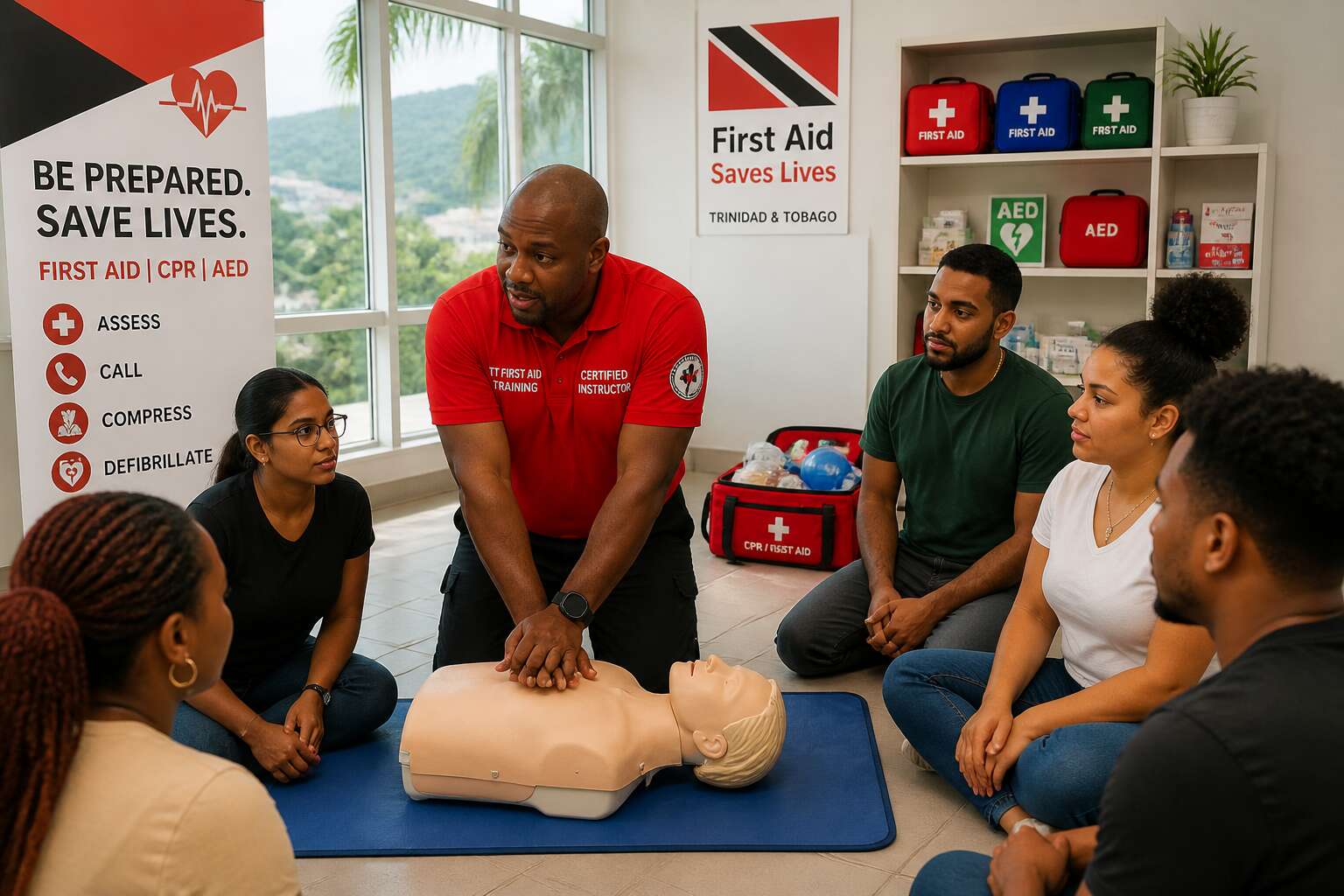
Understanding First Aid Training in Trinidad
The Role of First Aid in Emergency Preparedness
Every minute counts when someone collapses beside you on Frederick Street. The average ambulance in Trinidad responds within fifteen to twenty minutes during daylight traffic, often longer in the rain. Those are the quietest minutes of your life, and what you do with them determines everything. First aid courses in Trinidad teach you to hold that space between the emergency and the experts. You learn to assess, to prioritise, to act while others freeze. Emergency preparedness usually focuses on the big ticket items. Evacuation plans, disaster kits, insurance papers. Those matter. But preparedness is also deeply personal. When you can recognise the signs of a stroke or know how to position an unconscious person, you become the first line of defence, not a passive observer calling for help that has not arrived yet.
Legal Requirements and Workplace Safety Regulations
Differences Between Basic and Advanced First Aid Courses
Most people perceive first aid as a single, uniform skill set. This perception collapses the moment you examine the curriculum of most training providers. A weekend course and a multi-week certification share the name “first aid,” but they exist in different universes of responsibility and competence alertness.
The basic course, often called the one-day or two-day session, focuses on the golden hour. You learn to stabilize a scene, manage airways, control bleeding, and treat minor wounds. It arms you with the information needed to keep a casualty comfortable until professional medical help arrives. Advanced training, by contrast, extends into diagnostics and prolonged care. It teaches you to administer oxygen, use an automated external defibrillator with confidence, and recognize the subtle signs of a developing stroke or cardiac event. The advanced curriculum alters your ability to think in an emergency.
- Basic training covers primary survey, recovery position, and CPR for adults.
- Advanced training adds pediatric life support, spinal injury management, and emergency medication administration.
- Basic courses conclude in one weekend; advanced courses require several days of rigorous assessment.
- Advanced certification also covers incident command structure and triage protocols.
The drive between these two levels mirrors a broader social principle about preparation. A basic course is an introduction to helping others; an advanced course is a commitment to leading others during a crisis. When you search for first aid courses in Trinidad, you must first ask which level of responsibility you are ready to shoulder. The choice changes not only what you learn, but how you perceive the role you play in your community. The decision is less about time and money, and more about the depth of duty you are willing to accept.
Choosing the Right First Aid Course for Your Needs
Assessing Your Personal or Professional Requirements
Scenario decides skill. When someone collapses beside you, the course you selected becomes your script. The right training in Trinidad depends on your daily environment and the people around you. A parent needs infant choking techniques. A construction manager needs major bleed control. A fitness coach needs sudden cardiac arrest drills. These are different skills, and a single generic class won’t cover them all.
To narrow your options, consider these key factors:
1. Certification validity and local recognition.
2. Practical hands-on time versus online theory.
3. Specific skills like oxygen administration or spinal management.
4. Class size and instructor feedback quality.
First aid courses in trinidad are plentiful, but not all match your role. Among first aid courses in Trinidad, look for one that asks about your worksite or home setup before you register. Ask a provider how they tailor sessions to your industry. Ask if they teach with the equipment you will actually use. A course that feels convenient at signup may feel useless during a real emergency. Choose based on scenario realism rather than price alone. The best investment is one simple, accurate action you can perform without hesitation.
Comparing In-Person vs. Blended Learning Formats
While certification cards are physical evidence of your training, the true measure of your capability is what remains when the card expires. In the debate of in-person versus blended learning formats, the decision hinges on how memory works during a crisis. Pure online theory can introduce the history and vocabulary of emergency response, but it often neglects the critical component of psychomotor memory. A lecture on chest compression depth is not the same as feeling the click of a rib cage under your palms.
In-person sessions within first aid courses in Trinidad provide the only true environment for this physical conditioning. Instructors can correct the angle of your elbow during a rescue breath or the pace of your compressions to the beat of a real metronome. Blended learning, which pairs online theory with a few hours of practical work, offers flexibility for busy schedules, yet it compresses the crucial time required for skill mastery. The tactile familiarity of handling a mannequin or applying a tourniquet under direct supervision remains the cornerstone of reliable response.
When choosing between formats for first aid courses in Trinidad, assess your own learning history. Consider what is physically present at your worksite or in your car.
– Does your team require certification renewal, where scenario-based refreshers are more valuable?
– Does your daily routine allow for a full day of immersive training?
– Are you comfortable with self-directed study to manage your schedule?
– Is your need primarily the certificate, or the confidence to act?
The real question is not whether online is easier, but whether a screen can build the instinct to act when it matters. For all the convenience they offer, blended courses still rely on you to bridge the gap between watching a video of a bleed control procedure and physically packing a wound. A pure online course cannot simulate the weight of a casualty or the urgency of a collapsing scene. Ultimately, the format that forces your hands to work is the one that will save a life.
Duration and Scheduling Options for Busy Adults
Let’s face it, your schedule is a chaotic jigsaw puzzle where the pieces are meetings, school runs, and the desperate hope for a nap. The idea of spending two full weekends on a certification seems about as appealing as a root canal. However, the length of a course does not dictate its quality. The standard duration for most first aid courses in Trinidad is roughly sixteen hours, but how those hours are spent is the real variable.
Some providers offer a compressed two day marathon, which is excellent for those who want to get it over with like ripping off a bandage. Others split the content into evening sessions, which allows for mental digestion. When you are assessing your options, consider the reality of your attention span. A marathon day might leave you cross eyed by the time you reach the module on environmental emergencies.
You can also look at the exact structure of the program. A course that mixes theory with practical drills requires your physical presence for the entire time. There is no way to fast forward through the bandaging practice. For the busy professional, this is often a benefit. It forces you to block out the time and actually do the work.
When scanning the calendar, consider these scheduling models:
1. The weekend warrior option, which is an intensive two day sprint.
2. The split schedule, which separates sessions over several days.
3. The evening classes, designed for those who work a standard nine to five.
4. The half day express, which is often a refresher for a current card.
The real challenge is not finding the time, but rather protecting it. You will need to treat this like an important client meeting, not a casual obligation. The most common mistake is underestimating the physical fatigue of practical assessments. You are not just sitting in a chair; you are kneeling on the floor, checking for breathing, and performing compressions.
Many reputable providers now structure their full day to include a proper break for lunch and several short rests. This helps to retain information, but it also extends the total hours in the day. You should ask about the actual closing time, because a course that claims to be eight hours might run for ten when you factor in the coffee breaks. The true cost of first aid courses in Trinidad is often measured in lost productivity, not just the fee. Whether you choose the intensive route or a slower pace, the goal remains the same, to get you out the door with a skill set that is still intact when you need it and not just a piece of paper that expires.
Course Level Selection from Beginner to Refresher
Your expired wallet card does not measure the decay of your practical skill. The choice between a beginner course and a refresher is an exercise in honesty, not efficiency. A beginner level builds your foundation from zero, covering airway management and wound care in a deliberate sequence. A refresher assumes that foundation exists and instead targets protocol changes, skill decay, and confidence gaps.
In first aid courses in Trinidad, the screening process usually separates these cohorts. I have seen too many people pick a refresher to save a weekend, only to struggle with a manikin. If you cannot name the current adult compression rate without pausing, that pause is your signal to start over.
Certification and Accreditation: What to Look For
Recognized Certifying Bodies in Trinidad and Tobago
A course certificate is only as valuable as the body that issues it. In Trinidad and Tobago, you cannot assume every provider holds proper accreditation. Recognized certifying bodies, such as the Trinidad and Tobago Red Cross Society and St. John Ambulance, follow rigorous international protocols. These organizations align with global standards from the International Federation of Red Cross and Red Crescent Societies.
Before enrolling, ask for proof of accreditation. Verify that the certifying body regularly audits its instructors and refreshes course materials. When comparing first aid courses in Trinidad, look for these markers:
- Direct affiliation with a recognized national or international medical authority
- Clear documentation of instructor qualifications and renewal schedules
- Independent reviews from past participants who completed first aid courses in Trinidad
Without this scrutiny, you risk wasting money on a certificate that no employer trusts.
Validity Periods and Renewal Requirements
Validity periods are not uniform across providers in Trinidad. Some certificates from first aid courses in Trinidad remain current for two years, while advanced emergency or responder roles often require a one year renewal. The difference comes from the certifier’s scope and the level of practical skill it expects a participant to hold.
- Standard first aid with CPR: two years
- Advanced emergency medical responder: one year
- Instructor level certification: annual recertification
Renewal is more than a fee. It involves a physical demonstration of the technique, plus sometimes a written assessment. The instructor verifies your skills under pressure, and the new date reflects that fresh assessment. Without this step, an expired certificate loses its standing during an emergency and no record remains.
International Recognition of Local Certifications
When you search for first aid courses in Trinidad, the certificate’s international standing deserves as much scrutiny as its price. A local provider may offer a glossy credential, but without proper accreditation, that paper carries little weight beyond the classroom. Ask which global standard anchors the curriculum, whether that is the American Heart Association or the International Federation of Red Cross and Red Crescent Societies. I have seen certificates that impress employers locally yet fail entirely abroad, simply because the issuing body lacked a recognised audited chain.
Accreditation is not a single stamp. It is a layered system. Look for these markers:
- Alignment with international resuscitation guidelines
- Instructors qualified by an accredited foreign body
- Practical assessments that mirror real emergencies
International recognition often hinges on reciprocity agreements between Trinidad’s certifying organisations and major global regulators. Without those links, your skills may not transfer when you travel or work abroad.
Verifying Instructor Credentials and Course Quality
When I evaluate first aid courses in Trinidad, I start with the person standing at the front of the room. A certified instructor should carry credentials from a recognised body, but more importantly, they should demonstrate current clinical knowledge. Ask when they last taught! Ask how many students they have guided through real emergencies. The best instructors maintain active practice in healthcare or emergency response.
Course quality reveals itself in the details. Look for:
- Student to instructor ratios that allow hands-on practice
- Mannequins that provide feedback on compression depth
- Scenario based assessments that test decision making under pressure
I have walked into classrooms where the equipment was decades old and the instructor read from a script. That kind of session wastes your money. The right first aid courses in Trinidad will push you to perform skills repeatedly, not just watch demonstrations.
Accreditation vs. Simple Completion Certificates
What does a first aid certificate actually mean in Trinidad?
The answer depends entirely on who issued it. A piece of paper from a weekend workshop can look identical to one earned through rigorous assessment. The difference lies in the accreditation behind it.
In Trinidad, reputable first aid courses in Trinidad are typically certified by international bodies like the American Heart Association or the International Federation of Red Cross and Red Crescent Societies. These organisations set global standards for emergency care. They mandate specific curriculum hours, practical skill checks, and written examinations.
Accreditation also involves regular audits. An accredited training centre must maintain equipment standards and instructor qualifications. When you receive a certificate, that logo on the page represents a system of accountability. It means someone verified that you could actually perform chest compressions at the correct depth and rate, not just answer a multiple-choice question about them.
The Distinction Between Completion and Certification
Some providers offer attendance certificates. These simply confirm you were present for a certain number of hours. You might have watched demonstrations. You might have practiced once on a mannequin. But there is no formal testing of your competency.
A true certification requires demonstration of skill proficiency. You must prove you can handle a scenario where someone is unresponsive, bleeding heavily, or choking. The instructor observes your technique, times your interventions, and evaluates your decision-making process.
Consider checking whether your certificate lists specific skills mastered, or whether it merely states participation. The former holds value in professional settings. The latter serves as basic awareness training at best.
What to Look For in Trinidad’s Training Landscape
When researching first aid courses in Trinidad, examine the certification details before the price tag.
– Course duration should meet international standards. Basic life support typically requires at least four to six hours, while comprehensive first aid spans two days or more.
– Look for an instructor-to-student ratio that allows individual practice time. You cannot learn CPR in a room of thirty people sharing two mannequins.
– Ask about the recertification policy. Most certifications expire after two years, and shorter refresher courses should be available.
– Verify the certifying body directly if possible. A quick email to the organisation can confirm whether your instructor holds valid credentials.
Why Accreditation Shapes Outcomes
The real question is whether your certificate will hold up when it matters. Hospitals in Trinidad may require specific credentials for employment. Regional safety regulators might ask for documentation during inspections. Insurance providers sometimes have their own requirements.
Beyond paperwork, consider the quality of instruction you received. Certified courses use mannequins with feedback technology. They record whether you are compressing hard enough and fast enough. Simpler courses might use basic mannequins that merely look like a torso. The learning outcomes differ significantly.
A certification earned through accredited first aid courses in Trinidad provides a baseline. Employers and professional bodies can trust that your knowledge meets a standard. That trust matters when someone’s life depends on your response. Choose your course based on what that certificate represents, not just the convenience of the schedule.
Course Content and Skills You Will Learn
Core Techniques: CPR, Choking, and Bleeding Control
The core of any first aid courses in trinidad is hands on practice with three critical emergencies. CPR comes first. You will rehearse chest compressions, rescue breathing, and automated external defibrillator usage until your timing feels intuitive. Choking relief is next. You will master back blows, abdominal thrusts, and the careful adaptations needed for infants or pregnant women. Bleeding control completes the set. Expect to practice direct pressure, wound packing, and tourniquet placement on simulated wounds.
Your instructor will likely break the session into drills. Expect to sweat a little; the mannequins are not glamorous. For instance:
- Performing CPR on adult and child mannequins
- Clearing an obstructed airway with proper hand placement
- Controlling severe hemorrhage using pressure bandages
These exercises feel repetitive, but repetition builds competence, which is why first aid courses in trinidad focus so heavily on drilling. You leave with skills that do not vanish when adrenaline spikes.
First Aid for Common Medical Emergencies
> “The heart of emergency response is not heroism, but prepared decision making.” This distinction becomes clear when you move beyond the headline skills of CPR and bleeding control. The curriculum in first aid courses in trinidad also equips you to recognize the quieter, often more confusing medical emergencies that unfold without dramatic bloodshed. You will learn to identify the onset of anaphylaxis, a condition where the airway can close in minutes, and administer an epinephrine auto injector with confidence. Seizure management becomes a lesson in protection, not restraint. You will learn to time the event, cushion the head, and understand the critical distinction between a typical seizure and a medical emergency that requires escalation.
Your training will also extend to environmental and metabolic threats. Heat exhaustion and dehydration are common workplace hazards, and the signs are subtle. You will learn to differentiate between the pale, clammy skin of a person with heat stroke and the flushed skin of someone with a simple fever. Diabetic emergencies require a different type of assessment. The instructor will train you to recognize the neurological changes that signal hypoglycemia and the correct protocol for administering sugar to a semi conscious victim.
The curriculum will introduce a structured approach to these scenarios.
– Scene safety and the assessment of a sudden collapse
– Taking a pulse and measuring respiratory rate without a device
– Positioning a victim to maintain an open airway during an altered mental state
These steps are the foundation of a broader situational awareness. When you take first aid courses in trinidad, you are not just learning to react to bleeding bones or obstructed airways. You are learning to read the human body, to interpret its silent signals, and to intervene before a minor complaint becomes a life threatening event. This knowledge transforms you from a bystander into a reliable first responder in any setting.
Handling Environmental Emergencies in the Caribbean
The Caribbean sun is not a passive backdrop. It is an active element of the working environment, and in Trinidad, the heat index often dictates the rhythm of the day. Environmental emergencies here rarely announce themselves with a bang. They arrive as a creeping lethargy on a construction site, a sudden confusion on a fishing vessel, or a collapse during a midday jog along the Savannah. The curriculum for first aid courses in trinidad dedicates significant time to these specific threats.
You will learn to manage heat stress, not as a theoretical concept, but as a series of observable signs. The focus is on the gradient of severity, from the cramping of muscles to the altered mental state of heatstroke. Your training will emphasize the critical action of rapid cooling, using available resources like shade, water, and fans. A systematic approach to the environment is part of the training.
1. Assess the scene for ongoing exposure to sun or humidity.
2. Determine the patient’s level of consciousness and core temperature signs.
3. Initiate active cooling while preparing for rapid evacuation.
The waters surrounding the islands present another set of variables. Injuries from marine life, from sea urchin spines to jellyfish stings, require a specific knowledge of local fauna and the correct first response, which often differs from standard protocols. You will also review the protocols for near drowning and the proper management of a victim pulled from the water, focusing on spinal precautions and the unique physiology of a wet, hypothermic patient. These skills are part of the broader module in first aid courses in trinidad. The instruction moves beyond city streets, preparing you for the rural communities and coastal areas where professional medical help remains a half hour away. It is about making the difference between a bad day and a tragedy.
Using First Aid Kits and Emergency Equipment
That difference often comes down to the contents of your bag. In first aid courses in trinidad, you learn to operate a first aid kit with precision. Course time focuses on deploying bandages, antiseptics, and splints. You also train with emergency equipment: bag valve masks, oxygen cylinders, and cervical collars. The curriculum builds muscle memory, so during a crisis, your hands act without hesitation.
A dedicated module covers these skills:
- Performing a rapid scene assessment before opening your kit.
- Substituting missing components with everyday items, such as a folded newspaper for a splint.
- Inventory auditing and rotation of expired supplies.
In my experience, this practice goes beyond physical stocking. A kit’s value lies in its organization, not its brand. These first aid courses in trinidad prepare you for moments when professional help is a half hour away. That mastery separates an effective responder from a spectator!
Practical Assessment and Hands-On Practice
The time between an injury and professional medical care can be critical, and in some areas of Trinidad, that window might stretch. A first aid course is only as good as the skills you retain, which is why the best first aid courses in Trinidad focus heavily on practical assessment and hands-on practice. You won’t just watch a video and call it training. You will get on the floor, use the bandages, and apply the pressure.
These sessions are designed to build confidence through repetition. Instructors simulate real-world scenarios, forcing you to make decisions under pressure. This isn’t about memorising a manual; it is about developing motor skills. You will learn to check a scene for danger, call for help effectively, and prioritise casualties.
The hands-on component covers:
– Bandaging various wound types on a partner.
– Performing rescue breaths on a manikin.
– Managing a blocked airway.
This muscle memory is the difference between freezing in a crisis and acting. The physical act of performing these tasks is what makes the knowledge stick. It turns the information from your textbook into a reflex, ensuring you are a capable responder when it truly matters.
Navigating First Aid Course Providers and Costs
Where to Find Reputable Training Centers
Training costs in Port of Spain can swing by several hundred dollars for the same certification. I’ve watched people choose the cheapest provider, only to sit through a crowded room with a single mannequin and no real feedback. That mistake wastes both money and time.
To locate a reputable center, check with your employer’s safety officer or the regional emergency services. Many hospitals also maintain lists of instructors they trust. A solid provider openly breaks down fees, including equipment and certificate costs.
- Confirm the instructor’s recent experience in emergency response.
- Ask about the maximum class size for practical sessions.
- Request a written schedule of the course modules.
When evaluating first aid courses in trinidad, weigh the quality of hands-on drills more heavily than the quoted fee.
Cost Ranges and Payment Plans
When an emergency unfolds, hesitation is the enemy. Yet many individuals in Trinidad and Tobago sign up for training without ever considering how their chosen program will prepare them for real-world pressure. The true cost of a certification is not measured in dollars alone; it is measured in confidence, competence, and the ability to act while others freeze. This distinction becomes glaringly apparent when you compare the cheapest providers against the most reputable ones.
The price discrepancy for first aid courses in Trinidad often stems from operational overheads. A provider renting a pristine facility, maintaining up-to-date mannequins, and paying qualified instructors properly will naturally charge more than an operator running classes in a cramped community hall. Instead of viewing this as a drawback, consider it a filter. When a provider openly shares their pricing structure, including costs for consumables like dressings and pocket masks, they signal transparency. A vague quote that changes upon registration should raise immediate red flags.
Narrowing down your options requires a focused approach. You can start by asking for recommendations from local health centers, but your own diligence matters more. Visit the training location before committing. Observe whether the equipment is clean and modern, and verify the instructor’s credentials on a national registry. Ask pointed questions about their recent experience in the field; an instructor who actively volunteers with the fire service or a medical response unit brings invaluable context to the classroom. The environment and the educator are direct indicators of the quality you will receive.
During your search, use this checklist to compare programs effectively:
– Confirm the student-to-instructor ratio for the practical sessions; a maximum of ten students per instructor is ideal for skill mastery.
– Request a detailed breakdown of the course fee, including the certificate card, learning materials, and any taxes.
– Ask about the refreshment and retraining policy, as many providers offer a discounted rate for recertification.
– Check whether the certification is valid for the specific workplace requirements you need to meet.
Fortunately, the market for first aid courses in Trinidad is competitive enough to keep pricing accessible. Most standard programs fall within a reasonable range for a full-day session, and several providers offer installment payment plans to ease the financial burden for individuals paying out of pocket. This flexibility makes it possible to invest in quality training without derailing your budget. However, be wary of packages that seem suspiciously low, as they often involve shortened hours or outdated instructional methods that do not meet modern guidelines.
Your choice ultimately reflects how you value preparedness. Spending a little extra on a provider that uses realistic scenarios and provides thorough feedback during the practical assessment can be the difference between a certificate that decorates your wall and skills that actually save a life. Prioritize substance over savings, and you will find that the right training is an investment that pays dividends in every future emergency you face.
Corporate Group Training and On-Site Sessions
For many organizations in Trinidad, the decision to bring training in-house hinges on logistics as much as curriculum. Coordinating shifts so a dozen employees can attend a public class often proves more disruptive than hosting a session on your own premises. This is where corporate group training demonstrates its worth, particularly for industries like hospitality, construction, and education, where a single shift might otherwise be left understaffed.
An on-site session allows a provider to tailor scenarios to the specific risks of your environment. A workshop conducted in a Port of Spain office tower will naturally focus on different emergencies than one held on a Chaguanas factory floor. This customization is a significant advantage when reviewing your options for first aid courses in Trinidad, as it ensures the training addresses the real hazards your team faces daily.
The practical advantages extend beyond mere convenience, touching on the bottom line and team cohesion.
– Reduced travel time: No lost hours spent commuting to and from a training venue.
– Contextual scenarios: The instructor can use your actual equipment and layout to build realistic drills.
– Team unity: A shared learning experience can improve communication during an actual crisis response.
– Simplified scheduling: You gain the flexibility to run sessions across multiple shifts to maintain coverage.
When selecting a provider for this format, you should scrutinize their instructor-to-participant ratio. A vendor who insists on a 1:10 maximum will give your staff more time on the mannequins, which builds the muscle memory necessary for effective CPR. Also, confirm they will bring all training materials and mannequins; you do not want your staff practicing bandaging techniques on each other with improvised cloth.
The psychological comfort of a familiar setting cannot be underestimated. Employees often participate more freely and ask questions without the self-consciousness they might feel in a mixed public group. This leads to a more engaged session and better retention of the skills. Ultimately, choosing the on-site route can transform a mandatory certification into a meaningful investment in your crew’s collective ability to act decisively when it matters most.
Scholarships, Subsidies, and Free Community Workshops
Cost is a factor, but the true value of any training lies in its quality. When you compare first aid courses in Trinidad, the cheapest option is rarely the best one. You are investing in the ability to respond when seconds count, so the reputation of the provider and the realism of the training are paramount.
Begin by looking for trainers who bring practical field experience, not just a textbook background. A good instructor will adapt the curriculum to local realities, such as dealing with snake bites or heat exhaustion, rather than sticking to a generic international script. While many local courses follow standards from the American Heart Association or the Red Cross, you should ask how the certification is recognized by your employer or industry regulator. Some courses offer a physical card, while others provide digital credentials that are easier to verify.
The fees for these courses vary significantly. You will find budget-friendly community workshops and premium private sessions with smaller class sizes. Before you pay, ask about what is included in the price. Does it cover the cost of the training manual, the certification card, and any necessary equipment? Hidden fees can be a nasty surprise, so confirm the total cost upfront.
To help you narrow down your options, consider these points.
– Always ask for a breakdown of the course syllabus before enrolling.
– Check if the provider offers a discount for group bookings from a single company.
– Verify the expiration date of the certification and the process for renewal.
– Look for reviews from past participants who work in your specific industry.
Remember that the goal is not just to get a piece of paper; it is to gain the muscle memory and confidence to act. A slightly higher price for a more engaging and thorough course is a small price to pay for peace of mind. In the end, the best first aid courses in Trinidad are the ones that leave you feeling prepared, not just certified.
Reading Reviews and Evaluating Success Rates
Every year, thousands of people in Trinidad and Tobago sign up for a first aid course, yet many walk away unable to perform a simple bandage change correctly. The gap between holding a certificate and possessing real skill is wider than most assume. When the moment arrives, a panicked coworker or a child with a burn needs someone who acts with clarity, not someone who merely recalls a slide from a PowerPoint presentation.
Navigating the landscape of first aid courses in Trinidad requires more than comparing price tags. The island offers everything from intensive two-day sessions in Port of Spain to abbreviated online modules that promise certification in a few hours. The real question revolves around what happens after the course ends. Will you remember the compression rate for CPR in six months? Can you actually apply a tourniquet under stress? The quality of the instruction determines these outcomes, which makes the selection process vital.
The reputation of the training provider matters immensely. A well-established organisation with local roots typically understands the specific risks present in Trinidad, from road traffic accidents on the Priority Bus Route to heat-related emergencies during Carnival season. International franchises bring standardised content, yet they may lack the contextual awareness that local instructors possess. When evaluating providers, look closely at the background of the trainers themselves. A nurse from the Port of Spain General Hospital or a paramedic who has worked with the Emergency Health Services brings a lived perspective that no scripted curriculum can replicate. This practical wisdom transforms a standard course into something far more meaningful.
Certification validity is another factor people often misunderstand. The standard for most workplace requirements in Trinidad is the CPR and First Aid certification that remains valid for two years. However, not all certificates carry equal weight. Some employers and regulatory bodies demand specific accreditation, while others accept any document that looks official. Before enrolling, check whether the course aligns with the Occupational Safety and Health requirements that apply to your workplace. If you work in education, healthcare, or the energy sector, the expectations may differ significantly from those in retail or hospitality.
Course structure plays a significant role in how well you retain the material. Traditional classroom sessions that run for eight hours often overwhelm participants with information. The better courses in Trinidad break the learning into segments, allowing time for hands-on practice and questions. Some providers now offer blended learning models that combine online theory with in-person practical assessment. This approach works well for busy professionals who cannot spare two full days away from work. The practical component remains essential, though. First aid is a physical skill, and no amount of reading can substitute for pressing on a mannequin or practising recovery positions.
When comparing costs, look beyond the listed price. A cheap course may seem attractive until you realise that you must purchase the manual separately or pay extra for the certification card. Some providers include everything, while others quote a low base price and add fees for the final examination. Ask directly what the fee covers. The most transparent training centres in Trinidad will provide a clear breakdown without hesitation.
– Verify the instructor to student ratio, as a crowded room means less individual attention
– Ask if the course includes a physical manual or if access is only digital
– Confirm whether the certification card is issued on the day or mailed later
– Enquire about a refresher discount if you plan to renew your certification in two years
– Check whether the provider offers any post-course support or advice hotline
The true value of a first aid course in Trinidad reveals itself in confidence. A well-trained person moves with purpose during an emergency, while someone with a weak foundation hesitates, often with serious consequences. The investment in quality training pays dividends in peace of mind, whether you are responsible for a family member with a chronic condition or you simply want to be a better citizen in your community. Choosing a course that pushes you to practise, question, and repeat the skills until they become instinctive is the only sensible option. Certification is the end goal for many, but the ability to act is the real outcome that matters.

0 Comments