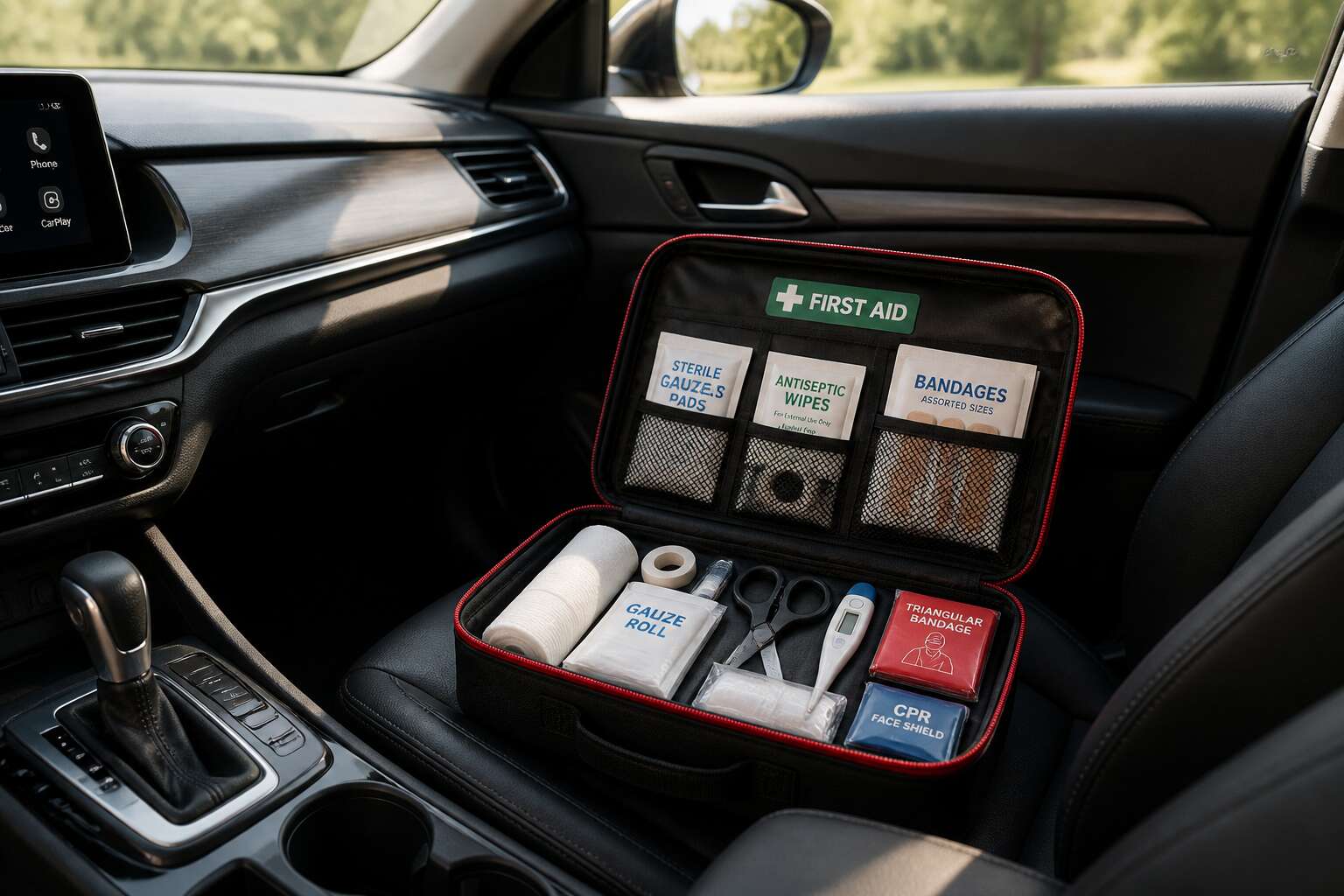
Why Every Vehicle Needs a Medical Kit
The Critical Gap Between Injury and Emergency Services
According to the Road Traffic Management Corporation, nearly 40% of South African crash victims reach help later than the golden hour. For a driver on a quiet Free State road, sirens are still ten minutes away. That is the critical gap. Between the moment a wound opens and the moment a paramedic arrives, you are the emergency services.
A first aid box for car does not sit in the boot as a formality. It sits there as the nearest hospital. Packed with pressure dressings and trauma shears, it turns a helpless wait into a controlled response. In that window, it allows you to seal a chest wound or splint a fracture. Without it, you stand and watch.
Regional Laws and Driving Regulations That Mandate Supplies
There is a quiet weight to the metal latch on a well stocked first aid box for car. It is not the weight of the gauze or the antiseptic wipes, but the responsibility they carry. On a farm road outside Kroonstad, or a bustling highway in Durban, the presence of a kit changes the tone of a crisis from panic to purpose. It is a small object that holds a promise to a family, a promise that you will not be helpless when the seconds count.
South African regulations do not leave this to chance. The National Road Traffic Act requires that all vehicles carry a first aid box for car, alongside a warning triangle and a fire extinguisher. This is not a suggestion for long distance travellers; it is a legal duty for every driver on every journey. For businesses, the Occupational Health and Safety Act goes further, demanding that company vehicles maintain a fully stocked kit to protect employees on the clock. These laws exist because the road is an unpredictable partner, and the law insists you be ready for its sudden turns. A driver who neglects this duty is not just breaking a rule, they are forfeiting a layer of protection for themselves and their passengers.
A compliant kit is a specific thing. It holds a trauma dressing for heavy bleeding, plasters for small wounds, a burn shield, and a pair of scissors that can cut through a seatbelt. The contents must be sealed and undamaged, because a torn package is a useless promise. The list of essentials is often debated, but the core remains the same.
– Trauma dressings and bandages.
– Sterile gauze and adhesive tape.
– A burn treatment and antiseptic wipes.
– Resuscitation face shield.
– Disposable gloves.
Checking these items is a habit of care. Replacing the expired saline solution or the worn out tape is an act of quiet diligence. The law requires the box to be there, but your character determines if it is ready. When the sirens are far off, and the dust is still settling, that simple case on the back seat is the only medical professional you can summon.
Psychological Benefits of Being Prepared on the Road
There is a strange calm in knowing the first aid box for car is within arm’s reach. I have felt it on long stretches of the N1, when the radio cuts out and the road narrows. That quiet reassurance does not come from the box itself, but from the decision to pack it properly. Anxiety on the road often comes from uncertainty. A stocked kit removes one layer of that uncertainty.
The mind works better when it trusts its hands. For families travelling with children, this becomes even more tangible. That steadiness shows up in three ways:
- Clearer thinking in the first moments after an incident.
- A calmer voice when comforting a frightened passenger.
- The ability to focus on the next step instead of the worry.
The box holds bandages, but it also holds a sense of control. That is its own kind of medicine.
Essential Components to Include
Wound Care Basics: Bandages, Gauze, and Tape
A single strip of medical tape often decides whether a wound stays clean or becomes a breeding ground for infection. Wound care basics demand precise supplies, because road accidents rarely allow for improvisation. The first aid box for car should hold sterile gauze pads in several sizes, adhesive bandages for minor cuts, and a roll of hypoallergenic tape.
I have seen too many kits with useless trinkets that fail under pressure. The essentials break down into three working parts:
- Sterile gauze for absorption and direct pressure
- Adhesive bandages for shallow abrasions
- Paper tape for securing dressings without tearing skin
Gauze must remain factory sealed until the moment it touches a wound. Tape needs firm grip yet gentle release. Every component earns its place through function alone.
Cutting Tools and Tweezers for Splinter and Debris Removal
A dusty gravel road can leave a driver with more than a flat tyre. Tiny glass shards and acacia thorns often embed themselves in skin before the engine cools. A first aid box for car should always carry a pair of stainless steel tweezers with pointed tips, plus a small cutting tool with a blunt edge for cutting clothing away from a wound.
- Pointed tweezers for splinter and debris extraction
- Compact scissors or a safety cutter with a guarded blade
These items work best when they sit in a separate pocket of the kit. Tweezers must be cleaned with alcohol before use. Cutting tools need a locking mechanism to prevent accidental closure during a bumpy drive. Without these, a minor foreign object becomes an infection risk.
Antiseptics, Ointments, and Pain Relief Medications
In the half hour after a rocky pass scuffs your elbow or a door handle catches your thumb, the right antiseptic makes the difference between a quiet evening and a fevered night. I always keep a small bottle of chlorhexidine solution in my own first aid box for car, because alcohol stings like a swarm of bees and some wounds need a gentler flush. Antiseptic wipes, povidone-iodine sachets, and a tube of mupirocin ointment handle the business of cleaning and guarding against infection. Pain relief medications, paracetamol for a throbbing head and ibuprofen for inflammation, sit beside them in a waterproof sachet. In South Africa’s heat, keep these items away from direct sunlight inside the glove compartment. A practical car kit includes:
- Chlorhexidine or povidone-iodine solution
- Antiseptic wipes (individually wrapped)
- Mupirocin or fusidic acid ointment
- Paracetamol and ibuprofen tablets
Tablets degrade quickly in a hot boot, so check the expiry date every six months. A proper first aid box for car saves you from a pharmacy stop at night, but only if the antiseptic has not evaporated and the medication has not turned crumbly. Rubbing alcohol in a small pump bottle also works for cleaning tweezers or your own hands before dressing a wound. Store these liquids in sealed containers, and the kit stays ready for real driving days.
Emergency Blankets, Gloves, and CPR Shields
A motorist’s body temperature can drop dangerously within minutes of a collision, even in mild weather. That is why my first aid box for car always includes a Mylar emergency blanket. It folds to the size of a wallet and reflects up to 90 percent of body heat. I keep two, one for the injured person and one for myself while waiting for help.
Nitrile gloves protect against bloodborne pathogens. A CPR shield with a one-way valve lets you breathe for someone without direct contact. These items are small but they change the outcome.
- Emergency blanket (Mylar or foil)
- Nitrile or vinyl gloves (at least two pairs)
- CPR face shield with one-way valve
For a first aid box for car, these are non-negotiable. The blanket also serves as a ground cover or a signal reflector. The gloves keep your hands clean, and the shield removes hesitation when every second counts.
Specialized Additions for Children, Elderly, or Pets
In South Africa, your first aid box for car must extend beyond the usual stockpile. A child’s paracetamol suspension, an elderly person’s blood pressure medication copy, and a pet’s antihistamine tablet can bridge the gap between roadside panic and professional care. The challenge is that needs vary so widely. A collapsible water bowl and a thermal reflective pad serve both a dehydrated pensioner and a nervous spaniel, while a glucose gel sachet works for a diabetic grandparent or a toddler with low blood sugar.
- Child-safe scissors and a soft splint for little limbs
- A printed list of chronic conditions and allergies for older passengers
- A muzzle or cloth tape for an injured animal’s protection
Your first aid box for car becomes a family document. When you tailor it to actual passengers, you turn generic supplies into targeted responses!
Customizing Your Kit for Different Driving Environments
Urban Commuting: Compact and Quick-Access Solutions
Johannesburg’s morning gridlock can turn a routine commute into an unexpected hold-up. A first aid box for car designed for urban driving needs to sit within arm’s reach, not buried under luggage. Your city kit should prioritise compactness over comprehensive coverage, focusing on minor scrapes and sudden headaches rather than multi-day emergencies.
Consider the constraints of your vehicle. A glovebox or under-seat storage area works best. I prefer a simple pouch that tucks under the passenger seat. Adhesive bandages, antiseptic wipes, and a small torch fit neatly inside:
- Antiseptic wipes for quick cleaning
- Adhesive bandages in assorted sizes
- A compact torch for dim parking areas
Keep the kit organised, since fumbling through loose items while parked on a busy street wastes precious minutes! The right configuration changes based on your daily route, from highway sprints to stop-start suburb crawling.
Off-Road and Remote Travel: Extended Survival Supplies
When the highway fades to gravel and the cell signal disappears, the calculus changes. Remote routes, from the Tankwa Karoo to the wild coast, can leave you hours from the nearest clinic. A first aid box for car built for city commuters will not carry you through a night on a mountain pass. Your first aid box for car must evolve into a survival station.
Extended survival supplies require heavier thinking. Water purification tablets, thermal blankets, and a manual suction device for snakebite rank above simple bandages. The kit grows, but so does your margin for error. I keep mine in a hard case bolted to the load bay, protected from dust and impact.
- A tourniquet and haemostatic dressing for severe bleeding
- Electrolyte sachets for dehydration in summer heat
- A foil bivvy bag for overnight waits
- A headlamp with spare batteries
Each item earns its space by addressing a scenario unique to isolation. The open road rewards those who plan for the hours between help arriving and help being possible.
Extreme Weather Conditions: Heat, Cold, and Humidity Adaptations
South Africa’s driving environments range from desert heat to coastal humidity, and each condition alters your supplies. A first aid box for car parked in the sun can see interior temperatures above 60°C, degrading liquid paracetamol and weakening adhesive tape within weeks. Store it in an insulated pouch and rotate temperature-sensitive items before each long trip.
Cold presents the opposite challenge. Highveld winters and mountain passes can cause antiseptic solutions to crystallize or separate. A foil bivvy bag is standard, but a small hand warmer addresses slowed circulation. Humidity along the Wild Coast seeps through paper packaging, bending gauze and rusting scissors.
Check the kit’s seals every season. For extreme heat, add burn gel with a melting point above 50°C. For dampness, pack silica gel sachets. For cold, keep a zipper pouch with gloves and a thermal cap. These adjustments are not about buying more. They ensure the first aid box for car works when the mercury does.
Fleet and Commercial Vehicles: Meeting Occupational Safety Standards
A commercial vehicle’s first aid box for car is rarely a matter of preference. In South Africa, the Occupational Health and Safety Act places responsibility on employers to supply equipment that matches the workplace, and a vehicle is a workplace. That shifts how the kit is assembled and maintained.
Fleet operations involve multiple drivers, rotating shifts, and varied routes. One kit must serve every handover without missing items. Occupational safety standards require documented checks, sealed components, and an easy way to confirm the contents at a glance. The box itself may sit under heavy cargo, so it needs distinct visibility.
- Tamper-evident seals to flag any unauthorized removal
- A laminated inventory list secured inside the lid
- Reflective casing or a bright handle for rapid location
These provisions turn the first aid box for car into a verifiable piece of compliance rather than a forgotten container.
Maintenance and Storage Best Practices
Conducting Regular Expiration and Integrity Checks
Most vehicle owners never open their first aid box for car until blood is involved, so a cracked tube of antiseptic or a rusted pair of scissors becomes a discovery made too late. Heat cycles in South African summers and damp winters break down adhesive seals quietly.
Storage location matters more than people assume. The glove compartment exposes any kit to constant temperature shifts, while a dedicated boot organiser keeps the container upright. A quarterly review should cover expiration dates on every medication, the integrity of each sterile wrapper, and the condition of the latch itself.
Choosing Impact-Resistant and Temperature-Controlled Containers
Most drivers never think about the case itself until it splits open. A first aid box for car is only as reliable as the container holding it together. A rig with a cracked shell or loose hinges lets in dust and moisture, turning sterile gauze into something you would not want near a wound.
Consider what the case must endure on South African roads: heat soak from a black dashboard, sharp jolts from potholes, and the weight of other cargo shifting. Choose a body with these features:
- Moulded polypropylene with reinforcing ribs around the mounting points
- A full-length hinge pin that will not shear off in cold weather
- A lid latch that stays closed under G-force but releases with one thumb
Storage inside the vehicle matters too. A first aid box for car kept under the seat absorbs less heat than one left on the parcel shelf in direct sun. The right placement and a solid container extend the usable life of every medication and dressing inside, without requiring extra thought when seconds count.
Optimal Placement and Secure Mounting Inside the Cabin
The glovebox is the most common grave for a first aid box for car. It becomes a landfill of receipts and loose coins before the month is out. The boot is worse; by the time you open it, the wound has already made its own decisions. Place the box where a passenger can reach it without unbuckling, and where cargo cannot crush it.
Secure mounting is the part people skip. In a 60 km/h collision, an unsecured case becomes a missile. Use the seat anchor points or a dedicated bracket, then check the straps during routine tyre pressure inspections. Sunlight degrades both the case and its contents.
- A low mounted box stays clear of side airbag deployment zones.
- Footwells invite kicked latches and loose straps.
- A vehicle change or a new child seat means the placement should be revisited.
Placement should feel permanent, not improvised. A first aid box for car that stays put is one you will actually use.
Seasonal Reassessment and Updating Inventory
A first aid box for car lives a hard life. Heat in summer, cold in winter, dust from the roads. Storage best practices begin with knowing what your box endures. Open it once a month, not to admire it, but to feel every packet for damage. Humidity damages packaging slowly. A silica gel pack costs little and protects more than you think.
Seasonal reassessment changes what you carry. Consider what the next three months will throw at you:
- Winter: thermal blankets, burn dressings, chest rubs
- Summer: antihistamines, extra saline, sunburn gel
- Rainy season: waterproof plasters, antiseptic wipes
Updating inventory is not a chore, it is a conversation with your own risks. Keep a small checklist inside the lid and tick it off when you check your oil. A first aid box for car only works when its contents match the season ahead.
Restocking Protocols After Every Use or Emergency
Blood seeps into gauze packets. Ointment tubes crack under a seatbelt. An emergency leaves a mess inside a first aid box for car. Restocking is not a later thought. It is the immediate sequel to every incident. Within an hour of use, open the box and audit every item. Replace what you consumed. Discard anything contaminated. An emergency can break a thermometer or bend tweezers. That broken tool is now a hazard. My protocol:
- Restock used items before parking the car for the night
- Sanitize any surface that came into contact with bodily fluids
- Test every closure and seal after the box is closed
Maintenance is less about the calendar and more about the moment. A first aid box for car does not fail because of time. It fails because someone moved one bottle and never put it back. The check happens after every emergency, not after every month.
Integrating with Other Roadside Safety Gear (Flares, Reflective Triangles)
Your first aid box for car shares the boot with flares and reflective triangles. Those items have different purposes, but they must work together. When you stop to help, you will need the triangle set up before you treat anyone. That means you cannot store the medical kit under the spare wheel. Keep the first aid box for car in a separate, marked compartment that is reachable without unloading cargo. Flares and triangles should sit beside it, but not pressed against the box. Heat from a flare can damage syringes or ointments.
Check all roadside gear in one routine.
- Inspect the reflective triangles for cracked reflective panels.
- Confirm flares are dry and within expiry.
- Make sure the first aid box for car has no spilled contents.
This combined check takes five minutes. It prevents the moment where a flare fails and the medical kit is useless because the box was crushed by a jack. Store each item with clear space around it. Secure them so they do not shift during a sharp turn. The roadside kit only works when every part is accessible in the same moment.
Legal and Compliance Considerations
Country-Specific Requirements for Vehicle Medical Kits
South Africa’s traffic laws are surprisingly quiet on the exact contents of a first aid box for car, although the National Road Traffic Act expects drivers to carry basic emergency equipment. That silence creates confusion, because neighbouring countries like Namibia and Botswana enforce their own, stricter lists. In Europe, the German DIN 13164 standard is a frequent reference point, while France mandates a specific inventory. If you cross borders, your local compliance may not protect you.
- Check the SANS codes for South African medical kit standards.
- Verify the legal requirements for every country you plan to drive through.
- Keep a printed list of your kit’s contents for quick inspection.
That list is the difference between a courteous gesture and a legal obligation.
Workplace and Company Vehicle Mandates
An employer’s duty does not end at the office door. When staff drive for work, the responsibility to provide a first aid box for car becomes a legal obligation. The Occupational Health and Safety Act places this burden squarely on management. Inspectors may also evaluate private vehicles used for business errands. One missing kit can expose a company to liability. Consider these compliance checkpoints:
- Audit every vehicle with a business purpose.
- Document each kit’s contents and inspection date.
Failure to document is failure to prove compliance. The law does not require perfection, but it requires proof. Employers who overlook this face fines, lawsuits, and reputational damage. Those who prepare, protect their people.
Insurance Implications and Documentation
A single expired packet of antiseptic wipes can sink an insurance payout. When a claim crosses the desk, the insurer asks whether the driver maintained a first aid box for car. A documented history of monthly checks and restocking shows diligence. An empty kit suggests neglect, which may reduce a payout or void coverage entirely.
Legal scrutiny follows similar logic. Courts review records, not intentions. If an injured passenger suffers because your supplies expired, the absence of documentation is as damaging as the missing bandage. Lawyers search for the paper trail that proves care or exposes carelessness.
The records themselves are simple:
- Date of each inspection
- Items removed and replaced
- Signature of the person who checked the kit
A South African driver can fit this list on a single card. The card sits beside the kit, ready for review. An inspector who opens the box finds proof of maintenance, not excuses. I have seen adjusters grant leeway to drivers who can show a consistent record.

0 Comments