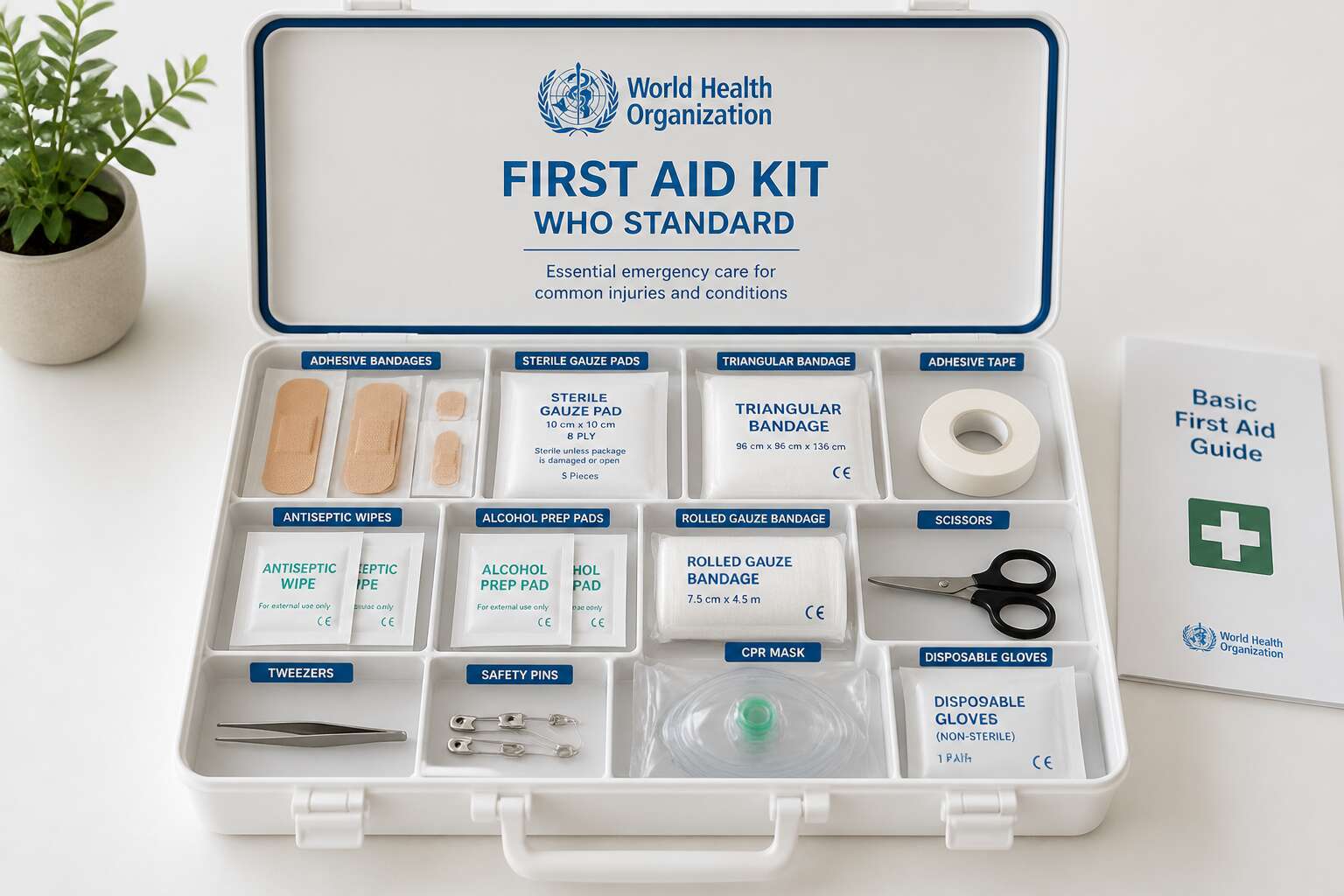
Understanding the WHO Standard First Aid Kit
Target Users and Intended Environments
The WHO standard first aid kit was never meant for a single type of responder. It serves a wide spectrum of people: a security guard at a Cape Town shopping centre, a nurse in a Limpopo clinic, or a team leader on a remote farm. The contents are chosen to function across these diverse settings, offering dependable support when professional medical help is still minutes away.
Its intended environments are just as varied. The kit appears in workplaces, schools, and public gathering spaces, but it also plays a role in emergency response during floods or community health outreach. Common placement areas include:
- Factory floors and construction sites
- Rural health posts and mobile units
- Sports fields and community halls
Anyone with basic first aid training can use the WHO standard first aid kit effectively. Its organised compartments and clear labelling support quick decisions under pressure, which matters most when every second counts.
Core Principles Behind the Standard
Every WHO standard first aid kit begins with a question: what actually works when time is short? The answer emerges from years of emergency data, not guesswork. Each item earns its place because it addresses a documented injury pattern. This evidence-based foundation is the first principle of the standard.
The second principle is restraint. A kit overloaded with gadgets becomes a burden. The WHO standard first aid kit deliberately keeps its contents lean, favouring versatility over volume. A single item may serve several purposes, which matters greatly in low-resource areas where resupply is irregular.
The third principle is consistency. Caregivers in urban Johannesburg and rural Mopani districts share the same layout, the same labelling, the same expected contents. I have seen how this uniformity builds competence through familiarity. That reliability alone can save critical seconds!
These principles anchor the design:
- Evidence over assumption
- Versatility over abundance
- Consistency over improvisation
Together, they explain why this standard remains a dependable tool when emergency care is out of reach.
How It Differs from Basic First Aid Kits
Most basic kits treat scraped knees and headaches. The WHO standard first aid kit addresses catastrophic bleeding, penetrating wounds, and hypothermia. That distinction changes everything about what sits inside the bag.
Basic kits assume a pharmacy is minutes away. The WHO standard first aid kit assumes nothing. It carries field-expedient tools like triangular bandages and occlusive dressings. These items manage injuries that would overwhelm a typical household kit.
- Bleeding control: tourniquets and haemostatic agents
- Airway management: nasopharyngeal tubes
- Thermal protection: space blankets
South African emergency responders often face multiple casualties from taxi accidents or violent incidents. The standard kit’s modular layout allows quick triage. Every compartment has a purpose, unlike haphazard basic kits filled with random plasters and outdated ointments.
Essential Components of the WHO First Aid Kit
Bandages, Dressings, and Wound Care Supplies
In my experience assembling emergency supplies, the wound care layer is where preparation meets reality. The who standard first aid kit specifies sterile gauze dressings, roll bandages, and adhesive tape to manage bleeding without cross contamination. These components work together, each piece serving a distinct purpose in wound management.
Consider the abridged inventory that defines this category.
- Absorbent compress dressings for direct pressure
- Triangular bandages for immobilisation or slings
- Adhesive wound closures for small lacerations
Every dressing must meet WHO quality benchmarks, ensuring durability in field conditions. That is why standardised packaging and expiry tracking matter more than raw quantity.
Instruments and Tools for Emergency Care
Most people fear the bleeding, but the real enemy is hesitation. A clean cut with a sharp tool beats a fumbled attempt with a dull one. The who standard first aid kit bundles instruments that serve specific purposes.
- Blunt-tipped scissors for cutting clothing and tape
- Tweezers for splinter and debris removal
- Safety pins for securing slings and bandages
- Disposable CPR masks for airway support
These tools are not accessories. They are the practical instruments that make every other item usable. In my experience, a kit without scissors becomes difficult to manage. The same principle applies to this kit. Instruments are there to remove obstacles, not to complicate them.
Medications and Antiseptics
Medications and antiseptics form the pharmacological backbone of the WHO standard first aid kit. Antiseptics like chlorhexidine and povidone iodine reduce microbial load on wounds before dressing. The kit includes paracetamol for pain and fever, and oral rehydration salts for fluid loss. These medicines address common emergencies without requiring advanced training. A key distinction: antiseptics prevent infection, while antibiotics treat established infections. The WHO standard first aid kit separates these roles with deliberate precision.
Supply chains in South Africa sometimes struggle with expiry dates. This creates a practical concern for kit maintenance. Checking expiration dates becomes a routine habit for anyone serious about readiness! In my experience, a dated inventory list prevents unpleasant surprises.
The standard protocol includes:
- Povidone iodine solution
- Chlorhexidine gluconate
- Paracetamol tablets
- Oral rehydration salts
- Aspirin for suspected cardiac events
Each item serves a defined purpose. There is no room for redundant additions. The pharmacist who assembles these kits understands that protocol adherence matters more than inventory size.
Personal Protective Equipment and Safety Gear
A collapse on a Johannesburg street leaves no time for indecision. The who standard first aid kit places responder safety above all else. Personal protective equipment creates a primary barrier against bloodborne pathogens. A pair of nitrile gloves can mean the difference between action and hesitation. The kit includes a face shield for rescue breathing, which removes the need for direct contact. Safety goggles protect against splashes, while a foil blanket manages shock after the incident.
These items are prerequisites for safe intervention. I always inspect the gloves first. The kit commonly contains:
- Nitrile examination gloves
- Pocket mask or face shield
- Safety goggles
- Emergency foil blanket
Without this gear, even a trained professional becomes a second casualty. The kit ensures a responder can act without compromising their own health.
Emergency Instructions and Documentation
In the quiet moments before a crisis, the paper inside the kit often goes unnoticed. Documentation rarely receives the same reverence as a fresh bandage, but it carries a distinct authority. The who standard first aid kit treats information as a critical tool, not an afterthought. These materials guide a responder through uncertainty with a calm, structured voice.
The kit includes an inventory sheet that demands accountability after every use. This simple checklist ensures the kit is restored before the next emergency. A first aid instruction booklet, written in plain language, walks you through the steps for common injuries. The who standard first aid kit also includes an incident report form for recording details at the scene, a practice that turns a chaotic moment into a manageable sequence of events.
– A compact instruction card for CPR and recovery positions
– A laminated quick reference chart for severe bleeding
– A pencil and notebook for scene documentation
Beyond these, a wound assessment chart helps you look past the obvious damage. This documentation creates a record that aids medical professionals who receive the patient. It bridges the gap between the street and the hospital room. The paperwork in the who standard first aid kit transforms a bystander into a deliberate, informed responder.
How to Assemble a WHO-Compliant First Aid Kit
Step-by-Step Checklist for Required Items
Most people assume a compliant kit is a mystery box, but it is actually a system of checks. The assembly process is a methodical exercise in restraint. You begin with the container itself, the rigid shell that will carry your supplies. After that, you work through the categories, starting with the physical trauma items like the pressure bandages. Then you move to the infection control layer, adding the cleansing wipes and the antimicrobial ointments.
The key is to avoid overcrowding. A useful checklist follows a logical order to prevent waste.
1. Lay out the required dressings and bandages first to establish the bulk.
2. Add all the instruments, such as scissors and tweezers, placing them in the designated slots.
3. Include the protective gear, the masks and the gloves, at the top for immediate access.
4. Finish with the documentation and the instruction manual in the lid pocket.
Once the base is secured, you address the stock rotation. Each item must be checked for its expiry date, and the packaging must be sealed. The location of every piece should be known by the person responsible for the kit. The who standard first aid kit is not a luxury item for the office shelf; it is a working asset that requires a deliberate, organised assembly to function as intended during an emergency.
Sourcing Approved and Certified Materials
Once the checklist is locked, the harder question surfaces: where do the components come from? A who standard first aid kit only performs if every item inside is authentic. In South Africa, the market is crowded with lookalike products that fail under pressure.
I have seen kits filled with gauze that shreds on contact. The certification mark is not decoration. It is a traceable promise. Look for the SABS mark, the European CE mark, or documentation from a recognised regulatory body. The WHO publishes specifications that manufacturers must meet, even if it does not physically stamp every box.
Certification leaves a trail:
- Verified manufacturers appear on the WHO prequalification list.
- Lot numbers appear on every sealed package.
- Certificates of analysis accompany antiseptics and medications.
The supply chain deserves the same scrutiny as the contents. A who standard first aid kit sourced from an unverified distributor is a liability. Certification paperwork carries the same weight as the items themselves.
Organizing Your Kit for Quick Access
A first aid kit that requires treasure hunting is a decorative box with ambition. Organizing a who standard first aid kit is an exercise in practical logic. In an emergency, you won’t have time to rifle through layers of packaging. The goal is to let your hands find the right item without your eyes doing the searching.
- Wound care gear goes on top, because blood does not wait.
- Instruments sit in a middle pouch, away from soft dressings that can snag.
- Medications and antiseptics stay in a sealed, labelled pocket lower down.
- Documentation and emergency instructions ride in the lid or an outer sleeve.
Every bag has a personality. A who standard first aid kit should feel predictable. The arrangement reflects how you think under stress. Some people favour compression bandages at the top; others prefer gloves first. Consistency matters more than perfection, because muscle memory does the real work when panic takes over.
Labeling and Packaging Standards
Once the contents are arranged, the packaging demands attention. A WHO standard first aid kit with unreadable labels cannot serve its purpose. In South Africa, where heat and humidity test every adhesive, the label must outlast the emergency it describes.
I have seen kits fail because their labels faded into illegibility. The standard demands more than a name on a box. Batch numbers, expiry dates, and manufacturing origins must be legible at a glance. Sterile items require tamper evidence and a clear indicator if the seal has been broken. Every label should survive alcohol spills and rough handling!
- Permanent ink that resists moisture and friction
- English plus at least one other official language
- Visual cues for priority items
- Storage temperature and opening instructions
These specifications serve a practical function. They turn a jumble of supplies into a predictable system. The WHO standard first aid kit functions correctly when the packaging is legible under stress.
Budgeting for a Complete Kit
A decent WHO standard first aid kit in South Africa costs roughly R1,200, which is R1,200 more than you want to pay until you actually need it. Assembly starts with a budget that respects both the standard and your bank balance. Certified components carry a price premium, and bargain dressing packs fail inspection quickly and expensively.
Costs split into three stubborn categories: sterile consumables, instruments, and the case itself. Bulk purchasing of consumables reduces the per-unit price, but only if you actually use them before expiry. Do not buy one luxury trauma shears and a packet of plasters!
- Set a ceiling for each item type before shopping
- Compare medical wholesalers instead of retail pharmacies
- Reserve 15 percent for expiry date replacement cycles
The WHO standard first aid kit does not reward penny pinching on sealed consumables or batch traceability. A compliant budget accounts for restocking cycles, because a hidden expired item is a silent failure. That is the real cost of owning a WHO standard first aid kit.
Maintenance and Usage Guidelines
Regular Inspection and Expiry Management
A WHO standard first aid kit loses its purpose when supplies expire unnoticed. Monthly inspections reveal cracked packaging, discoloured antiseptics, and expiration dates drifting past their usefulness. Record what you find in a simple log. Replace items before they fail, not after.
Storage conditions influence shelf life. Heat and humidity, common in South African summers, accelerate degradation. Keep the kit in a shaded, ventilated space. Rotate stock, moving older supplies to the front so nothing lingers untouched.
Use this maintenance rhythm:
- Monthly: check expiry dates, seal integrity, and inventory levels
- Quarterly: test instruments and replace worn gloves, tape, or scissors
- Annually: audit the entire kit against the current WHO standard first aid kit checklist
Consistent upkeep turns a static box into a dependable resource when minutes count.
Replacing Used or Contaminated Supplies
Used supplies leave the kit in one direction only: out. Once a dressing touches a wound, it belongs in a waste bag, not back in your stock. The same applies to opened antiseptic wipes, torn packaging, or any item that has fallen on a dirty floor. Contamination is not always visible.
Restock what you use in the same moment you use it. A who standard first aid kit missing a single pad or roll of tape is already a compromised response tool. Log every removal, and check the kit before you leave a scene, not when the next emergency arrives.
- Discard soiled dressings in sealed plastic
- Replace syringes and blades in puncture-proof containers
- Do not return items once their packaging is broken
Replacement is not an afterthought. The act of restoring a supply carries the same weight as the act of using it. Keep a complete who standard first aid kit, and the next emergency will find you prepared.
Training Requirements for Effective Use
Confidence means nothing when a wound is open. The WHO standard first aid kit requires trained hands, not hopeful ones. Personnel must know each compartment, each tool, and the exact sequence of action before an emergency unfolds.
Training requirements should cover:
1. Sterile technique when handling dressings
2. Correct tourniquet placement and pressure control
3. Proper disposal protocols for contaminated materials
4. Communication procedures during multi-person response
Refresher drills keep skills sharp. Annual certification ensures nobody drifts into complacency. The who standard first aid kit rewards those who practice. Hesitation costs time. Untrained hands cause damage. A practiced response is quiet, deliberate, and precise. That precision is what separates an effective response from a failed one.
Adapting the Kit for Different Settings
The WHO standard first aid kit does not adapt to you. You adapt it to your environment. In South Africa, that means assessing the local conditions. Coastal clinics need extra saline for saltwater exposure. Highveld farms require burn dressings for welding accidents. Urban offices benefit from compact splints for slips on polished floors. The core kit stays unchanged. The additions make it functional.
Usage guidelines demand the same precision. Open the kit with a clear mind. Set up a clean working surface before removing any item. Hold dressings by the edges only. Never blow on a wound to clean it. Respect the order inside the kit. Someone must know exactly where each item sits. That requires practice, not luck.
Adapt the contents based on real risks:
- Remote field work: include a pressure dressing and a signaling mirror
- School environment: add adhesive bandages and cold packs
- Workshop or garage: stock eye wash and particulate masks
Test each adaptation during mock drills. The WHO standard first aid kit remains the baseline. Your setting decides the rest.
Disposal and Restocking Procedures
A WHO standard first aid kit only proves its worth when something inside has been used, replaced, or thrown away. The maintenance rhythm is quiet. It asks for attention long before an emergency calls for it.
The fabric of the kit shows wear first. A torn pouch, a broken zip, a faded label. Consider a scenario where a responder needs a burn dressing. The burn dressing is there, but the outer packaging is cracked from age. The dressing is compromised. Clean, functional contents in a failing container are a contradiction.
The process follows a predictable loop. Every month, the kit is emptied onto a clean surface. This is the only time to check for leaks, rust, or dampness. Sharps are counted. Blister packs are checked for seal integrity. The stainless steel scissors are oiled. The tape is tested. Any compromised item becomes waste, not a thrifty keep.
Disposal is a matter of hygiene and law. Used needles go into a puncture-proof container. Expired liquids are drained and rinsed. Old dressings go with general medical waste. No item is ever reused or donated. The record of what was discarded determines the restock list.
Restocking follows the exact order of the original layout. The WHO standard first aid kit has a fixed stock list. The replacement order does not deviate from it. Place the new item where the old one sat. Moderate usage patterns allow for restocking every six months. High-traffic sites check quarterly. The goal is a kit that is always ready, with no surprises under the flap.
Comparing WHO Standards with Other First Aid Guidelines
Differences from Red Cross Recommendations
Few people realize that the who standard first aid kit diverges from Red Cross guidance in ways that affect real emergencies. The WHO deliberately excludes items like cold packs, which many Red Cross chapters consider essential. Why? Because refrigeration is not guaranteed in every environment, and the WHO designs for global equity.
Red Cross protocols also lean heavily on national legislation. South African employers follow the Occupational Health and Safety Act, which aligns with certain Red Cross chapters but not necessarily with WHO specifications. This creates a practical tension for safety officers who must decide which framework takes precedence.
- The WHO limits wound closure to butterfly strips, whereas Red Cross chapters often permit steri-strips of various sizes.
- Red Cross guidelines require elastic bandages for pressure dressings, but the who standard first aid kit uses plain conforming bandages.
OSHA Compliance and Workplace Kits
When safety officers compare the who standard first aid kit against OSHA compliance expectations, they often find mismatches in quantity rather than content. OSHA does not prescribe a universal contents list, it defers to the employer’s hazard assessment. This means a South African workshop might need more burn dressings than the WHO kit provides.
- OSHA requires kits to be based on workplace specific risks
- WHO focuses on generic, globally available supplies
- South African regulations add their own layer of compliance
Workplace kits therefore become a negotiation between these frameworks. The who standard first aid kit serves as a baseline, but not a final answer. Employers who ignore local legislation in favour of WHO guidance expose themselves to liability. The reverse also holds true, a kit built purely around local rules may lack the durable, universal items that WHO recommends for remote settings.
ISO Standards and International Variations
One might assume first aid standards are universal, but the reality is a study in contrasts. The who standard first aid kit prioritizes accessibility and simplicity for global deployment, while ISO standards often focus on performance testing and specific material durability. These are not competing philosophies; they address different failure points.
Consider how a kit’s integrity is judged.
– ISO 8596 focuses on the performance of individual components under stress.
– WHO guidance prioritizes the availability of those components in low resource areas.
– National bodies, like SANS in South Africa, then mandate packaging and labeling for local liability.
This creates a hierarchy where the who standard first aid kit forms the operational core, while ISO provides the quality assurance layer. For a professional, neither document is sufficient alone. You must read them in tandem to understand that a compliant kit is not just stocked, it is certified to survive the environment it is placed in. The international variation lies in interpretation, not intent.
Regional Adaptations and Local Regulations
In South Africa, the who standard first aid kit serves as a baseline, not a final destination. The Occupational Health and Safety Act and provincial regulations layer additional requirements onto that global structure. A mine near Carletonville needs different consumables than a small school in the Free State. Both respect the global core, but local laws redraw the boundaries.
Provincial quality assurance introduces these distinctions:
– Local authorities mandate expiry tracking that goes beyond the WHO list.
– Labeling must appear in established South African languages.
– Quantity thresholds scale with the number of occupants, not a fixed ratio.
The who standard first aid kit supplies the shared template. Local statutes then dictate placement, inspection intervals, and documentation. The intent stays the same, while the delivery shifts with the local territory.
Choosing the Right Standard for Your Needs
Comparing WHO standards with other first aid guidelines is a matter of context, not hierarchy. The WHO standard first aid kit anchors itself in accessibility and broad usability, while OSHA pushes toward hazard-specific compliance and ISO demands documented consistency. Each framework answers a different question, and none of them is universally superior.
For South African buyers, the real task is choosing the right standard for your needs. Consider who will use the kit, where it will be stored, and how quickly professional help can arrive. A coastal fishing operation and a Johannesburg office tower face completely different risk profiles.
When weighing your options, examine these variables:
- The physical hazards present in the space.
- The training level of the people expected to use the kit.
- The expiry cycles you can realistically manage.
The WHO standard first aid kit serves as a sound foundation, but local regulations and workplace assessments should guide the final selection.

0 Comments