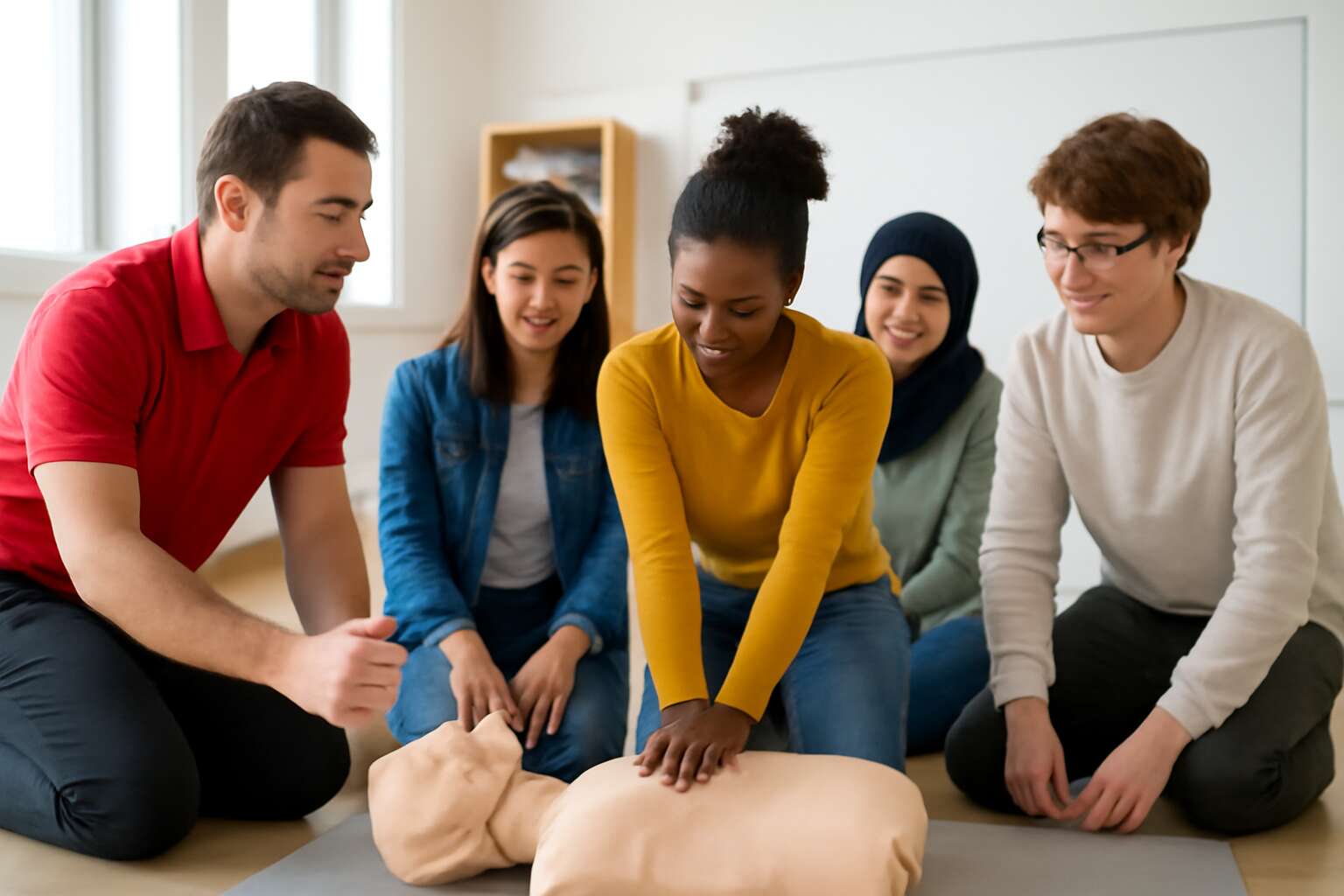
Why Enroll in First Aid Training
Benefits and outcomes
Seconds count, and trained hands save lives. Studies show bystander CPR can double survival chances in the first minutes after a collapse. Enrolling in first aid classes puts that power in your hands: you’ll learn to size up a scene, summon help, control bleeding, and perform CPR with calm precision and compassionate presence. It’s practical courage—ready to surface at school, at work, or in your community. A lantern of knowledge shines when it matters most.
- Instant, actionable skills you can rely on anywhere
- Safer workplaces, schools, and homes through prepared responders
- Stronger community resilience with confident bystanders
These outcomes endure beyond the classroom. In South Africa, where response times vary, trained individuals can bridge delays and stabilize until professionals arrive. You’ll carry techniques, sharper communication, and teamwork into every setting.
Key skills taught
In a heartbeat, the line between chaos and calm is drawn by a single choice. Across South Africa, trained bystanders bridge minutes that medics cannot, turning fear into action and action into hope. Choosing the right first aid classes empowers you to act decisively.
These courses weave practical literacy with poise, turning nerves into steady hands, readying you for school, work, or community life.
- triage and risk assessment
- bleeding and wound care
- airway management and CPR readiness
- AED operation and aftercare essentials
Why enroll? Because knowing what to do does more than save time—it can save a life, and life in South Africa deserves prepared hearts!
Audience and prerequisites
One minute can tilt the odds between panic and help. Across South Africa, a calm, trained bystander can turn chaos into care. first aid classes arm you with that momentum.
Who should enroll? Parents, teachers, coaches, HR professionals, and volunteers all benefit from having a ready responder in the room.
- Parents and guardians
- School staff and coaches
- HR and safety teams
- Sports clubs and community groups
- Volunteer organizers
Prerequisites. No prior knowledge is required to start; just bring a willingness to learn.
- Age 16 or older (guardian consent if under 18)
- Basic language comprehension (English or local language)
- Ability to attend the full course
- Availability of the training date and venue
Enrolling in first aid classes is a practical investment in safety at schools, workplaces, and communities. Prepared people make better decisions—and South Africa deserves it!
What to expect in class
In emergencies, a calm, trained bystander can tilt the odds toward help. Across South Africa, first aid classes empower everyday people to act decisively—turning chaos into care before professionals arrive.
Enrolling isn’t just about a certification; it’s about building a culture of safety where schools, workplaces, and community groups feel prepared. You’ll gain practical decision-making, reduce panic, and demonstrate responsibility when it matters most.
In class, you’ll move from demonstration to action, practicing vital steps in a safe, realistic setting.
- Hands-on practice with adult and infant simulators
- Realistic scenarios reflecting local emergencies
- Short assessment and certification valid for several years
- Small groups and language-accessible sessions
Course duration and pacing
Big emergencies don’t come with a calendar, but training should. In South Africa, where the pace is fast and the hours are many, the duration and pacing of first aid classes are designed to fit real life. Short, focused bursts keep nerves steady and hands ready.
Whether you prefer a single, full day, or bite-sized sessions spread across evenings, these options let you learn without collateral damage to your schedule. That way, first aid classes stay approachable for busy families and professionals alike.
- Flexible formats: one-day intensives or multi-evening modules
- Compact practice blocks that reinforce memory without burnout
- Accessible for schools, workplaces, and community groups
Course Formats and Delivery Methods
In-person class formats
“Time matters in every emergency,” a nurse once told me, and that truth shapes how we teach first aid classes. In-person class formats put hands-on learning at the center, turning theory into confident action and giving participants real-time feedback that sticks long after the bell rings!
In-person formats thrive in three practical settings that South Africa workplaces, communities, and outreach programs rely on.
- On-site sessions at workplaces, factories, and clinics
- Community centers, schools, and faith-based venues
- Mobile outreach in rural townships with portable kits
Each setting emphasizes hands-on repetition, local relevance, and safety compliance, with seasoned instructors guiding drills, feedback, and debriefs that cement learning and improve readiness for real-world calls.
Online and blended options
Time matters in every emergency,” a nurse once told me, and that urgency informs how we design first aid classes for today’s learners in South Africa. Online delivery and blended options expand access without sacrificing practical skill building. Participants can start with foundational theory online, then drop into focused, instructor-led sessions to refine hands-on technique and situational judgment.
- Synchronous online workshops with real-time feedback
- Asynchronous video tutorials and quizzes
- Hybrid programs that pair online theory with periodic in-person drills
In blended formats, learners balance flexibility with repetition, tailoring the pace to work shifts, rural access, and budget constraints common in South Africa. This approach keeps these trainings practical, relevant, and ready for real-world calls.
Hands-on practice and simulations
“Time matters in every emergency,” a nurse once told me, and that urgency shapes how we design first aid classes for today’s learners in South Africa. Real-world readiness mirrors the patchwork of communities here, where accessible formats meet busy lives and distant clinics alike.
In our course formats, hands-on practice and simulations lock theory into muscle memory. Participants move from imagined scenarios to high-fidelity CPR, bleeding control, and unconscious patient responses under guided critique, building calm decision-making.
- Scenario-based drills with realistic props
- Peer feedback cycles that shorten the gap between knowing and doing
- Timed, stress-tested scenarios that mirror workplace calls
This approach travels beyond the classroom, delivering practical competence that travels into the field. Flexible schedules, rural access, and budget-conscious options keep the training relevant to South Africans from every walk of life.
Self-paced learning modules
Every minute without first aid can be the difference between life and death. Self-paced learning modules unlock essential skills for South Africa’s diverse communities, letting learners build confidence in first aid classes at their own pace.
Designed for busy lives and distant clinics, these modules let participants pause, rewind, and revisit core concepts. They complement hands-on practice by reinforcing quick decision-making and recall, with content accessible on phones, tablets, and computers.
Key features of self-paced delivery include:
- Modular bite-sized lessons for flexible pacing
- Instant feedback quizzes to reinforce learning
- Offline access and progress tracking
This format keeps essential skills accessible to South Africans from all walks of life.
On-site and mobile training
In emergencies, the clock can be cruel—and the right training can rewrite the verdict. On-site and mobile formats for first aid classes bring instruction directly to communities, from workplaces and schools to remote clinics across South Africa, turning every town square into a potential lifeline.
On-site and mobile delivery keep skills sharp where they’re needed most. They offer flexible scheduling, hands-on practice with real equipment, and culturally aware coaching that speaks to local realities.
- Flexible scheduling aligned with shifts and transport realities
- Hands-on practice with authentic equipment and simulators
- Multi-language support and local coaching styles
These formats honor the dignity of learning while ensuring every learner can move confidently into everyday life and emergencies with first aid classes.
Certification, Compliance, and Credibility
Certification types and scope
In every emergency, a trained responder buys precious minutes—an advantage that only first aid classes can grant. In South Africa, recognized certificates turn knowledge into capable, compliant action, weaving safety into the everyday.
- Basic First Aid certificate (core skills, latest guidelines)
- CPR with Automated External Defibrillator (AED)
- Workplace-specific first aid certification aligned to OHS standards
Certification types and scope cover both individual skills and organizational expectations, outlining what a holder is authorized to perform and under which circumstances.
Compliance and credibility hinge on issuance by accredited bodies, clear expiration timelines (commonly two years) and required refreshers that keep practices current, ensuring employers trust the credential earned through first aid classes in busy environments.
Accreditation and standards
In emergencies, every minute counts—certified responders turn time into outcome. As one safety officer puts it, “Certifications aren’t paperwork; they’re lifelines.” In South Africa, credible first aid classes are backed by recognized bodies and clear standards that translate training into responsible action.
Credibility rests on who issues the credential, how long it remains valid, and the refreshers that keep knowledge current. Most SA programs align with national occupational standards and require renewal roughly every two years to reflect updates in guidelines and best practices.
A reputable program also demonstrates alignment with South Africa’s OHS acts and recognised safety frameworks, ensuring a certificate carries weight with employers and in busy work environments.
Recertification requirements
In emergencies, time is judgment. first aid classes translate training into action, with credibility stitched into every certificate. As one safety officer puts it, “Certifications aren’t paperwork; they’re lifelines.” In South Africa, credentials are anchored by credible issuers and clear standards that signal responsible action on site.
Certification cadence matters; recertification keeps pace with evolving guidelines and OHS acts. The cadence varies, but the aim is clear: ongoing competency rather than static certificates.
- Issuer credibility: credentials should come from recognized bodies aligned to national occupational standards.
- Validity: certificates should specify a duration and renewal window.
- Refreshers: mandatory updates and practical refresh sessions to reflect best practices.
Ultimately, employers value a certificate that travels beyond the wall of a training room—credibility, compliance, and a demonstrated commitment to safety in busy work environments.
Record keeping and proof of completion
“Certifications aren’t paperwork; they’re lifelines.” In South Africa, issuer credibility anchors every certificate. Credentials should come from recognized bodies aligned to national occupational standards. Certificates should specify duration and renewal windows, with recertification keeping pace with evolving guidelines. The aim is ongoing competence, not static documents—especially in fast-paced sites where safety hinges on action rather than memory. That’s true whether you’re upskilling teams through first aid classes or safety inductions.
Key record-keeping and proof of completion include the following elements:
- Official certificate with expiry date
- Digital record accessible to HR and supervisors
- Renewal reminders aligned to recertification windows
- On-site verification or audit trail when needed
When a certificate travels beyond the training room, it signals credibility and compliance on busy sites. In South Africa, robust proof of completion supports audits and safety culture, and it helps teams move confidently through daily tasks.
Industry-recognized credentials
On South Africa’s busiest sites, a credible certificate is a lifeline that turns chaos into order when minutes matter and actions count.
Industry-recognized credentials from bodies aligned to national standards anchor trust. In the realm of first aid classes, the certificate’s origin matters as much as the badge itself—it signals competence, not memory, and supports safe decision-making under pressure.
- Issuer integrity ensures audits glide through with confidence
- A clear scope and expiry cadence keeps teams current
- Visible credential trails strengthen safety culture across shifts
When a certificate travels with a team, audits feel less like hurdles and more like a shared commitment to safety.
Industry-Specific Training and Accessibility
Healthcare and elder care training scenarios
In South Africa, the right first aid classes can change the course of an emergency in minutes, not hours. “Preparedness is patient safety,” a nurse once told me, and that quip guides every industry-specific scenario I design.
Industry-specific training meets learners where they are—healthcare facilities, elder care settings, mines, and hospitality. Accessibility features ensure diverse learners can participate, from on-site simulations to mobile workshops and online refreshers that mirror real-world pressures.
- Hospitals and clinics
- Elder care and home-based services
- Industrial and mining workplaces
- Hotels, campuses, and event venues
With this approach, these first aid classes become practical, inclusive, and memorable—ready to deploy wherever South Africans work, live, and gather.
Childcare and school settings
In South Africa, the right first aid classes can change the course of an emergency in minutes, not hours. Industry-specific training meets learners where they are, from busy childcare centers to bustling schools, hotels, and industrial floors. Accessibility features ensure participation, with on-site simulations, mobile workshops, and online refreshers that mirror real-world pressures.
- Childcare centers and early learning facilities
- Primary and secondary schools and campuses
- After-school programs and student housing integrated with first aid classes
In childcare and school settings, the emphasis shifts to swift triage, clear directions during chaos, and safeguarding children under instruction—without halting learning. Content adapts to shift patterns, multilingual classrooms, and varying attention spans, ensuring every caregiver and teacher can act confidently when minutes matter.
Workplace safety and compliance
“In an emergency, the first minutes decide,” a veteran safety officer often says. Industry-specific training for first aid classes in South Africa cuts through generic drills and places life-saving skills where workers live and breathe risk. From factory floors to hotel kitchens and classrooms, courses align with safety statutes, SAQA credentials, and real-world workflows. On-site simulations and mobile workshops keep pace with shifts, multilingual teams, and the tempo of modern operations, ensuring compliance without stalling learning.
- Role-aligned scenarios drawn from real environments—construction sites, kitchens, clinics, and classrooms—so responses feel instinctive.
- Recordkeeping and credentialing that satisfy regulators and employers, with clear evidence of competency.
- Accessible delivery methods—on-site, mobile, or online refreshers—designed for mixed-ability teams and varying shifts.
These features translate policy into practice, making first aid classes a durable part of workplace safety culture rather than a checkbox. When teams train with sector realities, response times improve and confidence grows across supervision, frontline staff, and volunteers.
Cost and funding options
Across South African workplaces, trained responders in industry-specific first aid classes cut emergency response times by as much as 40% in the first five minutes. That momentum carries through to hotel kitchens, construction sites, and clinics, where real-world workflows demand targeted skills. These courses translate safety policy into practical action, aligning with local regulations while staying nimble for mixed shifts and multilingual teams.
Accessibility and affordability go hand in hand. Costs vary with group size, modality, and whether training is delivered on-site or virtually, but several funding avenues ease the journey into first aid classes for SA businesses.
- SETA grants and discretionary funds for workplace safety training
- Skills Development Levy rebates through employers and training providers
- Public-sector subsidies or low-cost online modules for SMEs
Smart budgeting keeps first aid classes within reach while securing ongoing compliance and resilience.
Accessibility and inclusivity in training
In the storm of a medical emergency, the clock breaks into seconds. Across South Africa, industry-specific first aid classes cut the crucial first five minutes by up to 40%, turning panic into practiced response and keeping teams safer when every moment counts.
Industry-specific training translates policy into on-the-ground action, shaping drills to the exact rhythms of hotel kitchens, construction sites, clinics, and beyond. Realistic scenarios keep learners engaged and ready for mixed shifts and multilingual teams.
- Hotels and hospitality
- Construction and manufacturing
- Healthcare facilities and clinics
Accessibility and inclusivity ensure no one is left outside the circle of safety. First aid classes should offer language options, varied formats, and flexible scheduling so every employee can participate with confidence.

0 Comments