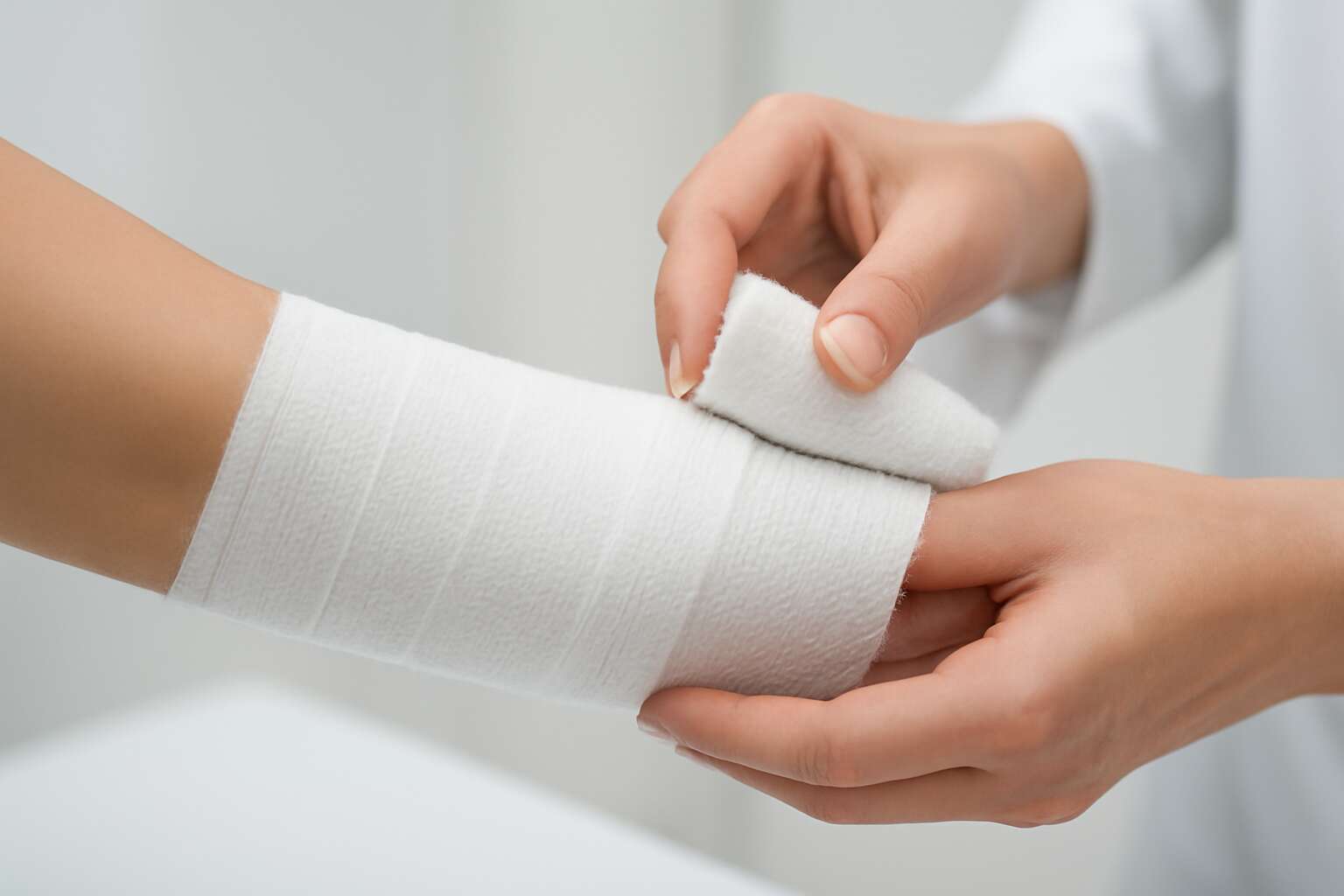
Understanding crepe bandages in first aid
What is a crepe bandage
In South Africa, 70% of minor injuries at workplaces are managed on-site with basic bandaging, a statistic that underscores how crucial a simple wrap can be. The first aid crepe bandage is a quiet hero in these moments, delivering instant, forgiving compression when every second counts!
A crepe bandage is a lightweight, elastic cotton fabric that moves with the body, holding dressings in place and easing swelling. For the first aid crepe bandage, its breathable weave and gentle stretch mean you can adjust comfort without pinching or slipping.
Key qualities that make it a staple in any kit include:
- Elastic and adjustable support that stays put
- Breathable fabric that reduces heat and irritation
- Durable enough to handle field use and repeated wraps
Used in clinics, homes, and rural settings across South Africa, this practical wrap embodies pragmatism and care, turning fabric into an everyday ally.
Key properties and benefits
Across rural clinics and remote farms, a simple wrap can mean the difference between steady control and frantic moments. In South Africa, 70% of minor workplace injuries are managed on-site with basic bandaging, underscoring the power of a quick, forgiving wrap.
Understanding crepe bandages in first aid helps responders apply them quickly and confidently. The first aid crepe bandage delivers quiet, adjustable compression that steadies dressings and eases swelling.
Its design keeps comfort in focus while staying practical in the heat of the moment.
Its key properties in field care include:
- Contour-friendly elasticity that moves with the limb
- Air-permeable weave that reduces heat and irritation
- Rugged knit that survives repeated wraps and removal
In clinics, homes, and rural outposts, this wrap is less a fashion choice than a dependable partner.
Common uses in first aid
A quiet wrap can calm the storm in a moment. In the field, fear often swells faster than the wound; a steady, protective layer restores a sense of control and humanity to the moment. The crepe’s softness shields the skin while the wrap holds fast against movement and heat. Intuition becomes action, and action becomes relief!
Understanding how a first aid crepe bandage functions in practice helps responders move with confidence. Here are the common uses that keep care practical on site:
- Securing dressings to control bleeding without cutting off circulation
- Stabilising sprains and strains by restricting unnecessary movement
- Controlling swelling with breathable, adjustable compression
These practical applications help maintain dignity and comfort in challenging moments.
Choosing the right crepe bandage for first aid scenarios
Types of crepe bandages
“A single wrap can hush the thrum of an anxious moment.” In a busy SA world, the first aid crepe bandage you choose becomes a quiet ally, moving with the body and easing swelling with grace.
Choosing the right crepe bandage for first aid scenarios blends instinct with practical insight. Types range from standard crepe bandages to breathable cotton blends and latex-free options, each with its own tempo. A wider bandage suits limbs that flex and bend, while a softer weave protects sensitive skin. The goal is steady support, not stiffness—comfort that travels with the wearer.
- Width and elasticity chosen for the area (arm, ankle, or knee)
- Material and skin sensitivity (latex-free options for comfort)
- Breathability and durability for longer wear in field conditions
In the end, your choice becomes a small act of care that speaks volumes when minutes matter and nerves tighten, a rhythm of protection and peace.
Sizing and fit considerations
A single tight wrap can hush the tremor in a crowd. In South Africa’s busy moments, the first aid crepe bandage you choose becomes a quiet ally—moving with the body, easing swelling with measured grace. Choosing the right wrap blends instinct with practical insight: width, elasticity, and skin comfort write the pace of care.
Size and fit come alive when you consider the area—arm, ankle, knee—and how the limb moves. Here are quick guardrails:
- Width matched to the body part (narrow for wrists, wider for limbs).
- Elasticity that provides steady compression without obstructing circulation.
- Skin-safe, latex-free options and breathable textures for longer wear.
In practice, the right fit feels like a soft, protective whisper—secure yet forgiving. The right first aid crepe bandage keeps pace with the wearer, turning minutes into calm.
Material and quality indicators
In South Africa’s crowded spaces, the first five minutes after an incident determine outcomes, and a steady wrap can be the quiet ally that keeps panic at bay. The right first aid crepe bandage hinges on material and build quality as much as on fit.
- Material indicators: breathable cotton or cotton-blend weave
- Elasticity: consistent stretch for secure, gentle compression
- Skin safety: latex-free and hypoallergenic
- Durability: strong seams and a uniform weave
A quality wrap should hold its shape after wear, shed no fibers, and carry clear sizing marks—qualities that separate a reliable tool from a fashion accessory. The distinct advantage lies in predictable performance when timing matters and instincts are tested by crowds.
How to read packaging and labels
In South Africa’s crowded spaces, the first five minutes after an incident determine outcomes. The quiet click of a steady wrap becomes a calm in the storm, and the first aid crepe bandage stands as an anchor when fear rises.
Choosing the right crepe bandage for first aid scenarios means listening to its weave: breathable cotton blends, consistent elasticity, latex-free skin safety, and durable seams that endure the crush of crowds. We seek resilience that whispers rather than shouts.
- Size in cm
- Material composition
- Latex-free claim
- Expiry date
How to read packaging and labels reveals a quiet parable of quality without opening the roll. Look for clear sizing marks, material claims, and expiry dates—tiny runes that speak of reliability.
Let the packaging tell its story, and let the roll prove its promise when streetlights glare.
Applying a crepe bandage correctly in first aid
Preparation steps before wrapping
In the frantic hush of an accident, a first aid crepe bandage becomes a quiet engine of relief. “Compression is the first language of healing,” a seasoned medic reminds us, and this bandage speaks that truth with gentle elasticity.
Preparation begins with clean hands, a quick visual check of the bandage for snags, and selecting a width that fits the limb’s contour. Clear the space, settle the patient, and picture even coverage that reassures rather than constricts.
When applying, aim for steady tension and smooth layers, and watch for signs of restricted circulation—numbness, pallor, or increased pain. In South Africa’s busy care landscape, a prepared wrap can steady the moment and aid recovery.
Wrapping techniques for limbs and joints
In the rush of a mishap, the first aid crepe bandage becomes a quiet engine of relief. “Compression is the first language of healing,” a seasoned medic reminds us, and this bandage translates that truth into patient, forgiving pressure.
Applied to limbs or joints, wrap with steady tension and even layers, letting the fabric cradle swelling without constriction. In South Africa’s crowded care landscape, such restraint can steady nerves as surely as it steadies tissue, a small act of surgical quiet in a room of beeping monitors and uncertain outcomes.
- Secure yet flexible fit that follows the limb’s contours
- Even coverage across the area of concern
- Ongoing observation for numbness, color change, or pain
As the wrap settles, the clinician’s eye remains vigilant, ensuring the first aid crepe bandage works as intended while the patient breathes, and the moment eases toward calm and healing.
Tension guidance and immobilization
Testing for circulation and comfort
A single, deliberate wrap can calm a patient—and a chaos-filled moment—faster than you think. In South Africa, field responders note that proper compression often shifts outcomes, reducing swelling and easing pain. The first aid crepe bandage you carry is more than fabric; it’s a shield in a crisis.
Apply with even, gentle pressure that supports the injury without pinching the skin. Start away from the heart and work toward the body, covering the affected area with a smooth layer. Keep the wrap secure without excessive tension, and use clips or a tuck to hold it in place.
Use these quick checks to confirm comfort and circulation:
- Color and warmth return quickly after movement
- No numbness or tingling under the bandage
- The limb remains comfortable at rest and during gentle movement
Testing for circulation and comfort helps ensure the wrap serves its calming, stabilizing role in a first aid scenario.
When to remove or rewrap
A crepe bandage isn’t glamorous, but in a crisis it can calm the room faster than a paracetamol storm. When used as a first aid crepe bandage, it provides steady support without sealing off circulation. In South Africa, field responders note that removing or rewrapping is the moment that often shifts outcomes—swap when swelling moves or skin colour looks off, and always monitor for numbness.
Wrapped correctly, it should sit gently, with even coverage over the injured area. Keep it comfortable, not pinching, and adjust with care as the day unfolds. The goal is stabilisation, not a fashion statement—so the wrap does its quiet work while you coordinate with professional care.
Maintenance, safety, and care tips for crepe bandages
Cleaning, storage, and hygiene
“Compression buys you time,” a clinician once said, and that is the pulse of any first aid crepe bandage. When applied with restraint, it tames swelling and lends support, turning a moment of injury into a quieter, more navigable experience.
Maintenance reveals itself in how a bandage age-steadies a limb. Elasticity remains the backbone; edges stay intact, and the fabric bears the patina of careful use. The wearer senses subtle feedback—the absence of lopsided pressure, the absence of numbness—that tells a story of safe, steady support.
Cleaning, storage, and hygiene shape longevity. After use, the fabric should return to a clean, dry state, free from residue and moisture. A dry, well-ventilated pouch away from direct sunlight guards a bandage’s character, ensuring it remains ready for the next moment when help is needed.
Inspecting for wear and damage
“Compression buys you time,” a clinician once said—and maintenance is the quiet backbone behind that truth. A well-kept first aid crepe bandage stays responsive when you need it most, its weave resilient and its edges intact, ready for the next field emergency or roadside stumble.
Regular inspection catches wear early and keeps safety at the forefront:
- Frayed edges or thinning spots
- Loss of elasticity or sagging fabric
- Discoloration, moisture, or odor
- Holes or tears near seams
Safety matters: never wrap with excess tension. If fingers feel numb, or color returns pale, loosen and rewrap; check circulation and comfort with any movement. A bandage should support, not squeeze—it speaks through subtle feedback.
Care and storage: after use, air-dry fully and store in a cool, dry pouch away from direct sun and heat. For long-term readiness across South Africa’s towns and veld, rotate stock and keep the first aid crepe bandage supple and ready in your clinic, kit, or home.
Safety considerations to prevent constriction
Maintenance and safety shape the life of a first aid crepe bandage. In tense field moments, its quiet resilience holds the line; a well-kept wrap stays responsive when you need it most, its weave supple and its edges true.
Safety considerations prevent constriction by listening to the body’s signals. Numbness, tingling, or pallor reveal that the wrap may exceed gentle compression. The bandage speaks through subtle feedback, inviting a discreet recalibration of tension rather than stubborn persistence.
- Watch for numbness, color changes, or swelling after application
- Avoid folds that create pressure points
- Keep the weave smooth and edges intact to prevent chafing
Care and storage: air-drying becomes the norm, with placement in a cool, dry pouch away from direct sun. Across South Africa’s towns and veld, rotating stock helps keep the first aid crepe bandage supple and ready in clinics, kits, or homes.
Replacement guidelines and shelf life
Maintenance keeps a first aid crepe bandage ready for action. In storage and in use, keep the weave smooth, edges intact, and folds to a minimum to prevent pressure points. Safety nudges you through gentle tension checks—look for numbness or pallor after application and recalibrate if needed. A well-kept wrap stays responsive when you need it most, whispers through the fabric, not with brute force.
Replacement guidelines and shelf life ensure readiness. When elasticity wanes, fibers fray, or color shifts, the bandage is no longer ideal for use. Proper storage in a cool, dry pouch away from direct sun and heat, with stock rotated across clinics and homes, helps keep it supple.
- Common wear signs: fray, stiffness, or loss of elasticity
- Batch date and expiry data inform timely replacements
Disposal and regulatory reminders
A well-kept first aid crepe bandage stays your best silent partner in a pinch. In a crisis, every minute counts. Maintenance means storing it in a cool, dry pouch with the weave smooth, edges intact, and folds kept to a minimum to prevent pressure points. Safety nudges you through gentle tension checks—if numbness or pallor appears after application, recalibrate the wrap. A responsive wrap whispers through the fabric, not snarls.
Disposal and regulatory reminders come into play the moment the bandage wears out. In South Africa, follow local medical-waste guidelines, clinic policies, and household rules to keep communities safe.
- Do not flush or recycle in curbside programs unless explicitly approved by local guidelines.
- Seal used bandages in a leak-proof bag before disposal.
- Consult your clinic’s or supplier’s disposal instructions and national regulations for medical waste.
Ensure readiness, rotate stock and keep dates in sight. A stock check keeps team equipped.


0 Comments