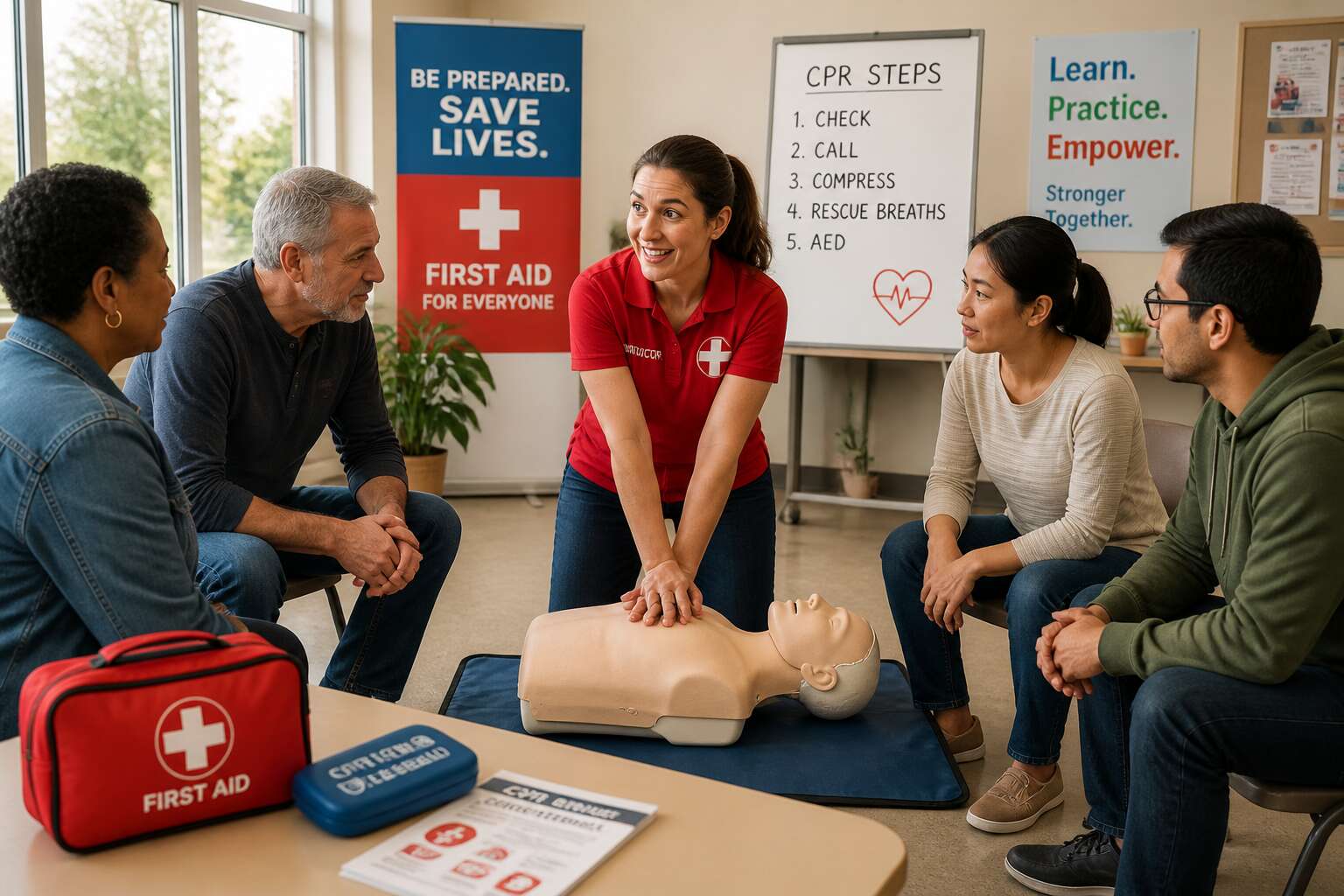
Understanding First Aid Certification Essentials
Why Workplace and Personal First Aid Skills Matter
I remember the moment I searched “where to do first aid course near me” as my child’s face turned pale from a bee sting. That frantic query taught me something: first aid skills are not a luxury, they are a baseline responsibility.
In any workplace, from construction sites to open-plan offices, a certified responder shifts the odds during critical minutes. Personal life mirrors this. A kitchen burn, a fall at the park, a choking dinner guest. The training you carry changes outcomes.
Course fundamentals rarely vary:
- Rescue breathing and chest compressions
- Immobilisation of fractures
- Emergency action planning
- Recognition of anaphylactic shock
The value of asking “where to do first aid course near me” lies in the quality of instruction, not the convenience of the location. Practice matters. Confidence matters. Both persist long after the certificate expires.
Course Levels and What Each Certification Covers
First aid certification in South Africa is not a single generic qualification. Providers stack the training into distinct levels, and each level changes what you can handle on scene. Level 1 covers the essentials: emergency scene management, basic wound care, and the primary survey. Level 2 goes deeper into head and neck injuries, fracture immobilisation, and prolonged patient care. Level 3, often called the occupational responder course, includes advanced airway management, oxygen administration, and emergency childbirth.
When you type “where to do first aid course near me,” check the accreditation first. A valid certificate must come from a training provider registered with the Department of Health or the Health and Welfare SETA. The certification details matter because your workplace files these credentials.
A typical Level 1 course includes:
– Vital signs measurement
– Cardiac emergency practice
– Practical resuscitation drills
Each level builds on the previous. The scene stays the same, but your scope of action grows with every certification you earn. Strong providers let you physically practise the skills. Annual renewal keeps them sharp.
Recognizing Accredited Programs and Valid Credentials
Around 40% of course certificates presented to South African employers are invalid because they come from unregistered entities. That statistic should give you pause. When you search for where to do first aid course near me, the results will include fly by night operators and legitimate institutions side by side. The difference is not in how slick the website looks, but in the legal standing of the provider.
The Health and Welfare SETA and the Department of Health maintain a public register of approved training providers. Your chosen institution must appear on that list. Without this accreditation, your certificate holds no weight in an audit, a workplace injury claim, or a legal proceeding. The Department of Employment and Labour checks these credentials when they inspect your company files.
Accredited programs link to the National Qualification Framework, which gives your training a recognised level. A proper verification process involves asking the provider for their accreditation number and then checking it against the official database. Some providers display their credentials proudly. Others will deflect the question. That deflection is a clear signal to take your business elsewhere.
Here is what you should verify before paying any deposit:
– The provider holds a current Department of Health registration
– The trainers have active instructor qualifications
– The certificate specifies the exact unit standard covered
– The course venue has functional practice equipment
The physical training space matters as much as the paperwork. Valid credentials come from institutions that invest in realistic manikins, airway management tools, and bandaging supplies. A provider who cannot show you their training floor is hiding something. The certificate is only as valuable as the practical experience that backs it. When you type where to do first aid course near me, you are not just looking for a piece of paper. You are looking for a facility where competence is built, tested, and verified.
Typical Course Duration and Time Commitment
The hours required for a first aid course often come as a surprise to people who assume it is a morning’s work. Most entry level programmes run for two full days, with some stretching to three depending on the provider and the specific outcomes attached to the unit standard. I see people underestimate this all the time, and then they scramble to rearrange shifts or child care at the last minute.
Different levels demand different amounts of your time. A basic one day awareness course will give you the rudiments, but it will not satisfy the Department of Employment and Labour’s requirements for a designated first aider. If you are pursuing a full qualification, the training floor will be your home for a solid few days. Before you search for where to do first aid course near me, take a hard look at your calendar and commit to the full stretch. You cannot compress a proper skill build into a few stolen hours.
– Level 1: two to three days of training, which includes assessment time
– Level 2: three to five days, covering more advanced patient care
– Level 3: five to seven days for those taking on a leadership role in emergency response
That span of days does not include the self study hours you will need for the theory component. A reputable provider will send you a manual ahead of the course. Give yourself a week of evenings to read through it, because walking into the classroom cold puts you behind from the start. The practical sessions are where the real learning sticks, and you want your mind free to focus on the hands on work rather than catching up on concepts you should have absorbed at home.
The time burden is real, but so is the payoff. When you finally hold that certificate, the hours spent practising bandaging and resuscitation techniques translate directly into the confidence to act when someone’s life depends on it. The accredited provider that runs you through the paces properly is doing you a favour by not rushing. A course that finishes early should raise a red flag, not a sense of relief. The time on the training floor is the very thing that makes your qualification worth anything in a crisis.
Exploring Different Training Venue Options
Community Centers and Local Nonprofit Organizations
In South Africa, rural towns often hold lifesaving courses in unexpected places. When searching for where to do first aid course near me, look past commercial training hubs. Community centers and local nonprofits offer practical, affordable sessions that serve neighborhoods with quiet dedication. These venues typically have smaller class sizes, so instructors give personal attention that larger chains cannot match.
A church hall might host weekend training while a volunteer group runs evening workshops. The atmosphere feels less clinical, more communal. Consider what each space provides:
- If the venue has proper emergency access and restrooms
- Whether the nonprofit partners with accredited bodies like the Red Cross
- How the room accommodates practical demonstrations on the floor
Each option has different benefits, but all lead to legitimate certification. So when you next search for where to do first aid course near me, keep these venues in mind. Simply find the one that fits your schedule.
Healthcare Facilities and Hospital-Based Training
Every day, South African emergency units treat injuries that basic first aid could have prevented. Hospital-based training offers one of the most direct ways to learn. When you search for where to do first aid course near me, look at your nearest public or private hospital. These courses take place in clinical settings, often inside simulation rooms with the same equipment used by paramedics. Instructors are frequently working nurses or emergency care practitioners. They teach with the intensity of a live department, which changes how you absorb the material.
Some hospital programmes include:
– Airway management on adult and child manikins
– Bleeding control using actual tourniquet systems
– Cardiac arrest drills with defibrillators and oxygen
This venue gives you a rare look at how professionals respond. You practice on the same gurneys where patients are stabilised. For a truly grounded experience, hospital-based options should be part of your search for where to do first aid course near me.
Workplace and Corporate On-Site Programs
Workplace training transforms the search for where to do first aid course near me. Instead of traveling to a venue, the venue comes to you. Your office becomes a classroom, and that familiarity changes how you engage. You practice on the same floor where a colleague might collapse. This isn’t abstraction. It’s visceral. That intensity matters!
Corporate programmes often include:
- Custom scenarios based on your specific risks
- Team-based drills that build shared competence
- Equipment familiarisation with your own first aid kits
This approach demands less scheduling friction and more genuine focus. When your daily environment holds the lesson, retention sharpens. On-site training turns a generic certification into a personal safeguard.
Online and Blended Learning Alternatives
Geography once dictated every decision about first aid training. That has changed! The search for where to do first aid course near me can now end online, in your living room, or on a video call with an instructor in another province. Some providers deliver the full theory portion through self-paced modules. Others require attendance at one practical day in a central venue. Consider how you learn best:
- Self-paced modules suit early birds and night owls alike
- Live virtual sessions allow real time questions with an instructor
- In person practical days confirm your hands on competence
Blended courses fit the rhythm of South African life. Shift workers study at midnight. Parents complete lessons during nap time. The practical session still demands your physical presence, but everything else bends around your calendar. The question of where to do first aid course near me becomes less about distance and more about freedom.
Leveraging Community College and Continuing Education Classes
Community colleges and continuing education programs can end your search for where to do first aid course near me. These institutions rarely advertise, yet they deliver consistent, affordable training. In South Africa, they sit close to residential areas, making the commute short. One registration often unlocks a complete course, taught by instructors who know the national protocols inside out.
Consider what these venues do well:
– Structure courses around working adults, with evening and weekend sessions.
– Provide practical rooms stocked with mannequins, bandages, and AED trainers.
– Run multiple cycles each month, so you can start within days.
Continuing education classes let you pay per module. That keeps cash flow light. You leave with a recognised certificate and a clear head. No frills, no fanfare. Just solid training that fits your pocket and your street.
Comparing Costs, Schedules, and Course Formats
Understanding Pricing Structures and Package Deals
I have compared dozens of training options, and pricing swings wildly. When you search for where to do first aid course near me, expect stark differences. A nonprofit class might charge R500 for a half day. A hospital program could run R1500. Schedules also vary. Some providers only offer weekday sessions, which clashes with shift work.
Package deals simplify the cost equation. Groups often receive discounts, and bundled certifications reduce the total. For instance, combine CPR with advanced first aid for a lower rate. When you revisit where to do first aid course near me, ask about group pricing or corporate rates, even for personal signups.
- Provider reputation and accreditation
- Included materials and manikin use
- Certification validity period
- Refreshment or venue costs
Ask for a full breakdown before you pay. That way, no surprise fees appear later!
Weekday, Weekend, and Intensive Scheduling Options
The Red Cross reports that 59 percent of deaths from injuries could have been prevented if first aid was given before emergency services arrived. That is why so many people are searching for where to do first aid course near me. The right training provider depends on your budget, your schedule, and your workplace requirements.
Understanding Pricing Structures and Package Deals
First aid training prices vary widely across providers. A standard one day course in South Africa typically costs between R450 and R950. The price depends on the provider, the level of certification, and whether the training happens at their facility or at your location.
Package deals often reduce the per person cost. Many providers offer discounts for groups of five or more. Some bundle first aid level 1, 2, and 3 into a single price. Others combine first aid with CPR training or emergency evacuation drills. When you compare where to do first aid course near me, ask each provider for a written breakdown of what the package includes. Some quote low base prices, then add fees for manuals, certification cards, or travel. Get the full picture before you book.
Provider reputation and accreditation
Before you commit, verify that the training provider is accredited. In South Africa, the Health and Welfare Sector Education and Training Authority, known as HWSETA, accredits first aid training providers. The Department of Labour also recognises certain providers.
Accreditation matters for two reasons. It ensures the training meets national standards. It also means your certificate will be recognised by employers and regulatory bodies. When you search for where to do first aid course near me, check the provider’s accreditation number on their website or request it directly.
Read reviews from past attendees. Look for specific feedback about the instructor’s teaching style, the condition of the manikins and equipment, and the organisation of the day. A provider with years of local experience will understand the workplace requirements in your area better than a national chain that outsources its trainers.
Included materials and certification
Most reputable providers include a manual or workbook in the course fee. Some also supply a pocket guide for carrying on the job. Check whether these materials are included or listed as an extra cost.
When you complete the course, you should receive a physical certificate. The certificate must show the provider’s name, the course name, the date of completion, and an expiry date. It should carry the provider’s accreditation number. Ask to see a sample certificate before you pay.
Validity and refresher courses
First aid certificates in South Africa are valid for three years. After that, you need a refresher course to renew. Some providers offer a one day refresher covering updated techniques and protocol changes. Others require you to retake the full course.
The Occupational Health and Safety Act requires that a designated first aider holds a valid certificate. If your certificate lapses, you are no longer compliant, and your employer faces penalties. Set a calendar reminder three months before expiry to book your refresher. When you look up where to do first aid course near me, ask about their refresher pricing and whether they send renewal reminders.
Course schedules and timing options
Providers offer different scheduling options to accommodate working people. Weekday courses run Monday to Friday, usually from 8am to 4pm. Weekend courses suit those who cannot take leave. These often run across a Saturday and Sunday, and you may pay a small premium for the weekend slot.
Intensive courses compress the training into a shorter window. A level 1 course that normally spans three days might be completed in two longer days. These appeal to people who need certification quickly and can handle a fast pace. Some providers also run evening classes over several weeks.
When you compare where to do first aid course near me, ask about the full schedule. Many providers only publish their course dates a month in advance. If you are working toward a deadline, such as a job offer or a workplace audit, book your spot early.
Workplace, community centre, and online options
Training can take place on site at your workplace if you can gather enough participants. The provider brings manikins, bandages, and splints to your premises. Your staff avoid travel time. Many providers discount on site training because they save money on venue hire.
Community centres, public libraries, and civic halls host first aid courses in many areas. These are open to the public, and the venue affects the price. A session at a local community hall often costs less than one at a private training facility.
Blended learning is a growing option. Providers offer the theory component online and the practical assessment in person. This reduces the hours you spend at a physical location. However, first aid requires hands on practice. You cannot become competent at CPR or wound dressing from a screen alone. A blended format works best for professionals with rigid schedules, provided the in person session is long enough for proper practice.
Continuing education and skill maintenance
First aid skills fade without practice. Many providers run free annual refresher sessions for past students. Others host simulation exercises and role play scenarios that keep your skills sharp. Ask about these opportunities when you phone to enquire.
If you work in education, security, or healthcare, your first aid training may count toward continuing professional development points. Confirm this with your professional body before booking, then keep your certificate on file as evidence.
The right decision comes from comparing at least three providers in your area. Request itemised quotes. Confirm the accreditation, the certificate validity, and the included materials. Ask about group discounts and refresher policies. Then book your spot and complete the training. The skills you gain could change the outcome of an emergency.
Group Discounts and Employer Sponsored Training
When budgeting for workplace safety, the cost of training often becomes the deciding factor. You will find that the price for a standard course fluctuates based on the provider’s overheads and the materials included. Before you settle on where to do first aid course near me, ask for a detailed quote that lists every item. Some companies advertise a low base rate but charge extra for the physical handbook or the plastic wallet card. Others include these items in a comprehensive package that also offers free tea and coffee during the breaks. Scrutinize these details to avoid unexpected expenses on the day of your training.
While the initial fee is important, the structure of the payment plan can also influence your choice. Many established training centres require full payment upfront to secure your booking, which can be a burden for small business owners. However, some providers offer flexible instalment options, allowing you to spread the cost over a few months. This approach can ease cash flow constraints, particularly if you are sending multiple employees for certification. It is worth asking about corporate accounts that might offer a 30-day invoice period, giving your finance department time to process the payment without stress.
Group bookings often unlock significant savings, making it more affordable to train an entire team. If you are coordinating training for a staff of ten or more, you can usually negotiate a lower per-person rate. This discount is a common practice because it guarantees the instructor a full classroom and fills the schedule efficiently. To secure this deal, you should contact the provider directly rather than booking online through an automated system. Speaking with a human being allows you to discuss your specific needs and potentially bundle in additional services, such as on-site training or customised scenario packs.
Beyond the advertised price, consider the value of the certification’s lifespan. A course that costs slightly more but offers a three-year validity period often proves to be more economical in the long run. You should also investigate whether the fee includes re-certification reminders or discounted rates for refresher courses. These perks can reduce the long-term cost of maintaining compliance. When you search for where to do first aid course near me, weigh the total cost of ownership against the upfront fee, ensuring you choose a provider that offers both financial flexibility and high-quality instruction.
Here are some key questions to ask before you hand over your credit card:
– Does the quoted price include the manual and certification card?
– Are there any hidden fees for booking, administration, or postage?
– What is the cancellation policy if you need to reschedule?
– Is there a discount for non-profit organisations or registered charities?
– Can you sit a practical exam only if you are renewing an existing certificate?
Ultimately, the cheapest option is rarely the best value. A rock-bottom price might indicate a rushed curriculum, an overcrowded room, or an instructor who lacks real-world emergency experience. Conversely, the most expensive course does not always guarantee superior training. The sweet spot lies with a provider that offers transparent pricing, accredited instructors, and a modern teaching environment. By comparing the full cost structure and payment terms, you can make an informed decision that protects your budget and your employees’ safety without compromising on quality.
Finding and Vetting Local Training Programs
Using Online Directories and Local Search Tools
Nearly 70% of South Africans turn to Google when searching for emergency skills training. Yet the search results often return a jumble of providers, many with outdated contact details or expired certifications. The trick is not just finding an option, but vetting it properly before you part with your money.
Online directories and local search tools are your first port of call for discovering where to do first aid course near me. Platforms like Google Maps and Yelp allow you to filter by proximity, but you should dig deeper than the star rating. Click through to the provider’s website and verify their accreditation against the Health Professions Council of South Africa or the relevant SETA. Then cross-reference their listed physical address with their registration documents. A legitimate training centre will have both aligned.
You can also refine your search with specific long-tail phrases to filter out irrelevant results:
– “first aid course near me with practical assessment”
– “accredited first aid training in [your city]”
– “valid Level 2 first aid certification”
This approach eliminates the guesswork and narrows your options to providers who rank for legitimate search intent rather than just paid advertisements. As you scan each profile, look for photographs of actual class sessions, instructor bios with current credentials, and any mention of refresher courses. These small details indicate an active training operation, not just a shell company. Once you have three or four credible candidates, contact them directly to confirm upcoming dates and ask about their assessment ratio. That conversation will tell you more than any website ever could.
Reading Reviews and Asking for Referrals
I have a strong preference for training that comes passed down through word of mouth. A neighbour, a shop steward, or a nurse can offer a provider name that a generic search would never place at the top. In my case, a nightwatch at my office mentioned a small training centre, and he turned out to be the right one. That is the kind of referral you do not forget!
Take that name and then cross using it with a search for where to do first aid course near me. Check the provider’s official to see if the address matches, read the past four reviews, and ask if you can sit in on a skill circuit. One personal recommendation plus a strong record creates a good cost. Keep the referral close, but give the proof time to reveal itself.
Checking Instructor Credentials and Class Size
When you search for where to do first aid course near me, start by evaluating local training programs. Vet each provider carefully; check if they hold official accreditation from recognized bodies like the South African Qualifications Authority. Instructor credentials matter as much as the curriculum. Ask about their practical experience and whether they maintain current certification. Class size also influences learning quality; smaller groups allow more individual attention and hands-on practice. Visit the venue if possible, and observe how the session runs. Speak with past participants to gauge the course’s real value. A reliable program will balance theory with realistic drills, ensuring you leave prepared for emergencies. Taking these steps helps you choose a course that genuinely equips you with life-saving skills.
Verifying Certification Acceptance and Renewal Requirements
The real cost of a poorly chosen course emerges only when you need the skills, and that is a debt you never want to collect. When you start your search for where to do first aid course near me, you must look past the glossy brochures and confirm the certificate’s actual standing in the professional world. A provider can display a beautiful certificate, but if it does not meet industry standards, your employer may reject it, and your time is wasted.
Before paying a cent, ask the provider who accepts their certification. The answer to this question determines the utility of your qualification. You also need to clarify the renewal policy, as most first aid certifications expire after a set period, typically three years for the basic levels in South Africa. A good vetting process includes a few direct questions:
– Does the certificate list the specific unit standards covered?
– Who is the issuing body and are they registered with the Health Professions Council?
– Is the trainer registered as a recognized assessor?
– What is the exact process for re-certification when the time comes?
Do not assume the trainer will volunteer this information. Most will happily discuss the course content, but they may forget to mention the fine print on the renewal deadline. The best approach is to ask for a copy of the sample certificate during the enquiry phase. This simple step reveals the validity period and the issuing authority without any pressure. You are not just looking for any course, you are looking for a qualification that stays valid for your career and personal requirements. Once you confirm the renewal terms, you have a solid answer to the question of where to do first aid course near me that actually serves you in the long run.

0 Comments