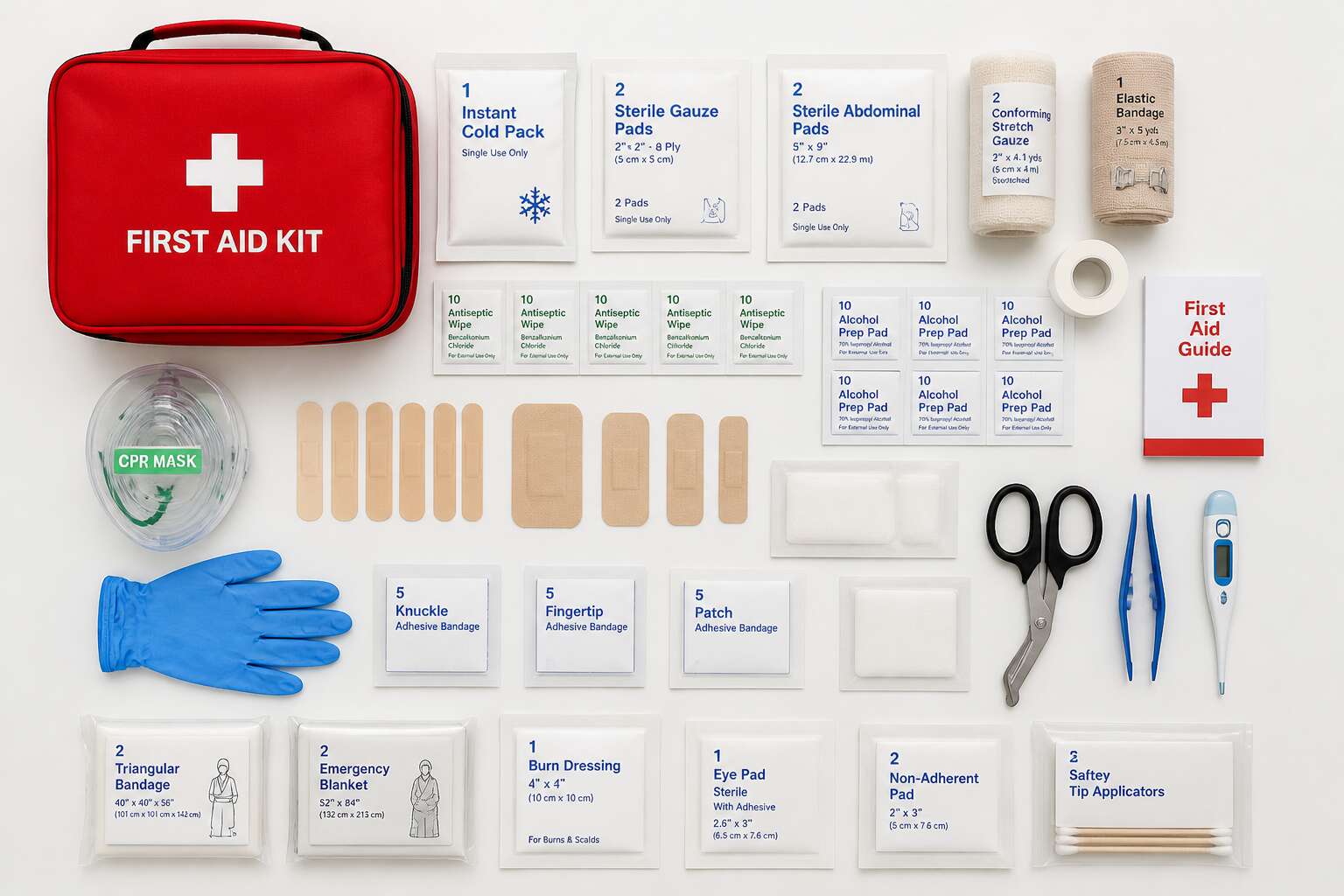
Preparing The Ultimate Medical Cache
Choosing The Right Bag And Organizational System
In South Africa, vast distances can leave you hours from professional care. That makes a properly curated first aid kit 50 items essential, but the kit is only as good as the bag that holds it. The ultimate medical cache begins with the right carrying system.
You need something rugged, water resistant, and easy to grab. Look for a pack with multiple compartments. This lets you separate trauma gear from daily supplies. Consider visibility too. Bright orange or hi-vis yellow boosts quick identification in a dusty boot or dark cupboard.
Organisation matters just as much. Use clear ziplock pouches, labelled with a permanent marker. Keep bulky items like bandages flat. Arrange heavier tools at the bottom. A simple roll-up pouch for smaller items prevents rummaging. When everything has a place, your ultimate medical cache becomes a reliable system, not a scatter of loose gear.
Setting A Budget For Bulk Supply Purchases
A single private emergency room visit in South Africa can easily eclipse R50,000. That sobering figure should anchor your budgeting philosophy for bulk procurement. Stockpiling consumables like sutures, haemostatic gauze, and intravenous fluid sachets demands a staggered approach, not a single impulsive splurge.
I allocate a fixed monthly amount toward replenishing the first aid kit 50 items checklist. This spreads the financial load. It also keeps your ultimate medical cache perpetually fresh, since expiry dates rotate naturally.
- Dedicate 40% of the budget to wound care and haemorrhage control.
- Reserve 30% for airway and breathing adjuncts.
- Spend 20% on medication and electrolytes.
- Keep 10% for packaging and labelling.
Bulk suppliers often offer tiered discounts, so consolidate your orders with trusted medical wholesalers rather than fragmented retail purchases. Track unit costs per item diligently. This discipline turns a daunting financial outlay into a manageable, recurring investment.
Creating A Rotating Expiration Date Schedule
Expiration dates wait for no one. A rotating schedule keeps the first aid kit 50 items from harbouring expired adhesives and questionable saline. The discipline is FIFO, first in, first out, the same logic your supermarket applies to milk.
Write the month and year on each box with a permanent marker upon delivery. This matters for every component of the first aid kit 50 items, from haemostatic gauze to electrolyte sachets. Foil packets smudge, so label the outer packaging. Then set a quarterly reminder to walk your cache and pull anything nearing its end.
- Shift soon to expire items into your everyday home kit.
- Use them first during training drills.
- Replace them with fresh stock from your next bulk order.
This cycle converts your stockpile into a live inventory. No more discovering a dried out suture packet when you need it most.
Customizing Your Stock For Household Size And Risk Level
Your household size and daily exposure define the real contents of a first aid kit 50 items. A single trail runner in the Drakensberg faces different threats than a family of six in a Gauteng townhouse. Assess your risks first, then let the stock follow that assessment.
Start with headcount. Multiply wound care supplies by the number of people, but keep trauma gear scaled to your worst realistic scenario. Children need paediatric doses and smaller dressings. Older relatives require burn gels and pressure bandages for thin skin.
- Add snakebite kits for bushveld or farm living.
- Include prescription copies for chronic conditions like asthma or hypertension.
- Stock extra saline and burn dressings for coastal dust or braai season.
Risk shifts with weather. Winter nights in the Karoo bring hypothermia, while summer storms flood low lying suburbs. I revisit my first aid kit 50 items each season and adjust for real life, not for a generic checklist.
Wound Care And Dressing Essentials
Sterile Gauze Pads, Rolls, And Adhesive Compress Dressings
A single untreated scrape can become a septic wound within hours! That reality explains why gauze dominates the wound care section of any first aid kit 50 items checklist. Sterile gauze pads absorb exudate without sticking to the wound bed, while rolls wrap around awkward joints or secure a primary dressing in place.
Adhesive compress dressings combine a sterile pad with attached tape, ideal for palms, elbows, and knees where movement shifts ordinary dressings. In South African households, these see constant use.
- 7.5 cm x 7.5 cm sterile gauze pads for moderate wounds
- 5 cm x 5 cm pads for minor abrasions
- 10 cm wide rolls for limb wraps
- Adhesive compresses in several widths
Each component serves a distinct role in bleeding control. Without them, a first aid kit 50 items collection loses its capacity to prevent infection.
Ointments, Antiseptic Wipes, And Povidone-Iodine Solutions
The quiet menace of a small wound lies in what you cannot see. A scrape that looks innocent by lamplight can harbor suppuration by morning. In any first aid kit 50 items, antiseptic wipes serve as the first line of defense, stripping away particulate matter and transient flora before they settle deeper. Povidone-iodine solutions offer a broader spectrum, lingering on the skin to reduce bacterial load. Ointments, whether containing bacitracin or mupirocin, create a barrier while the tissue repairs itself. South African homes, where humidity accelerates microbial growth, benefit from these mechanisms.
- Individually wrapped antiseptic wipes for quick field use
- A 10% povidone-iodine solution for larger abrasions
- Small tubes of antibiotic ointment for daily cuts
These elements form a rational sequence: wipe, disinfect, then protect. Within a first aid kit 50 items, this trio ensures that minor injuries do not become prolonged infections.
Medical Tape, Closure Strips, And Butterfly Bandages
A wound that stays open is a doorway. In South Africa, where outdoor work and play often happen far from a clinic, closure strips and butterfly bandages pull the edges together without a needle. Medical tape anchors the dressing, but choose the porous kind. Skin needs to breathe. Nonwoven tape conforms better than cloth and leaves less residue.
These three essentials form a simple hierarchy. Tape holds. Strips approximate. Butterflies close. For a clean cut, butterfly bandages offer the tightest grip. For a larger tear, closure strips distribute tension across the wound line. Medical tape alone cannot replace either.
- Porous medical tape, 2.5 cm wide
- Sterile closure strips in assorted sizes
- Butterfly bandages for pinpoint closure
Heat and humidity degrade adhesive quickly, so rotate your stock. A first aid kit 50 items strong is only as good as its weakest strip. Check expiry dates every season. Replace any roll that curls or loses tack.
Elastic Wrap Bandages For Sprains And Strain Support
A twisted ankle on a rocky kloof trail can end a hike faster than a downpour. Elastic wrap bandages provide compression that reduces swelling and stabilises a wrenched joint. Unlike rigid tape, these bandages stretch with movement and rebound, which makes them indispensable for sprains and strain support.
Your first aid kit 50 items list should reserve space for at least two rolls of elastic wrap. Choose widths based on the target joint:
- 5 cm for fingers and small wrists
- 7.5 cm for forearms and ankles
- 10 cm for knees and thighs
Tension matters! Wrap firmly enough to support, but leave enough give to slide a finger underneath. South African heat can make swelling escalate quickly, so check the wrap periodically and adjust.
Burn Dressings And Hydrogel Sheets For Thermal Injuries
Burns arrive with a particular rudeness, often mid-braai when the coals spit back or in the kitchen when a pot lid slips. South African summers guarantee some acquaintance with thermal injury, yet the old remedies, butter, toothpaste, ice cubes, achieve little beyond a sticky mess. Hydrogel sheets and burn dressings manage the situation with far more decorum!
Hydrogel sheets draw heat from damaged skin, keep the wound comfortably moist, and lift away without tugging at fragile tissue. Burn dressings provide the sterile barrier that keeps dirt and curiosity out. In my own first aid kit 50 items, I reserve a dedicated pouch for these two forms of wound care. Individually sealed sheets prevent contamination, and I have learned to check their expiry dates with the same diligence I apply to canned goods.
My kit carries these:
- Hydrogel sheets sized for fingertips and palms
- Larger non-adherent burn dressings for forearms and legs
Advanced Trauma And Immobilization Gear
Tourniquets And Hemostatic Agents For Severe Bleeding
Severe bleeding demands more than pressure alone. A compact tourniquet and a packet of haemostatic granules occupy minimal space, yet they convert a helpless bystander into someone capable of intervening during the golden hour. These items belong in any first aid kit 50 items checklist, particularly for households in high risk areas.
When selecting a tourniquet, look for a windlass system that can be locked in place. Haemostatic agents, often impregnated gauze or granules, accelerate clotting even when applied to deep wounds. Before storing this gear, verify the strap width and the agent’s expiry date.
- Check the windlass rod for cracks.
- Confirm the haemostatic gauze is sealed in moisture proof packaging.
- Test the buckle release mechanism.
Immobilisation splints for fractures pair well with this trauma set, though they serve a different purpose. A first aid kit 50 items configuration that omits these interventions leaves a critical gap in your emergency response.
Chest Seals And Pressure Bandages For Penetrating Wounds
A bullet to the chest or a broken rib penetrating the lung creates a sucking chest wound. Air enters the pleural space, and the lung collapses. A vented chest seal is a simple adhesive patch that restores negative pressure. In South Africa, penetrating trauma is a relatively common emergency. This small item, similar to a large sticker, can double a victim’s survival odds. Pair it with a high-pressure bandage for field expedient hemorrhage control.
Pressure bandages are distinct from tourniquets. They provide focused compression over a wound using a rigid or padded device, without the risk of ischemic damage to the whole limb. They are also effective on junctional areas where a tourniquet cannot fit, such as the neck or groin.
- Verify the chest seal is vented, not occlusive.
- Ensure the pressure bandage has a non-adherent pad.
These two items, often sold as a combo pack, are the backbone of civilian trauma response. When I review my first aid kit 50 items list, I confirm these are within reach.
Splinting Materials, Slings, And Malleable Aluminum Sticks
In the aftermath of a fall from a rooftop or a motorcycle crash on a gravel road, the difference between recovery and permanent disability rests on immobilizing a broken limb. Motion at a fracture site causes pain and tissue damage, possibly turning a closed fracture into an open one.
Modern splinting materials are versatile. Padded aluminum splints conform to the natural curve of a limb. Vacuum splints mold to the injury using suction. A sling, triangular bandage or purpose-built immobilizer, stabilizes the upper limb and relieves shoulder tension.
Malleable aluminum sticks remain the standard for field splinting and a staple of the first aid kit 50 items. They are lightweight, reusable, and shape easily around wrists, forearms, or fingers.
When I audit my personal first aid kit 50 items, these are always present. The emergency phase gets the attention, but the splint inventory carries the patient from the rescue scene to the hospital bed.
Cervical Collars And Compact Vacuum Splints
When a farmworker is pinned beneath a tipped tractor or a hiker tumbles down a koppie into a rocky ravine, the cervical spine becomes the most fragile link between life and mobility. A cervical collar, sized and fitted in the field, holds the head in a neutral position and reduces the risk of spinal cord damage during extrication. Compact vacuum splints, another modern addition to the first aid kit 50 items, are deflated pouches filled with polystyrene beads that stiffen around a limb when air is withdrawn. They provide rigid, custom support without the pressure points of traditional boards.
These tools are not replacements for the malleable aluminum sticks already discussed, but they cover injuries where a rigid straight edge cannot conform to a curved body part. For example, an ankle twisted in a livestock gate or a fractured wrist from a slip on a wet stoep. The vacuum splint molds to the exact contour and locks the joint in the position found, preventing motion during transport.
A functional first aid kit 50 items list should include at least one adult cervical collar, one pediatric collar, and two compact vacuum splints sized for upper and lower limbs. Check the vacuum seal before each trip. A slow leak means the splint will not hold its shape. Practice applying the cervical collar on a team member so that when the real call comes, you are not reading instructions beside a groaning patient.
These items are not everyday use. They are quiet insurance for the worst days.
Medication, Diagnostics, And Comfort Supplies
Pain Relievers, Anti-Inflammatories, And Aspirin
Headaches and fevers, not dramatic wounds, prompt most first aid kit use. Pain relievers form its bedrock. Paracetamol handles fever and general discomfort. Anti-inflammatories like ibuprofen step in for sprains, reducing swelling paracetamol ignores. Aspirin is a cardiac intervention, but only with a doctor’s approval.
Diagnostics deserve attention in a first aid kit 50 items too. A digital thermometer, a blood pressure monitor, and a pulse oximeter turn guesswork into data. I keep mine in a drawer. Comfort items like electrolyte sachets and instant ice packs ease recovery. Heat and humidity ruin these drugs quickly, so store them cool and dry!
- Paracetamol for everyday pain and fever
- Ibuprofen for inflammation and swelling
- Aspirin for cardiac emergencies, with medical approval
Proper rotation completes the medication segment of your first aid kit 50 items.
Antihistamines, Hydrocortisone Cream, And Calamine Lotion
Spring in the Karoo brings stings and rashes. I keep antihistamines, hydrocortisone cream, and calamine lotion near the top of my first aid kit 50 items. Antihistamines stop the histamine response behind hives and swelling. Hydrocortisone cream reduces inflammation from eczema, insect bites, or contact dermatitis. Calamine lotion dries oozing rashes and soothes the aftermath of nettle stings.
I pack these three in a small, labelled pouch. They handle different stages of skin distress.
- Antihistamines work from inside the body.
- Hydrocortisone targets a local patch.
- Calamine forms a protective layer.
For a family that spends weekends outdoors, these supplies turn an itchy evening into a bearable one.
Anti-Diarrheals, Antacids, And Oral Rehydration Salts
Stomach bugs do not wait for convenient moments. A roadside braai or a dodgy takeaway can leave the family scrambling. That is why my first aid kit 50 items includes anti-diarrheals, antacids, and oral rehydration salts.
Anti-diarrheals slow the gut when cramps strike. Antacids neutralise the burn of rich food. Oral rehydration salts restore fluids and electrolytes lost through sweating or vomiting.
- Loperamide tablets for sudden diarrhoea
- Chewable antacids for heartburn
- Rehydration sachets for electrolyte balance
In the Karoo heat, dehydration arrives quickly. I rotate the rehydration sachets every six months. These three items handle most tummy emergencies without a late-night pharmacy run.
Digital Thermometers, Blood Pressure Monitors, And Pulse Oximeters
Fever often announces itself through shivers and a hot forehead, yet a digital thermometer settles it in seconds. In a first aid kit 50 items list, I always pack this device alongside a blood pressure monitor and a pulse oximeter. These diagnostic tools turn vague unease into clear numbers. The monitor catches silent hypertension after a heavy meal. The oximeter reveals oxygen drops when the Highveld altitude gets to you.
Comfort supplies, such as a cool gel mask or an extra blanket, make the waiting easier. My checklist for the nightstand drawer appears below.
- Digital thermometer for accurate temperature readings
- Blood pressure monitor for heart and artery checks
- Pulse oximeter for oxygen saturation levels
This trio answers the question, “Is it serious?” without guesswork, which matters when the clinic is twenty kilometres away.
Instant Hot And Cold Compresses For Pain Management
Pain management often comes down to temperature, and the body answers heat and cold in opposing ways. Heat dilates blood vessels, increases blood flow, and eases stiff muscle fibres. Cold restricts circulation, dulls nerve endings, and tames early swelling. Since one compress cannot deliver both effects, a proper first aid kit 50 items arrangement usually includes a few of each.
The instant kind works through a simple chemical reaction. You squeeze, the inner pouch bursts, and the contents crystallise or dissolve, producing heat or cold for roughly thirty minutes. This is a tool for waiting rooms and farm kitchens alike, where there is no microwave or freezer nearby. The packs stay stable for years, hold no liquid, and fit into the smallest side pocket. On the Highveld, where the light is harsh and the evenings turn chill, both versions earn their place.
When do you reach for which?
- Cold compress for fresh sprains, bruises, and any injury that is still swelling.
- Hot compress for muscle tension, menstrual cramps, and stiff joints.
Neither should touch the skin directly. A thin cloth barrier prevents tissue damage while the temperature works its way inward.
Sunscreen, Lip Balm, And Protective Ophthalmic Eye Wash
South African sunlight does not negotiate. Sunscreen with SPF 30 belongs in a first aid kit 50 items because sunburn counts as an injury, and it can arrive before you feel the sting. Lip balm with SPF keeps lips from cracking in the dry Highveld air. Both work best when applied before exposure, not after.
Protective ophthalmic eye wash handles a different emergency. Dust, chemicals, or a stray twig can leave grit in the eye, and rubbing makes it worse. A sterile eye wash flushes particles out quickly. Keep the bottle sealed and check the expiry date, since opened saline loses its sterile edge. For eye emergencies, remember the basics:
- Do not touch the eye with any tool.
- Flush from the inner corner outward.
- Seek help if irritation persists.
Survival Additions And Administrative Items
Emergency Blankets, Whistles, And Signal Mirrors
More than 60% of search and rescue operations succeed because someone carried a simple signalling device. In the South African bushveld or along coastal routes, an emergency blanket, whistle, and signal mirror turn a bad situation into a story you survive.
The reflective surface of an emergency blanket does double duty. It traps body heat in cold conditions and reflects sunlight to catch the eye of a passing aircraft. A whistle reaches farther than a human voice. A signal mirror can flash a beam visible for many kilometres.
Your first aid kit 50 items checklist should reserve space for each of these tools:
- Mylar emergency blankets retain 90% of radiant body heat and fold to the size of a wallet.
- Pealess whistles work when wet and carry across dense vegetation.
- Glass signal mirrors with a sighting hole offer precise aiming.
Store them in an outer pocket where they stay accessible when time matters most. A complete first aid kit 50 items stock does not end with bandages and salves.
Water Purification Tablets And Emergency Food Bars
Water is a problem when you are hours from the nearest tap. South African heat can dehydrate you faster than you expect. Emergency food bars are equally important. Water purification tablets turn questionable river water into something safe. They kill bacteria and protozoa. A single packet weighs almost nothing. Emergency food bars provide 2,400 calories of compact nutrition. They survive harsh conditions and remain stable for years.
Add both to your first aid kit 50 items checklist:
– Water purification tablets treat up to 20 litres each.
– Emergency food bars need no cooking or preparation.
– Both fit inside a small waterproof pouch.
Pack them beside your signalling tools. Clean water and calories are the bridge between rescue and collapse. A complete first aid kit 50 items stock is as much about staying alive until help arrives as it is about treating wounds. These additions cost little, weigh less, and matter most when resources vanish. Keep them rotated and ready.
Multi-Tools, Scissors, Forceps, And Safety Pins
Your fingers are not enough. A multi-tool earns its place in your first aid kit 50 items list. It cuts clothing, opens packages, and turns screws on equipment. Scissors handle finer work. Forceps remove splinters and ticks. Safety pins secure slings and hold bandage ends in place.
I carry a compact multi-tool with pliers. It has helped me more than any single dressing! Forceps are small and precise. They reach where fingers cannot. Safety pins cost almost nothing. They solve problems you never anticipate.
Consider these additions:
- A multi-tool with pliers, knife, and screwdriver
- Blunt-nosed scissors for cutting bandages
- Stainless steel forceps for splinter removal
- Rust-resistant safety pins in assorted sizes
Each item weighs less than 100 grams. Each one expands what your first aid kit 50 items can handle. They make every other item in the kit easier to use.
Personal Documents, Prescription Lists, And Emergency Contacts
Paper weighs almost nothing. Yet in an emergency, it becomes essential. Most first aid kit 50 items checklists stop at trauma supplies. They ignore the documents that tell responders who you are and what you need.
Add these administrative items:
- A laminated card with your South African ID number and blood type
- A current prescription list with dosages and known allergies
- Emergency contact names and numbers, written clearly
- A copy of your medical aid membership details
Seal them in a waterproof pouch. I keep mine next to the antiseptic wipes. Paramedics in Johannesburg or Cape Town will search for this information first. A prescription list reveals what medications you take. Allergy notes prevent dangerous reactions. Contact names give responders someone to reach.
These lightweight papers complete your first aid kit 50 items. They turn supplies into a clear record of your health.
CPR Face Shields, Nitrile Gloves, And Biohazard Disposal Bags
A collapsed stranger does not wait for courage. A CPR face shield removes the barrier between intention and action, giving you a safe way to breathe life into another person. Nitrile gloves serve the same logic. They let you touch blood, vomit, or open wounds without sacrificing your own safety. Biohazard disposal bags close the cycle, containing contaminated gauze and used gloves until they reach proper waste systems. Within a first aid kit 50 items checklist, these three additions occupy little space. They buy you the right to act.
The sequence matters:
- Glove up before any contact.
- Deploy the face shield when rescue breathing is needed.
- Drop all used materials into the biohazard bag.
This order transforms chaos into procedure. In Johannesburg’s gridlock or a Cape Town trail, this rhythm turns a bystander into someone who responds.


0 Comments