Understanding the Standard Course Format
Typical Training Hours
A typical youth mental health first aid course spans two full days. The standard format compresses 14 hours of guided learning into structured segments. When someone asks how long is youth mental health first aid training, the honest answer often surprises them. It is neither a rushed afternoon nor a week long seminar.
- Morning sessions focus on recognising warning signs.
- Afternoons shift to applying skills through role play.
This cadence keeps energy levels high and fosters genuine engagement. Facilitators in South Africa commonly split the hours into three to four sessions, allowing for workplace flexibility. The result is a thorough yet efficient exposure to mental wellness.
In-Person vs. Blended Learning Schedules
Choosing between in person and blended learning changes the rhythm of the course. The question, how long is youth mental health first aid training, often depends on this choice. In person delivery runs on consecutive days, keeping the group together for the full 14 hours of contact time.
Blended learning uses a different schedule. A portion happens through self paced online modules, which learners complete before attending a condensed classroom session. The total guided hours stay intact, but the calendar opens up.
- In person suits organisations with set training days.
- Blended suits individuals balancing work and study.
Neither format shortens the material. They simply distribute it differently across your week.
Certification Timeline and Validity
Once the final session ends, the clock on your certification begins. Most providers issue the Youth Mental Health First Aid certificate within 14 working days, though some organisations take longer. The validity period is fixed at three years from the date of completion, not from the date of the assessment.
This expiry exists for a reason. Protocols evolve, and refresher training ensures your response stays current. The certification timeline also depends on your chosen provider’s administrative workflow, so confirm the expected turnaround when you enrol.
- Certificates are sent digitally in South Africa.
- Hard copies are available on request.
- Reaccreditation requires a shortened refresher course.
Understanding how long is youth mental health first aid training helps you plan, but the certification timeline shapes your long term schedule.
Why Course Length Varies by Provider
The standard course format follows a deliberate arc. You move through group discussions, video scenarios, and guided practice. Each segment builds on the last, so skipping ahead is not an option. Most sessions take place over two consecutive days, but some providers split them across a week to suit working schedules.
Why does the length shift? Provider choices matter. One organisation may compress the material into a single day, another extends it to allow deeper exploration. The instructor’s background affects pacing too. A facilitator with clinical experience might slow down for certain topics, while a peer educator may move faster through others.
- Group size influences timing, smaller groups finish quicker.
- Venue logistics add or remove time.
- Assessment methods vary, some require extra practical hours.
So when people ask how long is youth mental health first aid training, the honest answer depends on who is teaching and where.
Factors That Influence Training Length
Instructor-Led vs. Self-Paced Options
In South Africa, the answer to how long is youth mental health first aid training depends on whether you prefer a live instructor or a lonely laptop. Instructor-led courses compress the chaos into a fixed schedule, often squeezing the material into two or three frantic days. Self-paced options stretch the timeline, letting you conquer a module between loads of laundry and that crucial afternoon nap.
But length also hinges on your own learning style. Some absorb information quickly; others slowly. Consider what influences your final hours:
- Your prior experience with mental health concepts.
- The provider’s requirement for live practice sessions.
- Whether the course includes group discussions that meander.
Yes, the format dictates the duration, but so does your own stubbornness. Self-paced does not mean self-torture; it means you control the pace, which can lengthen the whole affair. Instructor-led forces you to keep up, which shortens the calendar but intensifies the brain strain. Either way, the clock ticks differently for everyone.
Class Size and Interactive Activities
Class size alters the arithmetic of the clock. A small group invites every voice into the circle, and each question adds minutes. A crowd forces the facilitator to keep moving, lest the schedule collapse. I have watched a six person class turn a two hour block into three. The material did not grow; the discussion did.
Interactive activities carry their own weight. Role plays and scenario drills require rehearsal, which requires patience. Every exercise inserts a pause into the progression. Here is what typically consumes your hours:
- Group role playing with feedback
- Case study debates
- Small group problem solving
Each element is valuable, but each one answers the question of how long is youth mental health first aid training with a heavier total. Your final hours depend on who sits in the room and how much you are asked to do.
Organization-Specific Scheduling Needs
Each organisation sets its own training calendar. A school in Gauteng must hold sessions during term breaks. A mining operation in the Northern Cape coordinates around shift rotations. A community NGO may secure funding for one dedicated block of days. These realities change how long is youth mental health first aid training takes to complete.
Some employers stagger staff into smaller cohorts across several weeks. Others request a single intensive weekend. The trainer adapts the schedule to the workplace rather than expecting the workplace to adapt to the course.
- School holidays and exam preparation periods
- Shift handover windows in round the clock operations
- Grant funding cycles for non profit organisations
Each pressure stretches or compresses the calendar. A standard two day format becomes three afternoon sessions. A one day plan expands to two evenings. Contact hours remain similar, but the completion timeline shifts.
Virtual, In-Person, and Hybrid Delivery
The mode of delivery affects how long is youth mental health first aid training in ways people rarely expect. Virtual sessions often break content into smaller pieces, because staring at a screen for hours tires a group. In person, a trainer can keep energy high and move quicker. Hybrid delivery requires extra planning, which can extend the total timeline.
I have watched a two day in person course compress what a virtual group covers in four nights. And in rural towns, load shedding and data costs can force even more breaks.
- Virtual: more sessions, shorter each time.
- In person: fewer sessions, longer each time.
- Hybrid: the most complicated to schedule.
Each mode changes the completion period.
Accommodations and Special Request Adjustments
Special requests can change how long is youth mental health first aid training more than any syllabus. A group that asks for closed sessions often needs extra time for trust building. Accommodations for participants with sensory or learning needs, such as quieter rooms or simplified handouts, stretch the schedule by design.
Language support adds another layer. When a trainer works through an interpreter, every segment takes roughly twice as long. I have watched a six hour course grow to nine hours because participants requested translated materials and one on one check ins. These adjustments are not inefficiencies. They open the door for people who otherwise might stay silent.
- Sign language interpretation adds 30% to session time.
- Low literacy versions of activities need 45 minutes extra each.
What to Expect Within the Timeframe
Breakdown of Core Learning Modules
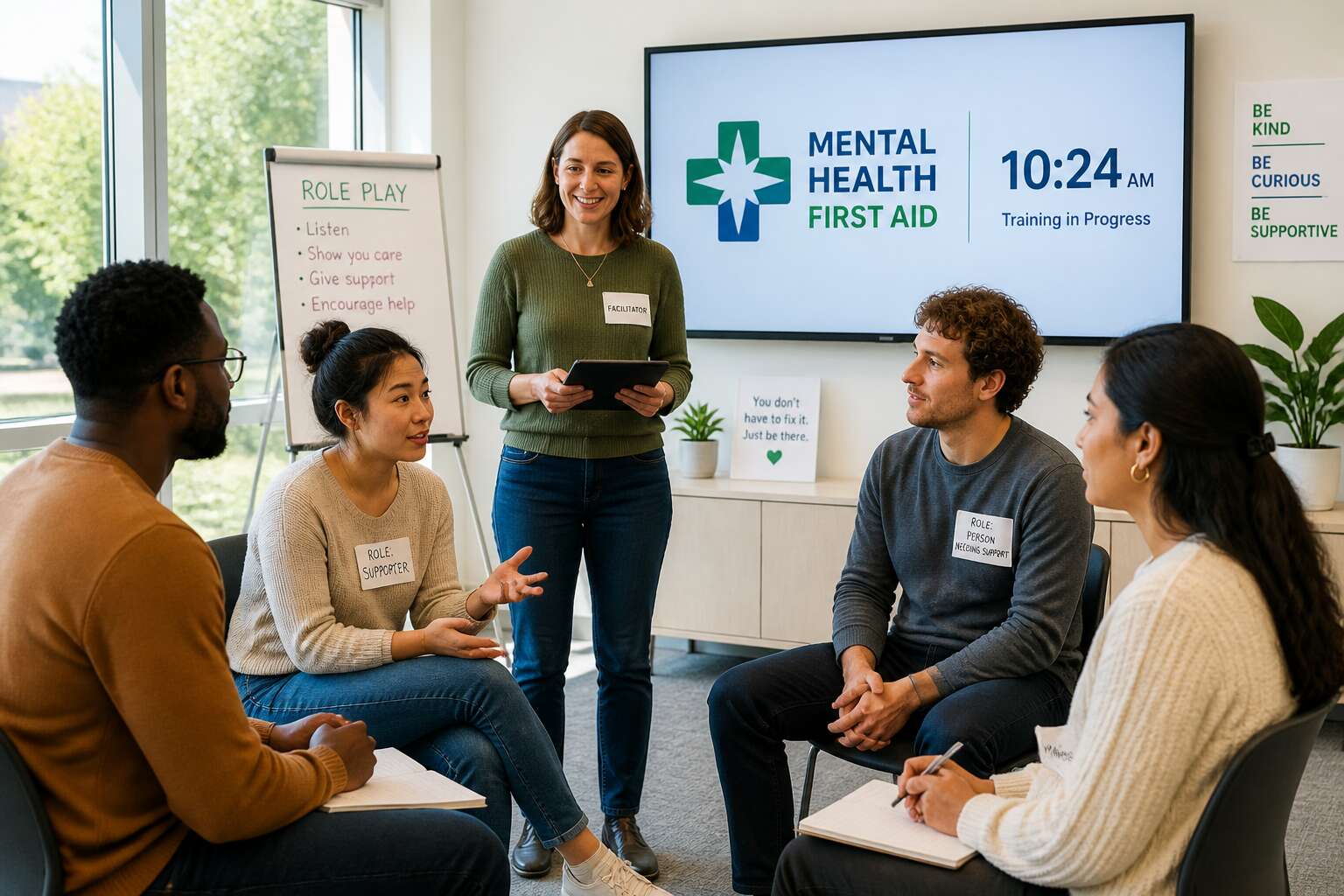
The core learning modules follow a deliberate rhythm, not a random sequence. You will spend roughly 20% of the total hours on foundational theory, covering the signs and symptoms of youth distress. The bulk, nearly half the course, goes into the five-step action plan. This is where the practical application happens.
A typical breakdown might look like this:
- 45 minutes on adolescent development and risk factors.
- 90 minutes on the action plan, with role-play.
- 30 minutes on crisis scenarios, like panic attacks or self-harm.
Each segment builds on the last. Instructors pace this based on class engagement. So, how long is youth mental health first aid training in practice? I have seen these timings stretch to fit group needs. The modules flex, but the overall structure stays anchored to these numbers!
Hands-On Practice and Role-Playing Exercises
When you ask how long is youth mental health first aid training, you are really asking about the time spent in the messy, human work of practice. The clock matters less than what fills those hours.
Role play consumes a significant portion of the schedule. You will sit across from another adult pretending to be a teenager in crisis. Your hands may tremble. Your words may fail. That discomfort is the point. Instructors observe your body language, your tone, and your ability to hold silence. They intervene only when the interaction stalls.
Expect to rotate through scenarios multiple times. Each repetition targets a different skill:
- Recognising early warning signs
- Asking direct questions about self-harm
- De-escalating a panic attack
The total hours stretch or compress depending on how quickly your group absorbs these moments. The structure stays anchored, but the depth of practice is where the real answer to how long is youth mental health first aid training lives for each participant.
Administrative Time, Breaks, and Q&A Sessions
Administrative time consumes a surprising chunk of the day. Registration, consent forms, and housekeeping announcements take roughly thirty minutes before the first slide appears. When you ask how long is youth mental health first aid training, factor in this pre-session window. The published duration often undersells your actual commitment.
Breaks are deliberate, not decorative. I have watched trainers guard these pauses fiercely. Fifteen minutes every two hours keeps the emotional load manageable. Q&A sessions stretch or shrink based on group curiosity. Some cohorts interrogate every slide, others sit silent. The facilitator adapts, so the same course can run long or finish early.
- Morning registration and digital check-in: 20 to 30 minutes
- Two tea breaks and a lunch pause: 60 to 90 minutes total
- Post-course evaluation forms: 10 to 15 minutes
These administrative minutes shift the real length of your day. A course listed as six hours can easily become seven by sign-out. Keep that in mind when calculating how long is youth mental health first aid training from start to finish.
How to Plan for Your Training Schedule
Selecting a Format Based on Your Availability
Your calendar will decide which format works best. I have seen people choose the blended option because it lets them complete the self-paced portion after work, then join live sessions on a Saturday. The core decision depends on your daily rhythm. You might have two clear weekdays, or only one free evening. That changes everything.
- Whether your workplace grants study leave
- How much uninterrupted time you can secure at home
- If you can handle a full day online without losing focus
- Whether you prefer spreading the course over weeks
Ask yourself how long is youth mental health first aid training for your specific situation. The answer depends on those constraints, not on a fixed timetable. A compressed format suits some people, while a longer rollout suits others. Plan around your energy, not the clock!
Employer and Group Training Packages
Employer booked courses change the equation entirely. When a company negotiates a group package, the provider usually adapts the delivery to fit operational demands. You might ask how long is youth mental health first aid training under those circumstances; the answer often comes down to shift patterns and headcount. Some workplaces require all floor supervisors trained before a compliance audit, so the provider compresses the curriculum into two half day sessions. Others spread the same material across three weeks, one module per Tuesday morning.
Group packages frequently include a dedicated facilitator, which shortens wait times for questions and reduces the overall hours needed. The trainer can also tailor scenarios to your industry, making role plays more efficient and relevant.
- Confirm whether your employer’s package covers the full course fee or only the certification.
- Ask if paid work hours count as training time.
- Request the exact schedule before enrolment so you can secure childcare or transport.
Remember, how long is youth mental health first aid training never has a single answer. The employer package reshapes the timeline around production, not the other way around.
Refresher Courses and Recertification Commitments
Once you know the course length, block out your calendar. In South Africa, travel to a training venue can add hours to your day. A course running from 8am to 4pm might mean leaving home by 6am. That changes how you prepare.
Refresher courses follow a different rhythm. Most certifications require renewal every three years. The refresher is often a half day or a single day session. Three details shape your planning:
- Whether your certificate expires before or after the refresher date.
- Whether the refresher includes a practical assessment.
- Whether the provider offers the refresher online.
People ask how long is youth mental health first aid training for the initial course, then forget the renewal. The initial training may take 14 hours over two days. The refresher might take four. How long is youth mental health first aid training depends on where you are in the cycle. I have seen too many people miss their renewal window.
Budgeting Time for Pre-Course Work
The quiet hours before a course begin long before the first session. Blended learning formats often include pre-course work that demands two to three hours of reading, videos, and personal reflection. This is where planners underestimate the cost of distraction.
I tell people to treat this preparation like a meeting with themselves. Block it in the diary. Silence notifications. Keep tea nearby.
Consider what else competes for your attention:
– Children finishing school
– Work deadlines creeping
– Load shedding interrupting your screen time
Each interruption stretches the real time required. So when someone asks how long is youth mental health first aid training, remember the official hours are only part of the story. The preparation time shapes the experience just as much.
Common Questions About Time Commitment
Can the Training Be Completed in a Single Day?
Can you really squeeze the entire course into one day? Some providers claim to do it, but be cautious! The standard format requires multiple sessions for a reason.
In a single day, you would lose the benefit of overnight consolidation. Your brain needs time to absorb new skills. Plus, trainers must trim interactive elements. What remains is a rushed overview, not true first aid competence.
Consider what you sacrifice:
- Hands-on practice with real scenarios
- Peer feedback and reflection
- Chances to ask nuanced questions
So, how long is youth mental health first aid training in reality? Expect at least two separate sessions, not one compressed day.
Are Extensions or Make-Up Sessions Available?
Life rarely adheres to a fixed schedule, and training providers understand this. Most accredited organisations will accommodate a missed session if you notify them in advance, though policies vary. Some allow you to join a later cohort for the segment you missed, while others require full attendance at scheduled times due to the interactive nature of the coursework.
What does this mean for your planning? Consider the following before committing:
– Ask whether the provider records attendance by module or by day.
– Clarify the notice period for rescheduling a session.
– Confirm if make-up work involves an online component or an in-person catch-up.
The honest answer to how long is youth mental health first aid training includes the possibility of small delays. A missed day rarely derails certification, but it can stretch your original timeline. South African providers, particularly those serving schools and community organisations, tend to build in flexibility rather than force rigid adherence to a single schedule.
How Does This Compare to Adult Mental Health First Aid Training?
When the question of how long is youth mental health first aid training comes up, people often measure it against the adult equivalent. The adult course typically spans two full days, while the youth version follows a similar framework but with additional layers of context. Working with adolescents requires attention to school dynamics, family structures, and the social pressures unique to this age group.
South African providers often adjust the pacing to accommodate local realities. The time difference is not dramatic, but it is meaningful.
– Adult training focuses on general crisis response.
– Youth training spends extra time on developmental stages and peer interactions.
Both courses demand genuine commitment, yet the youth pathway quietly asks for a bit more of your calendar.

0 Comments