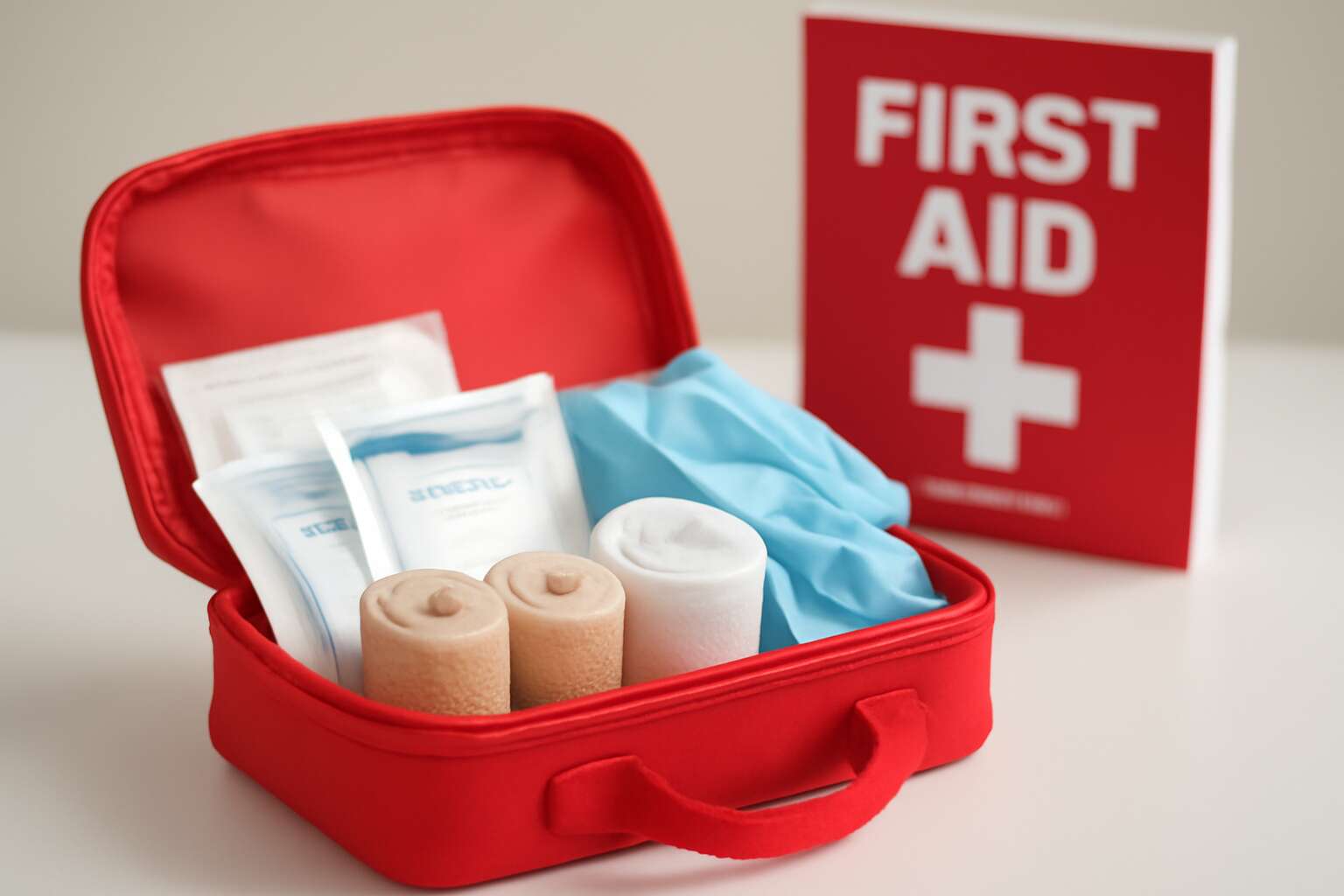
Understanding first aid 5th edition
Updates and changes in first aid 5th edition
Speed saves lives—a line echoed in first aid 5th edition training materials. In emergencies, the window for effective action narrows by the second, making clear, calm assessment essential even before help arrives.
Understanding the updates in first aid 5th edition sharpens the decision flow, refines CPR language, and broaden scenarios to reflect real-world risks common in South Africa. Key changes include revised casualty assessment, updated airway management cues, and emphasis on dispatcher-assisted care to bridge gaps before professional responders arrive.
A compact update snapshot:
- Revised CPR guidelines and compression-ventilation language
- Clarified airway obstruction and choking protocols
- Expanded scope for workplace and community first aid
- Stronger emphasis on dispatcher-assisted care and AED use
This approach makes resources more accessible across South Africa, supporting professionals and lay responders alike.
Core competencies covered by first aid 5th edition
In emergencies, every second count— the right knowledge can turn chaos into calm. Understanding first aid 5th edition core competencies empowers responders to move from hesitation to decisive care, shaping a confident decision flow even when help is minutes away.
Key core competencies include:
- Casualty assessment and triage under pressure
- Airway, breathing and circulation awareness
- Bleeding control and wound management principles
- Emergency communication, dispatcher coordination, and AED readiness
- Legal and ethical considerations for lay and professional responders
These competencies reflect South Africa’s diverse environments—from urban clinics to rural communities—where calm judgment and clear communication save lives. The emphasis remains on practical judgment, ethical conduct, and the seamless connection between bystanders and pros.
Differences from previous editions of first aid guidelines
In emergencies, the first minute matters—the difference between a saved life and a close call. The first aid 5th edition tightens the screws on complexity, replacing guesswork with field-tested, action-oriented guidance. It introduces refreshed, scenario-based workflows, clearer diagrams, and more intuitive quick-reference prompts that stay with you when adrenaline goes up to eleven. For South Africa’s diverse real-world settings, this edition aims to guide hands, not overwhelm them.
Key shifts you’ll notice include:
- Streamlined, scenario-based decision prompts that cut through confusion
- Clearer language and updated ethical framing for modern responders
- Expanded digital resources and printable quick cards for on-site reference
Who benefits from the 5th edition standards
In the pulse of an emergency, clarity is a superpower. The first aid 5th edition reshapes uncertainty into action, turning every tense moment into a practiced sequence that anyone can follow. Across South Africa’s schools, workplaces, and outdoor spaces, it translates complex care into tangible steps that save time and lives.
Who benefits? Hands-on responders—teachers, frontline workers, community volunteers, and family members who may be first on the scene—stand to gain the most. It also serves safety officers, nurses, guides, and emergency teams who need reliable, field-tested prompts that don’t stall under pressure.
- School staff and teachers
- Workplace safety officers
- Community volunteers and rural responders
- Outdoor and adventure guides
Common misconceptions about first aid 5th edition
In practice, first aid 5th edition reframes fear into action; in the pulse of an emergency, clarity is a superpower. This edition turns chaos into a practiced sequence that anyone can follow, from classroom corridors to rural roads, guiding South Africans toward immediate, reliable care.
Common misconceptions about the 5th edition of first aid cling to old myths. Here are a few that mislead well-intentioned bystanders:
- First aid is only for professionals.
- CPR always requires mouth-to-mouth rescue.
- Acting can’t help and might cause harm.
- You must wait for perfect conditions or the right equipment.
Reality is simpler: the guiding prompts stay practical, turning nerves into action and ensuring care begins without delay.
Practical skills and protocols in first aid 5th edition
CPR and AED guidelines in the 5th edition
From the clinic to the veld, practical skills and protocols in first aid 5th edition translate panic into precision—an elegant shift when life itself demands it. A bystander who commits to CPR and uses an AED within minutes tilts the odds from doom to delivery; survival improves by up to 40% with prompt defibrillation and steady compressions.
Key steps in CPR and AED use include:
- Scene safety and prioritizing clear, calm assessment
- Prompt emergency services activation and AED access
- Application of CPR with emphasis on flow and consistency
- AED analysis and following device prompts
- Reassessment and handover to professional care
In South Africa, these protocols align with practical realities—training, equipment access, and workplace culture—keeping the 5th edition standards relevant where you work, shop, or roam.
Bleeding control and wound care per the 5th edition
In the heat of injury, calm hands turn panic into precision. The bleeding control and wound care chapter circles back to basics—scene safety, direct pressure, and clean dressings—so a bystander becomes a steady steward of life.
In first aid 5th edition, bleeding control and wound care guide practical steps for South Africa’s veld and cities alike. The guidance favours direct pressure, clean dressings, minimal contamination, and prudent wound management, with tourniquet considerations reserved for dire cases and trained responders.
Choking, airway management, and breathing support in the 5th edition
In the heat of an emergency, a clear airway is a lifeline that tilts the balance from panic to precision. Choking and breathing distress demand calm, measured judgment, not improvisation. In first aid 5th edition, the choke, airway management, and breathing support are a cohesive skill set for rapid action under pressure.
These practical skills center on quick recognition, preserving airway patency, and knowing when to escalate to trained responders. The chapter offers concise, human-centered protocols, such as:
- Recognize signs of airway compromise and breathing difficulty
- Prepare for accessible, safe breathing support with trained responders
- Coordinate with emergency services and bystanders for a calm, decisive response
Whether in the veld or a crowded city, the guidance remains practical, emphasizing calm communication, scene safety, and timely escalation. It speaks to a South African reality where resourcefulness meets professional standards, keeping choking and breathing support readable and actionable without overwhelming bystanders.
First aid 5th edition in education and certification
Certified courses aligned with first aid 5th edition
On South African campuses and workplaces, a rapid, grounded response can mean the difference between confusion and care. The 5th edition remains the faithful guide, reshaping how we teach, test, and trust in emergencies. “Speed saves lives,” as one veteran trainer likes to say. That principle underpins every certified course that bears the edition mark.
Education and certification in South Africa are standardized, with courses aligned to first aid 5th edition.
- Consistent curriculum alignment across sectors
- Structured pathways to certification and recertification
- Robust, scenario-based assessment without jargon
These programs ensure accessibility across diverse settings—workplaces, schools, and community halls—blending essential knowledge with realistic simulations, all while staying approachable for South African audiences and keeping it at the center of professional growth.
Exam formats and practical assessments for the 5th edition
“Speed saves lives,” a veteran trainer likes to say, and in South Africa that motto shapes the teaching of first aid 5th edition. This edition reframes preparedness, pairing crisp guidelines with hands-on drills so learners leave with calm confidence when chaos erupts.
Exam formats and practical assessments under the 5th edition blend theory with real-world pressure:
- Written theory assessment to test guideline recall
- Practical skills stations for technique and timing
- Scenario-based evaluations simulating unfolding emergencies
- Recertification cadence to maintain current competence
Across campuses, workplaces, and community halls, the certification path mirrors national standards, ensuring portable competence that travels with you into any SA setting.
Recertification timelines and renewal processes for first aid 5th edition
Across South Africa, the calm certainty of a trained responder hinges on timely recertification. A veteran trainer often echoes the belief that preparation holds the line when chaos erupts. The first aid 5th edition establishes a clear cadence for education and renewal: refresh the theory to keep guideline recall sharp, pair it with disciplined hands-on drills, and let every renewal be a pulse check on real-world readiness. This approach treats certification as a portable credential aligned with national standards, ensuring you carry confidence from campus to workplace across SA settings.
Cadence and renewal pathways in SA typically unfold as follows:
- Annual online theory refresh to maintain guideline recall
- Biannual practical update sessions for technique and timing
- Triennial scenario-based reassessments to simulate evolving emergencies
In this way, first aid 5th edition becomes not just a certificate, but a dependable shield across communities.
Online vs in-person training for first aid 5th edition
Across South Africa, frontline responders juggle long shifts, transport delays, and scarce resources. The education and certification path for first aid 5th edition recognizes that reality, weaving online theory with essential in-person practice to build confidence where it matters most.
Online modules offer flexibility for rural clinics and busy campuses, while in-person sessions lock in technique, timing, and team coordination under the watchful eye of an experienced trainer. This dual approach keeps learning humane and tangible.
- Online theory is accessible any time, with self-paced refreshers that fit unpredictable schedules.
- In-person practicals provide hands-on feedback, safe spaces for errors, and realistic scenario rehearsal.
- Blended programs fuse convenience with discipline, supporting steady credential maintenance across SA contexts.
Together, they form a durable pathway for education and certification that travels from classroom to community.
Implementation and resources for first aid 5th edition
Organizing a first aid kit according to the 5th edition
Every hour, an unseen clock ticks in emergencies, and in South Africa’s workplaces a swift, prepared response can cut damage in half. The take‑home is clear: implementation hinges on clear resources, practiced routines, and the framework of first aid 5th edition.
Organizing a first aid kit according to the 5th edition improves visibility, access, and compliance. That means a clearly labeled cabinet, expiry checks every quarter, and content grouped by use—bleeding control, airway support, burns, and basic PPE—so responders can act without hesitation, as outlined in first aid 5th edition.
Resources to support implementation range from SA-accredited providers to official manuals and digital hubs. Local partners, supplier assurances, and mobile learning platforms keep the guidance live! Consider a simple starter kit checklist and references drawn from the 5th edition ecosystem for ongoing relevance.
- Quality wound dressings
- Sterile gloves and wipes
- CPR mask or shield
- Bandages, scissors, tape
Digital tools and apps supporting first aid 5th edition
In emergencies, attention to detail is a quiet powerhouse. With first aid 5th edition guiding the framework, South African workplaces see faster, more confident responses and fewer missteps when minutes matter.
Implementation is supported by digital tools and SA-aligned resources that keep guidance current and accessible—online courses, manuals, mobile apps, and supplier dashboards all feeding into practical readiness under the 5th edition framework.
- SA-accredited e-learning modules covering core competencies
- Official digital manuals and quick-reference apps
- Mobile-first checklists to guide kit inspections and use
These tools translate policy into practice, with real-time updates and scalable training that fits teams of any size across South Africa.
Workplace emergency response plans and 5th edition guidelines
In practice, implementation hinges on SA-aligned digital resources that keep guidance current. When first aid 5th edition frames workplace action, responses become quicker and more confident, even as minutes count. These tools bridge policy and practice, guiding emergency response plans from risk reviews to kit readiness across South Africa.
Key digital resources include:
- SA-accredited e-learning modules covering core competencies
- Official digital manuals and quick-reference apps
- Mobile-first checklists to guide kit inspections and use
These tools translate policy into practice, with real-time updates and scalable training that fits teams of any size across South Africa. They feed workplace emergency response plans and stay aligned with first aid 5th edition guidelines, turning compliance into confident, capable action.
School and community programs for teaching first aid 5th edition
“Preparation is not a mood—it’s a minimum standard,” a seasoned facilitator often quips, and first aid 5th edition makes that judgment undeniable. In South Africa, schools and communities are weaving ready-response training into daily life, turning scattered good intentions into practiced, confident action when minutes matter.
Implementation rests on partnerships, locally certified trainers, and SA-accredited digital resources that keep guidance current. For school and community programs, the 5th edition provides a common framework, language, and assessment path that scales from primary schools to neighborhood clubs.
- SA-accredited e-learning modules covering core competencies
- Official digital manuals and quick-reference apps
- Mobile-first checklists to guide kit readiness and training sessions
These tools translate policy into practice, supporting educators, caregivers, and volunteers to respond with calm and competence across South Africa.
Public access defibrillation and safety considerations in the 5th edition
Every minute counts when a sudden cardiac event strikes, and public access defibrillation programs are proving their worth across South Africa. AEDs in schools, workplaces, and community hubs turn panic into practiced response.
Implementation hinges on partnerships with locally certified trainers and SA-accredited digital resources that align with first aid 5th edition guidelines. Official manuals, e-learning modules, and mobile-friendly checklists move policy into action with calm competence.
Core resources include:
- SA-accredited e-learning modules
- Official digital manuals and quick-reference apps
- Mobile-first AED readiness checklists
- Safety and access guidelines for public spaces
Common mistakes to avoid when applying first aid 5th edition protocols
Implementation rests on a mesh of trusted local instructors and accessible digital resources that translate the first aid 5th edition best practices into everyday action. In South Africa, schools, workplaces, and community centers are building drills that convert calm into competence, like choreography in a theatre of urgency, from discovery modules to mobile-ready quick references.
To avoid missteps, organizations spotlight ongoing oversight, multilingual materials, and scenario-based rehearsals. A mindful rollout keeps policy in motion without overwhelming responders.
- Delaying action while seeking perfect certainty
- Ignoring scene safety or delaying emergency services
- Missing consent or misreading a patient’s cultural cues
- Moving an injured person when immobilization is advised
- Overreliance on a single responder or kit, with no delegation

0 Comments